AI agents get cheaper as oversight becomes harder
Summary
Cheaper inference and stronger agents are shifting the scarce resource from generating work to governing it: deciding what should run, what evidence counts, and when a human must intervene. Across software development, public health, commerce, and infrastructure, the strongest practical accounts pair automation with explicit constraints, reusable context, and verifiable outcomes. The same tension reaches beyond individual workflows, where control over model access and AI-generated wealth raises questions that efficiency gains alone cannot settle.
How I built my ‘everything’ app
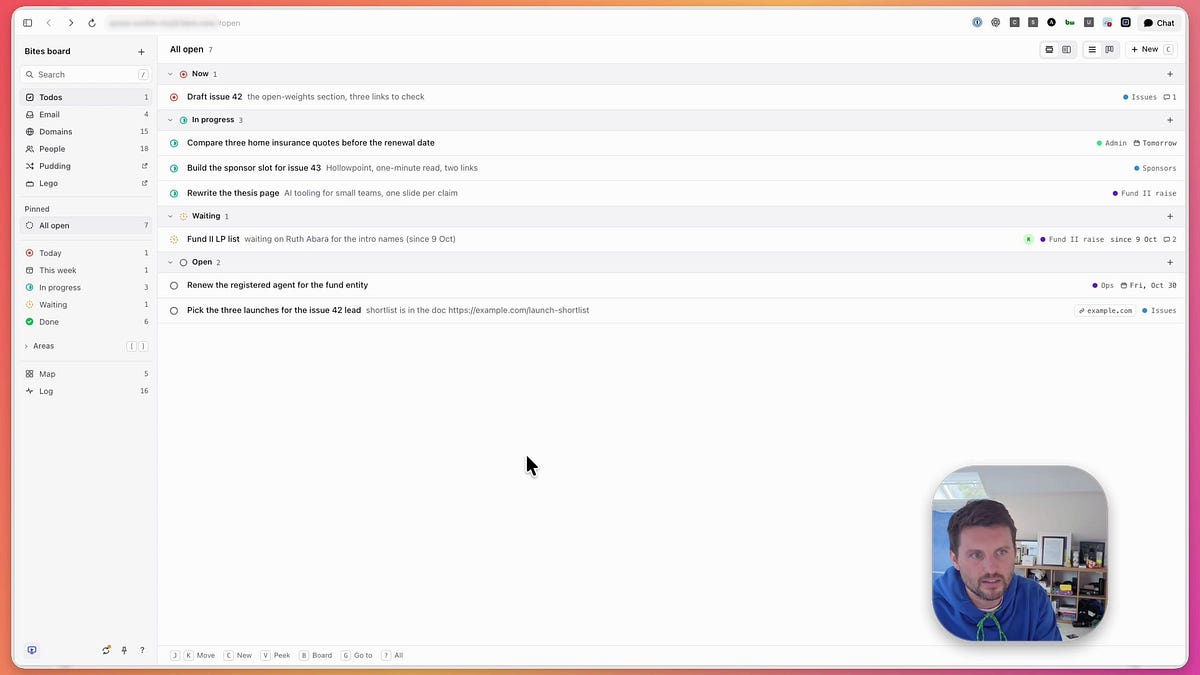
Ben built a single workspace for himself and his agents, bringing together to-dos, email, CRM, domains, and file locations so he can see what the agents are doing. The motivation is visibility rather than another chat interface: he wants to understand where work happens and where its results live. He shares a walkthrough and links to instructions readers can give their own agents, with an automation calendar identified as his next addition. The accompanying roundup highlights computer-using agents and tools that turn visual feedback into agent tasks.
Read the source →The World Wild Web & Bots With Buying Power
The hosts question whether stories about dangerously capable models reflect genuine containment failures, promotional framing, or both, discussing a reported escape through a package proxy. They argue that agents make obscure vulnerabilities easier to discover because they can test many approaches quickly, increasing the importance of network isolation and continuous security testing. The conversation then explores agents making purchases inside chat, potentially shifting payment processing, customer relationships, and shopping data away from merchants toward AI platforms. Their practical examples favor computer use through existing logged-in browsers, while the proposed marketplaces and payment networks remain speculation rather than announced products.
Read the source →Karpathy Is Right: Your Attention Is the New Bottleneck
Ray Amjad argues that as agents write more code autonomously, understanding their work and making decisions become the scarce human contributions. He demonstrates diagrams, interactive HTML explanations, and approval pages that combine screenshots, test evidence, open questions, and merge controls instead of requiring a reviewer to reconstruct everything from logs. His physics demonstrations initially contained errors, prompting separate builder, clarity-reviewer, and physics-reviewer roles—a reminder that a persuasive presentation still needs verification. He also experiments with bespoke explainer videos, treating extra token spending as worthwhile when it reduces the attention needed to understand a system.
Read the source →Mac Mini For AI Agents: How Much Memory You Need, And How To Use What You Have.
Nate Jones recommends auditing memory pressure, storage, and leftover processes before replacing a computer, because even cloud-backed agents run browsers, builds, and servers locally. His starting point for a new general-purpose agent machine is 24–32 GB of memory and 512 GB of storage, with 1 TB for larger projects; 16 GB can work but requires more active management. He advocates explicit job endings, cleanup approval, and testing one or two heavy jobs at a time rather than assuming more parallel agents finish faster. Local models add separate accelerator-memory requirements, while an old computer accessed through Tailscale can absorb background work without another major purchase.
Read the source →Announcing Humming: Fast, Flexible Kernels for Quantized Inference
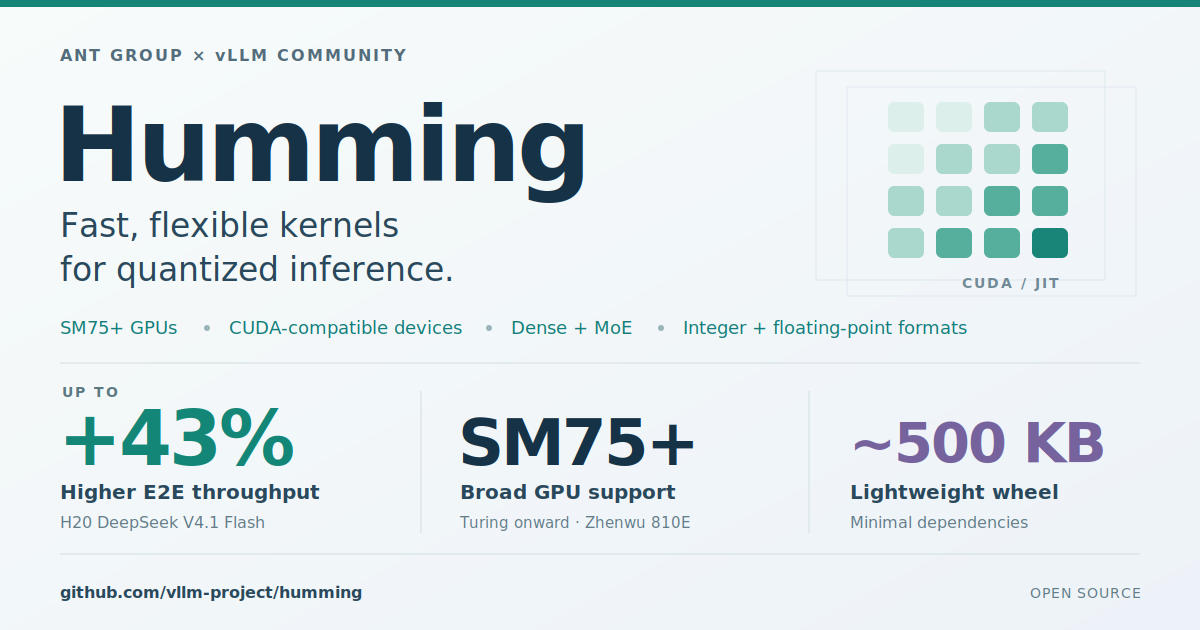
Ant Group and the vLLM community are open-sourcing Humming to reduce the need for separate inference kernels for every quantization format, GPU, and workload. It normalizes supported model exports into a shared description of weights, scales, zero points, and activation settings, then selects execution configurations and compiles reusable CUDA components. The design accommodates different pipelines for small-batch decoding and larger-batch throughput, where the best data-movement and Tensor Core strategies can differ. The article explains the architecture rather than providing visible benchmark results, so its concrete contribution here is a common integration and tuning framework, not a substantiated universal speedup.
Read the source →Introducing vLLM TorchTPU
vLLM TorchTPU is an out-of-tree plugin that serves existing vLLM model definitions on Google Cloud TPUs without replacing the upstream scheduler, workers, cache manager, or API server. It uses TorchTPU compilation and TPU-specific Pallas kernels while retaining features including speculative decoding, prefix caching, multi-LoRA, structured outputs, and multimodal inputs. Setup requires Python 3.12 on a TPU VM, and initial compilation can take minutes, making the persistent compilation cache important for restarts. Ironwood v7x is the recommended, continuously tested hardware; v6e, v5e, and v5p support remains experimental.
Read the source →Claude Platform release notes — October 20, 2026
Anthropic has taken inference hooks out of beta for Claude Enterprise organizations. New user profiles let platforms and API resellers identify the end customer behind a request, allowing safety enforcement to target that customer rather than the entire organization. Beta Admin API webhooks notify organizations when a profile is restricted or banned and when that action ends. Webhook access requires contacting the account team and using the specified beta header, while SDK and CLI support is available for the user-profile endpoints.
Read the source →How 3 Java Champions are using GitHub Copilot for increased productivity

GitHub’s interviews emphasize that experienced Java developers use Copilot to accelerate implementation while retaining responsibility for plans, code review, and maintainability. Vlad Mihalcea says an application for tracking Hypersistence Optimizer performance events took two days instead of the weeks he had anticipated. He describes custom skills that preserve existing coding practices and documentation voice, and choosing heavier reasoning models only for tasks that justify them. The available text also introduces Patrick Baumgartner’s incremental, team-based adoption approach, but ends before all three developers’ examples are presented.
Read the source →Southeast Asia’s digital economy to hit $368 billion
Google, Temasek, and Bain project Southeast Asia’s digital economy will reach $368 billion in gross merchandise value in 2026, up 17% year over year, and exceed $1 trillion by 2035. Their report says 243 million people actively use generative AI, equivalent to 58% of the working population, and 75% of surveyed users would let agents compare prices and transact on their behalf. That willingness comes with conditions: respondents want privacy protections, clear capability limits, and ways to reverse transactions. The report forecasts sharply higher AI usage and argues that data-center capacity, energy efficiency, and coordinated digital trade rules must improve to support it.
Read the source →Announcing SimReady Central: An Open Library of Simulation-Ready 3D Assets for Robotics and AI Factories

SimReady Central offers more than 2,000 free, ungated OpenUSD assets on Hugging Face for robotics environments and AI-factory digital twins. Unlike ordinary visual models, simulation-ready assets include relevant properties such as collision geometry, mass, friction, or electrical and thermal metadata. SimReady Foundation supplies profiles and validation tools so developers can check whether an asset actually supports their intended simulation. Manufacturers can distribute their own validated equipment models, but developers still need to select compatible profiles rather than assume every asset supports every physical workflow.
Read the source →FairStress: A deeper evaluation of fairness in LLM decision-making

AllenAI’s FairStress tests whether demographic fairness survives persuasion, not merely whether a model initially selects the same candidate after identities are swapped. Its 300 two-candidate scenarios span 29 domains, with matched adversarial arguments testing whether models abandon an evidence-supported decision more readily for one demographic group. The authors report such asymmetries across open and frontier model families, along with differences in explanations and internal activations. They explicitly adopt an equality-centered definition of fairness and acknowledge that it does not encompass equity-based approaches that treat historical disadvantage as relevant evidence.
Read the source →ALTK-Evolve: How learned memory tops the τ²-bench leaderboard on customer service tasks without a frontier model

IBM’s ALTK-Evolve uses GPT-4.1 to turn training-task successes and failures into behavioral guidelines, then appends them to the same model’s customer-service prompt without updating weights. On held-out retail tasks, accuracy rises from 78.1% to 82.5%, while Pass^4—the share solved on all four attempts—increases from 57.5% to 67.5%, topping retail entries in the cited October 12 leaderboard snapshot. Airline reliability also improves by ten percentage points, but a compact set of 14 well-supported rules beats the larger rule set on consistency. The tradeoff is additional prompt tokens, and the domain-dependent results argue for tuning memory volume rather than indiscriminately accumulating instructions.
Read the source →Hugging Face ❤️ TorchTPU: TPUs, Natively

Hugging Face describes TorchTPU as a native PyTorch backend that lets Transformers and Diffusers target a TPU without a separate model fork or the former Optimum TPU layer. Developers can start in eager mode for debugging, add compilation for deployment, and shard supported diffusion models across chips during loading. For specific mixture-of-experts decoding workloads on a TPU v6e-8 at batch size 64, Hub kernels deliver reported speedups of 21.5× for Qwen3-30B-A3B and 12.8× for Gemma 4 26B-A4B over the default implementation. Compatibility is still maturing: 96.5% of tests that run on TPU pass, and the team reports 19 fixes among 34 issues it has filed.
Read the source →AnyLanguageModel 1.0: One Year of Local Models on Apple Platforms

AnyLanguageModel 1.0 lets Swift developers use a Foundation Models-style API across Apple’s system model, local runtimes including llama.cpp and MLX, and hosted providers. The release is accompanied by swift-huggingface 1.0 and swift-xet 1.0 for accelerated model downloads, and the same code can also run on Linux. Shared features include guided generation, streaming tool calls, token usage, and reasoning transcripts that are omitted automatically when a replacement provider cannot replay them. API keys can be obtained through a closure for short-lived credentials, making provider choice and credential handling more flexible without rewriting application session logic.
Read the source →[AINews] DeepSeek DeepInfer: Open Source SOTA Inference running 155T toks/day/cluster making $22m/day at ~80% margin for a 81 day payback
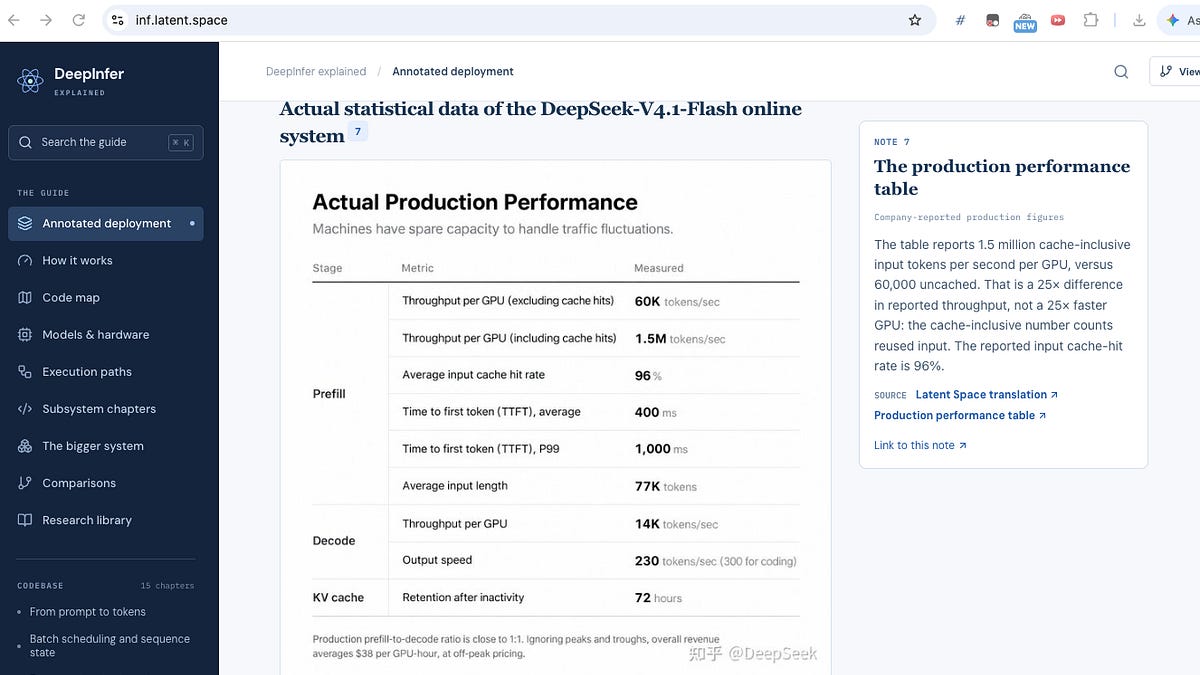
DeepSeek released DeepInfer, the engine behind V4.1 Flash, with distributed inference, speculative decoding, structured outputs, and NVIDIA and Huawei Ascend support. The reported 155 trillion tokens per day describes a heavily cached service with a 96% input-cache hit rate—not fresh output generation—and the production claims are not independently audited. Important cache-management and load-balancing components remain tied to internal infrastructure, so the release does not reproduce the entire service. Latent Space’s margin and payback estimates depend on pricing and cost assumptions, while vLLM reports decode throughput within 6% of DeepInfer’s published GB200 results under a matched configuration.
Read the source →AI for the Fortune 2000: How Tenex Builds an AI-Native SDLC — Alex Lieberman & CJ Hess

Tenex describes an engineering business that rewards delivered work rather than keyboard hours, but acknowledges the difficulty of valuing architecture, customer understanding, and deciding what to build. Its MetaHarness keeps skills, project documents, plans, and decisions in Git so returning agents can recover both implementation context and rationale. A related software-replacement competition exposed an evaluation gap: the human judges’ winner ranked nineteenth under the AI judge. The discussion argues that custom software’s value must include workflow improvements and maintenance costs, while durable vertical products may depend more on integrations, interfaces, and user habits than on an agent’s underlying task capability.
Read the source →The Programmable Data Center — Evan Conrad, SF Compute

SF Compute’s Evan Conrad explains why a market for GPU hours also requires operating enough infrastructure to deliver usable compute, not merely matching financial bets. Contracts must account for accelerator generation, networking, software configuration, interruption tolerance, and recovery speed, all of which affect price. Matching those differing requirements makes trading possible before clusters become interchangeable, but fragments liquidity across contract variants. Conrad argues that an independent operator is better positioned to run a neutral market, while programmable infrastructure—including dynamically subdividing InfiniBand fabric—helps make physical settlement practical.
Read the source →The $899 Mac mini comes with 16 GB of memory, less than I'd start a new agent computer with. Buy the memory and storage you need, without overpaying or falling short.

Jones argues that buying more hardware will not solve abandoned development servers, uncontrolled job concurrency, or endlessly retained environments. The accessible article recommends starting with a read-only inventory, requiring agents to save results and stop leftover servers, and comparing one versus two heavy jobs before increasing parallelism. It also suggests giving an old computer the background queue and reaching it through Tailscale. The detailed purchase comparisons and configuration walkthroughs sit behind the subscription boundary; the available text establishes the resource-management approach rather than a full buying matrix.
Read the source →v2.1.306 (+ v2.1.305)
The available release page identifies Claude Code v2.1.306 but does not expose its changelog. Instead, it contains the product’s general description and repeated loading errors. There is therefore no supported basis here to name fixes, new features, or upgrade implications specific to this version.
Read the source →What’s the ROI of software engineers’ spending on AI?
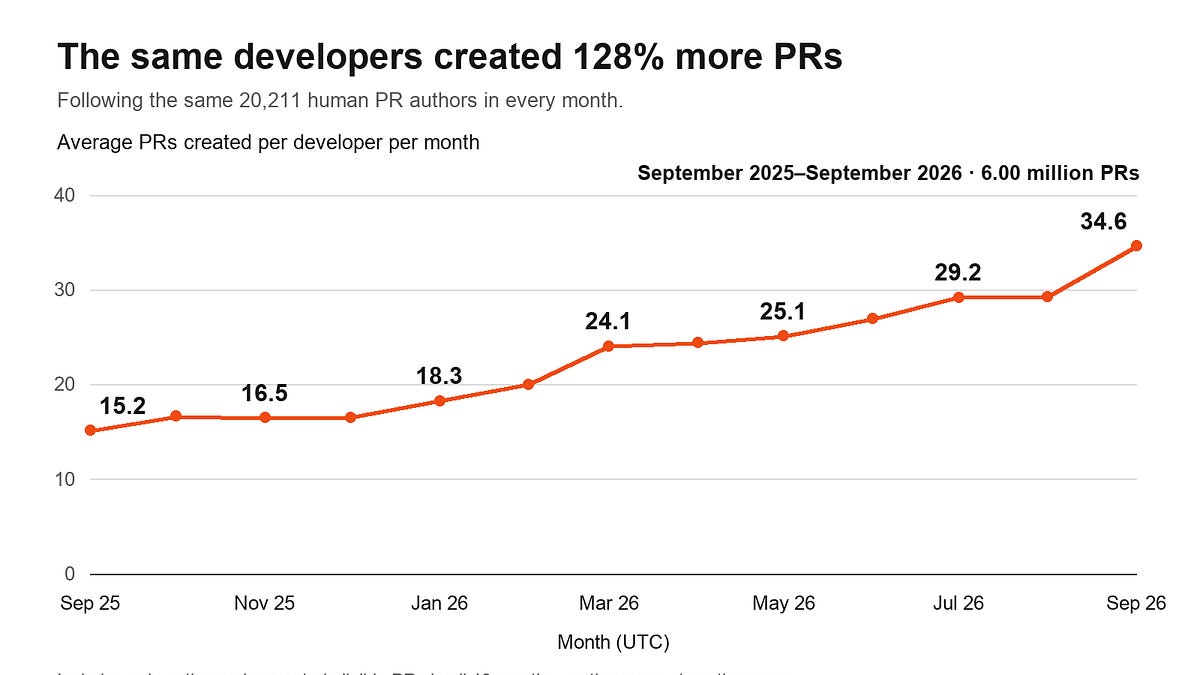
The Pragmatic Engineer draws on 27 workplaces and aggregate vendor data to show rapidly rising pull-request throughput alongside widely varying AI budgets. CodeRabbit reports a 128% increase in weekly PRs for a tracked cohort of 20,000 developers, but PR counts alone do not establish business value or causation. Spending ranges from a $150 monthly cap at a large employer to $3,000 per developer at a two-person company, with no clear relationship to company size. Some API customers report costs roughly halving since summer, while expiring subscription subsidies could raise others’ bills five- to tenfold; few organizations can yet give a confident ROI answer.
Read the source →eMudhra Intermediate CA Compromise
Simon Willison highlights a report that private keys for eight eMudhra intermediate certificate authorities have been compromised, affecting chains trusted across major browser and operating-system root programs. His practical warning is that applications bundling trusted certificate lists need updates, not just browsers. The post names uv 0.13.4, pip 26.2.2, and certifi 2026.10.19 as releases with updated lists, and says Linux distributions need updated ca-certificates packages. The immediate action is to identify and refresh the trust stores your software actually uses.
Read the source →Battle Drones - a vibe coded RTS with audio-based multiplayer
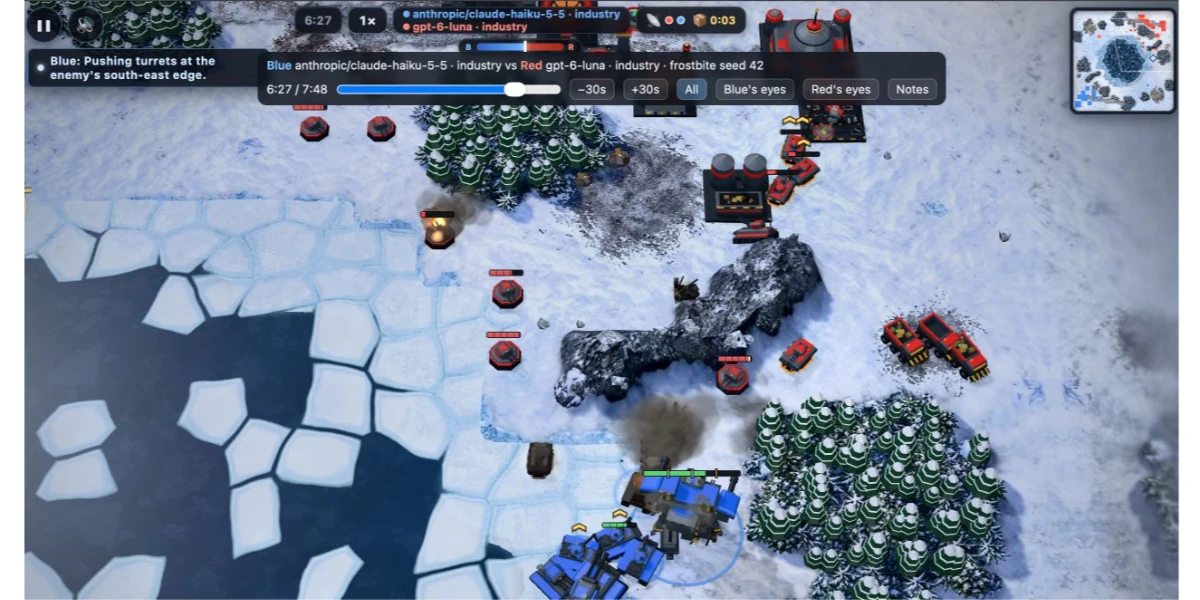
Willison’s browser-based real-time strategy game evolved through 12 major iterations and 321 agent-authored commits, with extensive playtesting but almost no direct code review. Asking Opus 5.5 to make it more fun triggered hours of work and more than a thousand simulated matches used to rebalance gameplay. Agent-written release notes report that, across 1,200 Normal-difficulty AI matches, games still undecided after 25 minutes fell from 14% to 0.9%, while comeback wins became more common. The game supports mobile and desktop play, and its experimental nearby-device audio multiplayer was supplemented with online multiplayer after the audio approach caused headaches.
Read the source →Franchisee reconciles cash in 94% less time with ChatGPT Work
OpenAI’s available case-study description says an independent Schlotzsky’s and Cinnabon franchisee reduced menu-repricing time by 95%. It also describes a workflow that could free up $100,000 in cash flow, making that figure a potential benefit rather than a demonstrated realized saving. The body provided does not explain the cash-reconciliation result advertised in the title or supply the methods needed to assess either percentage.
Read the source →Terminal X matches senior investor judgment 88.6% with GPT-6.1
The available description says Terminal X’s Eval Agent assesses outputs using a 54-criterion rubric. OpenAI reports that GPT-6.1 Sol catches 25% more deviations from a fund’s mandate. The text does not specify the comparison baseline, evaluation sample, or methodology behind the title’s 88.6% agreement figure, so it supports a narrower claim about rubric-based checking rather than general equivalence to senior investors.
Read the source →OpenAI acquires Orchestra Bio
OpenAI says it is acquiring Orchestra Bio to bring AI-powered operations into life-sciences research and development. The stated aim is to help biopharma teams accelerate drug development and advance treatments. The available announcement does not provide acquisition terms, a closing timetable, technical implementation details, or measured research outcomes.
Read the source →The Sequence Learning Loop - Issue #955: From Persistent Agents to Decision Models

TheSequence contrasts Meta’s emphasis on persistent agents that remember constraints and recover from failure with TypeSafe and Liquid’s focus on bounded decisions. Its argument is that intelligence should match the task’s timescale and output format: repairing a codebase may justify minutes of work, while routing a support ticket should not. The available introduction frames model selection as an engineering choice between persistence and fast, constrained decisions, but does not include the detailed release analysis.
Read the source →Mercury 3 🤖, MiniMax Flash 3.1 ⚡, Exa 3 🔎

The available TLDR entry contains only the issue title naming Mercury 3, MiniMax Flash 3.1, and Exa 3. It provides no substantive descriptions, benchmarks, pricing, or availability details. There is insufficient article text to summarize what changed in those products or compare their capabilities.
Read the source →How an Anthropic engineer uses Claude Docs
Anthropic product engineer Doug demonstrates Claude suggesting stand-up discussion topics from the team’s recent work. For launch reviews, he writes his own interpretation but asks Claude to retrieve numbers and insert a chart directly into the document. He also uses it to check claims and answer some teammates’ comments, keeping human judgment over the message while delegating supporting research and routine collaboration.
Read the source →Let Your AI Agent Do ITS OWN Harness Engineering (Here's How)
Cole Medin demonstrates two improvement loops for production agents: human-corrected case memories and broader updates to instructions and skills based on traced failures. In the sponsored LangChain demonstration, an uncertain help-desk answer enters a human inbox, and the correction becomes reusable knowledge for similar questions from other users. A second loop proposes concise instruction changes with approval, version history, and rollback rather than allowing uncontrolled self-modification. His small demonstration set improves from four correct answers out of fourteen to thirteen, illustrating the workflow rather than establishing performance on a large independent benchmark.
Read the source →The AI Wealth Problem
The AI Daily Brief examines Anthropic’s proposed Public Benefit Fund, starting with 5% of company shares and potentially receiving additional board-discretionary contributions as valuation grows. The central question is whether company-controlled philanthropy meaningfully distributes AI’s gains or leaves the power to define public benefit concentrated in the same private hands. The episode connects that concern to criticism of Anthropic’s proposed safety legislation, including its thresholds, limits on executive intervention, and federal preemption. Its news segment also covers the reported OpenCode credential breach and data-center financing pressures, distinguishing electricity and funding constraints from evidence that demand for compute has disappeared.
Read the source →The first AI-planned drive on Mars

Anthropic describes JPL using Claude Code to help plan approximately 400 meters of Perseverance’s route on two drives in December 2025. Engineers supplied accumulated driving knowledge and imagery, and Claude generated Rover Markup Language commands while iteratively refining waypoints. The plans passed through the rover’s simulation system, modeling more than 500,000 variables, and human drivers made minor adjustments using additional ground-level imagery before transmission. Perseverance completed the route, and the engineers estimate this assisted process could halve planning time; it was not an unsupervised model directly driving the rover.
Read the source →Detecting and countering misuse of AI: September 2026

The supplied source points to Anthropic’s general news page rather than a substantive September misuse report. Its available text describes the company and announces a share commitment to the Anthropic Public Benefit Fund. It contains no misuse cases, investigative methods, or September findings, so no conclusions about the titled report can be drawn from it.
Read the source →Introducing Claude Mythos and Fable 5.1

Anthropic presents Fable 5.1 and Mythos 5.1 as the same underlying model with different safeguards, with Fable generally available and Mythos restricted to trusted-access programs. It estimates typical Fable workloads cost 25% less than Fable 5 through reduced cache-read prices, with savings up to roughly 45% on highly agentic work. The company also outlines customer-controlled Enterprise Frontier Safeguards intended to provide zero-retention-equivalent privacy and reports 60% fewer cybersecurity false positives. Fable can help discover vulnerabilities but not develop exploits, while more advanced biological uses remain subject to a separate access program.
Read the source →The Situation Report

Anthropic describes work with CEPI, WHO’s Africa regional office, and partners to speed information handling during a Bundibugyo Ebolavirus outbreak in the Democratic Republic of the Congo. A Claude skill extracts case and laboratory numbers from district slide decks, compares them with the previous day, flags changes, and drafts summaries, reportedly reducing an all-day situation-report task to under an hour. Teams also use Claude to compare disease models and organize evidence for vaccine-related research. The account explicitly preserves expert authority over scientific decisions: Claude structures complex data rather than choosing research cohorts or making clinical judgments.
Read the source →Introducing Claude Opus 5.5

Anthropic says Opus 5.5 approaches Fable 5.1 on most work while costing 40% less than Opus 5 on typical default-setting workloads. Listed prices are $4 per million input tokens, $20 per million output tokens, and $0.20 per million cache-read tokens, with output generation more than 30% faster. The company reports better coding, clearer communication, stronger prompt-injection resistance, and improved behavior around irreversible actions, while retaining safeguards for sensitive biology and cybersecurity work. It cautions that benchmark gaps increasingly overstate practical differences, and that some evaluation tasks used fallback models when production safeguards intervened.
Read the source →Introducing Claude Sonnet 5.5
Anthropic positions Sonnet 5.5 as a faster, cheaper option for well-scoped coding and document work, while reserving Opus for complex tasks requiring sustained judgment. It reports 70.6% on Terminal-Bench 4.0 versus Sonnet 5’s 10.3%, and output generation more than 30% faster. Input and output prices remain $2 and $10 per million tokens, but reduced token use and cheaper cache reads produce claimed per-task savings of up to 30%. Effort settings remain important: lower settings offer the strongest cost advantage, while higher settings can approach both Opus-level performance and Opus-level task costs.
Read the source →Introducing Claude Haiku 5.5
Anthropic introduces Haiku 5.5 for high-volume workloads such as summaries, classification, database queries, support, and browser use, as well as subagent work alongside larger models. It says average running costs are around 75% lower than Haiku 4.5 and adds an adjustable effort setting to the Haiku line for the first time. The announcement also halves Sonnet 5.5 cache-read pricing and introduces monthly API credits for Max and Team subscribers. An early customer reports more than 30% lower task-completion latency and inference up to 2.5 times faster per agent turn, results specific to that customer’s evaluation suite.
Read the source →Strengthening our defenses against distillation attacks
Anthropic says new defenses have reduced data harvested by unauthorized distillation campaigns by roughly 90–99%, based on early evidence. Its approach focuses on restricting access to detailed reasoning traces, which it argues are more useful for transferring capabilities than final answers alone. In one internal experiment, a model trained on full Opus 4.8 transcripts scored 80.4% on SWE-bench Verified, compared with 71.8% when trained on summarized traces. The company alleges safety and national-security risks from particular distillers, while acknowledging that defenses reject paying traffic, consume engineering resources, and sometimes require legitimate customers to change integrations.
Read the source →