Agent builders add audits as coding costs fall
Summary
Cheaper generation is making verification, rather than code production, the scarce resource: the practical workflows invest in audits, independent critics, realistic tests, and explicit permission boundaries. The strongest tension is between moving humans out of routine execution and retaining enough understanding to remain accountable when agents fail. Across model compression, token-saving instructions, and benchmark gains, the recurring warning is the same: an efficiency metric can improve while the behavior users actually need gets worse.
Show HN: Qwen3-4B with the AI writing tics trained out
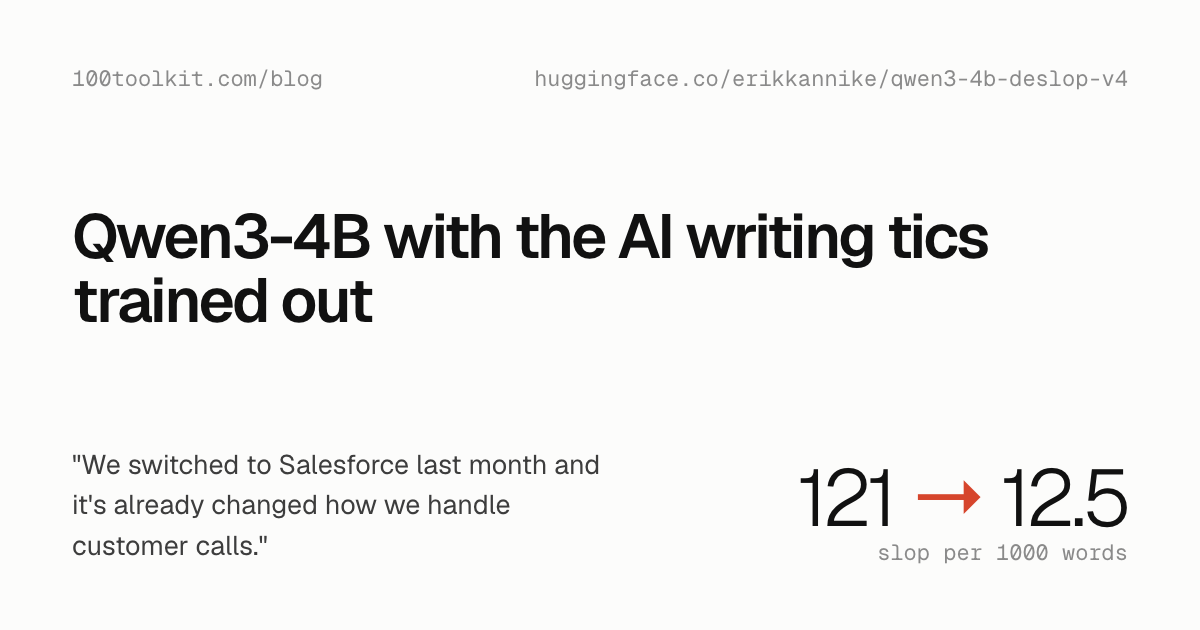
The author offers a modified Qwen3-4B for short English prose, including a 2.5 GB quantized build for Ollama or llama.cpp and a LoRA adapter paired with a tiny neuron edit. Its writing is plainer, but the author reports a flat voice, invented names and places, and difficulty respecting word limits. Evaluation uses the author's regex-based style guide rather than blind reader comparisons, and code, tool use, other languages, and long conversations remain untested. The next step is better human-writing examples for the teacher, larger student models, and blind preference tests—not a claim that cleaner style has solved factual reliability.
Read the source →DeepSeek’s new Flash ⚡, Replit drops Anthropic 🔄, Anthropic’s workforce 💼

The available text describes WorkOS Pipes, an integration service intended to replace separate OAuth, refresh-token, and scope handling for each tool an agent accesses. It advertises more than 300 integrations, a connection widget, automatically refreshed access tokens, and session-scoped access through Pipes MCP. The supplied passage contains no reporting on the DeepSeek, Replit, or Anthropic stories named in the headline, so it does not establish what happened in those stories.
Read the source →Claude Code's #1 Token Saving Skill Just Got Upgraded (But Is It BS?)
Chase AI's self-reported tests found Ponytail 5 produced 61% less code, cost 24% less, and ran 35% faster than unmodified Claude Code on the skill's benchmark tasks. A seven-word brevity instruction saved even more, but in a separate 24-build comparison it left tests less consistently and introduced two data-loss bugs, versus none for Ponytail. The important tradeoff appeared in underspecified frontend work: plain Claude supplied 82% of the grader's desirable extras, versus 41% with Ponytail, while asking Ponytail to add polish could erase the cost advantage. The recommendation is project-level testing: tightly specified implementation may benefit, but exploratory design and tiny surgical changes may not.
Read the source →Snyk's Manoj Nair: Skills and MCP Are the New npm
Manoj Nair separates agent security into insecure output, a new supply chain of skills and MCP servers, and dangerous behavior by over-permissioned agents. He argues that sandboxing limits infrastructure damage but cannot determine whether an application-level action matches the business's intent; agent identity, dynamic authorization, and behavioral steering remain incomplete. On remediation, he reports a Snyk benchmark with 90% merge success versus 60% for Claude alone and 61% greater token efficiency, alongside an internal campaign reporting 93% merge success across more than 100 repositories. These are vendor-reported results, and the discussion emphasizes strong tests and explicit organizational ownership of risk before allowing automatic merges.
Read the source →Ray Myers: Why the Dark Software Factory Is a Bad Idea
Ray Myers rejects the idea that agents writing faster than humans can read is a reason to stop inspecting code altogether. He grounds that position in 19 years of bug-prevention work, including three focused on coding agents, and urges engineers to “keep the lights on.” This is a short preview of his “Dark Factory Considered Harmful” talk at AI DevCon New York on November 2–4, rather than a detailed presentation of evidence or an alternative workflow.
Read the source →My Jev Pi Durable Agent CURATES News: HYPE, FACT, or SIGNAL
IndyDevDan demonstrates a persistent news agent whose browser and terminal interfaces connect to the same server-side state, with scheduled work continuing when neither client is active. SQLite-backed Pi Durable tasks gather, filter, deduplicate, and rank candidates, while Jev classification gates more expensive language-model calls. The product distinguishes actionable “signal” from merely true facts and attention-driven hype, and uses votes plus editable keyword and source weights to personalize later recommendations. His broader argument is to move gradually from supervising every action to reviewing background work, using durable state, narrow purpose-built tools, and feedback rather than an unattended chat window.
Read the source →Achieving near-zero-downtime scaling in Elastic Expert Parallelism
vLLM reports reducing the serving pause when scaling DeepSeek V4 Pro from 16 to 20 GB200 GPUs to 0.82 seconds, compared with 100 seconds for its earlier Elastic EP implementation and 197 seconds for a restart. Scaling back to 16 GPUs paused serving for 1.96 seconds rather than 56 seconds. The implementation prepares workers, weights, and communication in the background, then briefly commits the topology change; NIXL EP changes communicator membership in place so existing workers can retain their CUDA graphs. That last detail matters: asynchronous preparation without graph reuse still left pauses of 58 seconds up and 44 seconds down in the same benchmark.
Read the source →Design Docs, Nightly Audits, and Vycari's Agent Development Loop
Vycari CTO Allen Hutchison describes two founders landing well over a thousand pull requests in roughly a month, with planning documents directing implementation and nightly jobs reconciling those documents with the code. Independent reviews, reflection on user journeys, and review follow-ups turned into agent-ready issues keep the loop moving, while Hutchison retains final merge authority. The company puts consumer agents inside familiar mini apps, such as calendar booking that respects preferences and buffer time. Python, Postgres, VPS hosting, smaller repositories, and cheap models following procedures written by stronger models support a target subscription price of $5 a month.
Read the source →Copilot model policy API for enterprise, orgs, and teams
GitHub has made REST endpoints for reading and updating Copilot model policies generally available at the enterprise, enterprise-team, enterprise-app, and organization levels. Administrators can use GET and PATCH requests to manage model availability programmatically instead of relying solely on settings pages. Enterprise policy can delegate control to organizations in organization mode, or to teams and apps in enterprise teams mode, allowing automation to follow the enterprise's governance structure.
Read the source →GitHub Copilot models deprecated on October 19, 2026
GitHub says the model deprecations announced on September 18 have now taken effect across most Copilot experiences, including chat, edits, agent mode, and completions. Users should move workflows and integrations to supported models, and enterprise administrators may need to enable replacements through model policies before they appear in the selector. No action is needed to remove deprecated models. The available article text omits the affected-model list, so it does not identify which specific models were retired.
Read the source →How AI Scaling Laws Work, and the Wall Money Can’t Fix
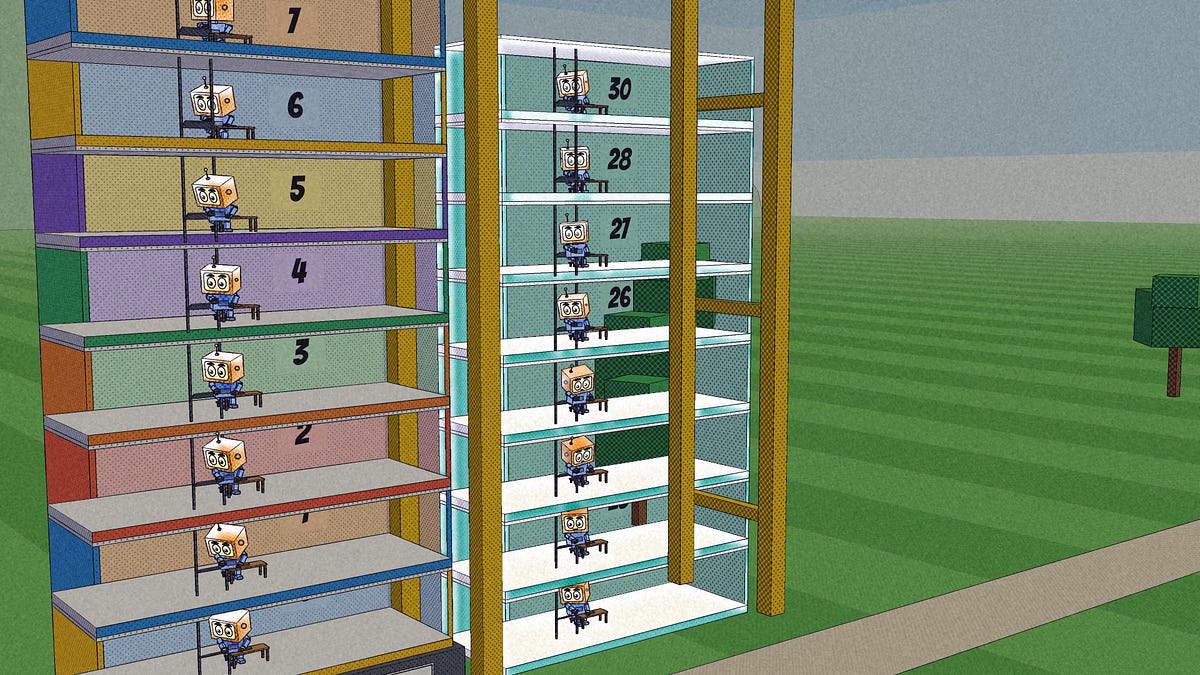
DiamantAI reports removing eight of Mistral 7B's 32 layers without retraining: accuracy on 700 multiple-choice questions fell only from 66% to 61%, yet all five simple free-response answers broke down. The argument is that preserving a single choice among answers is much easier than preserving a sequence of generated tokens, where errors compound. The article explains diminishing returns through partially redundant layers and limited representational width, while distinguishing reducible modeling error from the irreducible uncertainty of language itself. Its practical warning is to test the actual generation workload before accepting a smaller or compressed model on the strength of a leaderboard score.
Read the source →A Potentially Historic AI Breakthrough
The AI Daily Brief examines Nick Cammarata's hypothesis that neural networks are far more interpretable than earlier tools suggested, with apparently unrelated neuron activations sometimes reflecting a coherent feature researchers had missed. It describes improved visualization methods and self-reported findings of roughly 90% single-main-job detectors in a modern OpenAI model, while noting that the full technical paper and independent checks were not yet available. Critics including Neel Nanda question the definitions, argue that superposition remains plausible, and distinguish readable components from understanding an entire decision. The potential payoff is better investigation of hidden reasoning or deception, but the episode explicitly treats “alignment becomes a normal science” as a possibility rather than a demonstrated safety solution.
Read the source →How to continue a GitHub Copilot app session in VS Code

GitHub's tutorial explains that “Open in VS Code” carries a Copilot app session's conversation, plan, changes, and associated worktree into the editor rather than starting a fresh chat. Users can inspect the diff, ask follow-up questions with the original context intact, and make manual edits directly in the same isolated working tree. The guide emphasizes reviewing edge cases, repository conventions, test coverage, and unrelated changes, then running the project's normal tests and local validation. The handoff is designed to combine agent implementation with hands-on review and updates to the session's pull request.
Read the source →Import AI 477: In which I tell the IMF the Singularity has begun
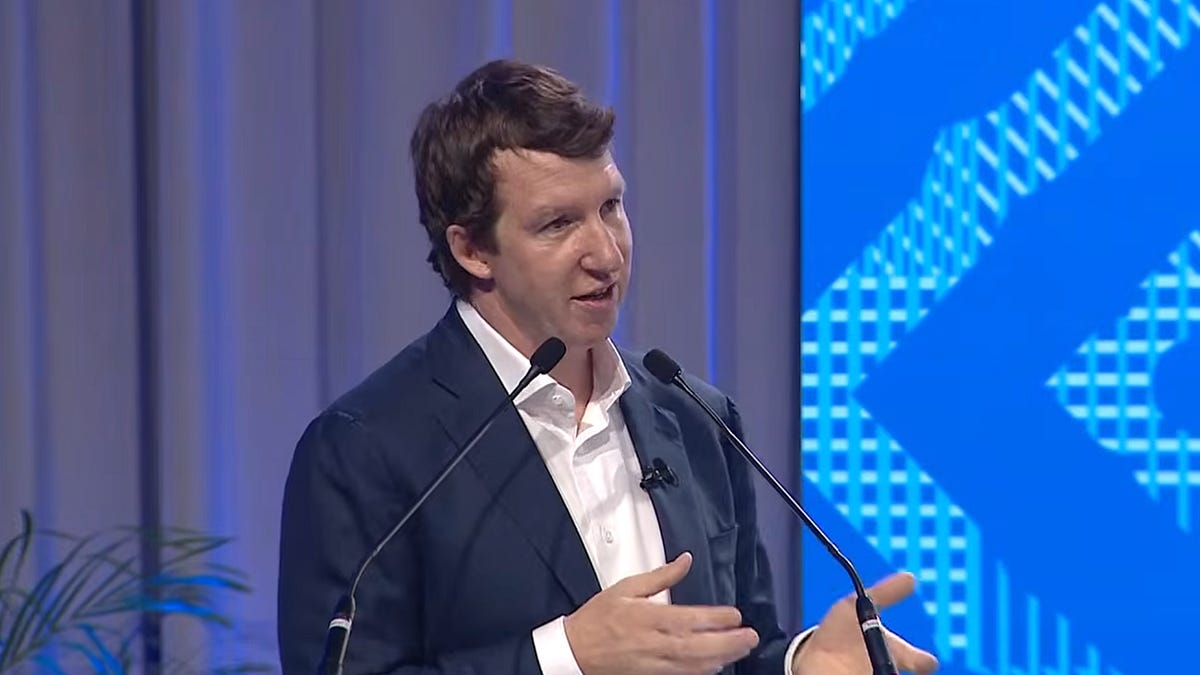
In his Per Jacobsson lecture at the IMF meeting in Bangkok, Anthropic co-founder Jack Clark argues that AI's work at the frontier of science and contribution to its own development mark the beginning of the singularity. He warns economists, bankers, and policymakers to expect faster scientific and technical progress than conventional expectations allow, with consequences for national security, infrastructure, health, and economic growth. The speech focuses on sharing the benefits through foresight and restraint, while acknowledging both potential peril and Clark's own responsibility as a participant in the industry. This is his interpretation of the trajectory, not evidence of a universally agreed threshold having been crossed.
Read the source →MPS in PyTorch 2.15

Hugging Face's PyTorch team details FP8 support and dedicated Metal kernels coming to MPS, with Apple silicon, macOS 15 or later, and Python 3.11 or later required. Across 96 BF16 linear-layer shapes, a new decoding path delivers a 1.23× geometric-mean speedup, while compiled MoE models on an M3 Ultra generate about 1.3× more tokens per second. A large-vocabulary FP32 softmax falls from 57 to 7 microseconds in the cited example, but that operation-level gain should not be mistaken for an equivalent whole-model speedup. The update also adds GPU-native grouped matrix multiplication, more complex linear-algebra support, and fixes for numerical extremes in singular-value decomposition.
Read the source →TorchNeuron: running HF models on AWS Trainium is easier than ever

TorchNeuron introduces a native PyTorch backend for AWS Trainium, with a public beta beginning October 20 and support for eager execution, torch.compile, and standard distributed primitives. Hugging Face recommends using Transformers, Diffusers, Accelerate, PEFT, and TRL directly rather than the older Optimum Neuron layer. It reports out-of-the-box support for 89% of the top 100 text-generation architectures, up from 46% with Optimum Neuron, and shows training that saves ordinary portable Transformers checkpoints. Hardware-specific tuning has not disappeared: static generation caches remain strongly recommended to avoid frequent recompilation, and parallelism still needs to match the available NeuronCores.
Read the source →v2.1.304
Claude Code adds guided auto-mode setup across more providers, a read-only Managed Agents security-configuration check, and a mod permission response that explicitly requires a person and refuses approval when nobody can be asked. It also warns Pro and Max users when resuming an inactive conversation would consume a noticeable share of their five-hour allowance. Notable fixes restore safety prompts for recursive deletion around mounted drives, prevent plugins from extending headless runs past stop conditions, and address worktree cleanup that could lose commits. Further fixes cover subagents forgetting recent work, gateway compatibility, sandbox paths, and repeated skill-list context overhead.
Read the source →[AINews] not much happened today

Latent Space highlights DeepSeek V4.1 Flash 1017, a 552B-total/16B-active open-weight MoE with a million-token context window, unchanged peak pricing of $0.30 per million input tokens and $1.20 per million output tokens, and an Artificial Analysis score of 45, up six points. Reported agent and browser benchmarks show substantial gains, but the roundup also notes exploration tasks using 30–40% more tokens without better results, comparisons confounded by a harness update, and disputed constraint-following or benchmark behavior. It cautions that other models can score higher at lower cost per task, so low token prices do not automatically imply the best value. MiniMax M3.1 Flash is also announced at $0.15/$0.60 per million input/output tokens, with weights scheduled for October 23 and vendor claims of one-third the cost and three times the speed of M3.
Read the source →My obituary for programming
Simon Willison highlights Jeremy Scheff's account of what coding agents take away from programmers who loved solving the puzzles themselves. The quoted passage describes a profession that rewarded both logical problem-solving and control over strategy, timelines, and what was possible. Willison draws a distinction between people primarily motivated by producing working systems, for whom LLMs are a continuing gift, and those whose satisfaction came from directly working through the problems. His point is that increased productive power does not make the loss of that craft experience imaginary.
Read the source →The Sequence Knowledge - Issue #954: Learning RSI: How AI Learns to Design Learning Algorithms

TheSequence uses DeepMind's DiscoRL to distinguish getting better at a task from improving the rule that turns experience into learning. A neural network represents the update rule, and a population of agents supplies the experience used to discover better rules; Disco57, discovered on Atari57, subsequently trained fresh agents on ProcGen and DMLab-30 without further meta-training. The article frames that transfer as evidence that a learned learning procedure can generalize, not proof of an unlimited recursive improvement loop. Practical adoption still depends on interpreting the rule and amortizing discovery costs across later runs, while a genuinely recursive claim must show gains after compute and evaluation costs are counted.
Read the source →Advancing coding in low‑resource programming languages
OpenAI's available description says it is improving ChatGPT's handling of low-resource programming languages. It names new evaluations covering software engineering, SQLite, and COBOL migration. The text provides no methods, benchmark scores, model identifiers, or migration results, so it does not establish the size of the improvement or its reliability on production code.
Read the source →Together Post-Training: frontier-grade model shaping, the way that fits you

Together introduces a service for supervised fine-tuning and reinforcement learning in which customers control the training loop, data, environments, and agent harnesses while Together manages the underlying infrastructure. Dedicated GPU “Model Resources” host training sessions, support multiple LoRA adapters or full-weight training for selected models, and separate trainers from rollout generators. Customers choose when updated weights reach generators, can use asynchronous RL, and can supply custom objective gradients alongside standard losses. Launch models include Muse Spark Open, GLM 5.3, Kimi K3, and Qwen 3.8-27B; the pitch is task-specific quality and deployment ownership, rather than a published universal performance gain.
Read the source →Vercel's CEO Just Unveiled The Greatest AI Coding Workflow Ever
AI Labs translates an interview with Vercel's CEO into a workflow centered on checking whether agent output advances the product plan, not merely counting tokens or shipped changes. Its proposed “direction” command compares implementation with requirements, while explicit non-negotiable constraints, security scans, and quality gates define acceptable tradeoffs. Separate breaker agents stress-test copies of data, and browser-only first-time-user agents look for confusing flows without reading the implementation. The final feedback loop routes clear failures toward fixes and ambiguous customer complaints toward human judgment, with error-free sessions and time from report to resolution serving as more useful measures of progress.
Read the source →