Anthropic launches Claude Haiku 5.5 at Luna pricing
Summary
The day’s releases are less about a single frontier breakthrough than turning capable models into economical, governable infrastructure: Haiku targets cheap high-volume work, decision models target frequent routing judgments, and vLLM targets the serving bottleneck beneath them. At the same time, Copilot sandboxing, secret scanning, and cloud-native harnesses show that autonomy is being packaged with containment, policy, and operational control rather than treated as a model-only problem.
Show HN: Agent.reviews – Where AI agents read and write reviews on tools
Agent.reviews is a directory for discovering and comparing tools, with reviews intended to be read and written by coding agents. It groups products by categories including repositories, pull requests, and code review. The site provides an agent-facing skill file, installation instructions, and Markdown versions of every page.
Read the source →Show HN: NanoMuse – An open-source AI agent for your phone and computer
nanoMuse is a GPL-3.0 open-source personal agent spanning a phone app, desktop app, web console, and relay. Each device runs its own agent and can coordinate through the relay; conversations travel through it while files and screenshots remain on the device where they were created. Users can take a free community-relay allowance, bring their own key, self-host the relay, or run without a server.
Read the source →Mistral Large 4 🧠, OpenAI Decisions API ❓, Nano Banana 2.1 🍌

The captured page consists of sponsorship notices rather than the newsletter’s reported items. It promotes an NYC agent-security summit and an enterprise agentic-AI security buyer’s guide. No article body was available here to substantively summarize the title’s referenced releases.
Read the source →Claude Haiku 5.5 Is LIVE (RIP OpenAI)
The video presents Haiku 5.5 as Anthropic’s long-missing fast, inexpensive model for repetitive tasks, saying it is about 75% cheaper than Haiku 4.5. It highlights reported gains over GPT-6 Luna on knowledge work, computer use, agentic coding, FrontierCode, and visual reasoning, while noting Haiku remains below Sonnet 5.5. It also flags Sonnet 5.5’s cheaper cache reads as a meaningful reduction for agentic workloads.
Read the source →What's new in Claude: September recap
Anthropic says it merged Chat and Cowork into one Claude experience, so users state their goal rather than select a mode, and cloud execution can continue after the laptop is closed. Conversations can now turn directly into editable docs, slides, or designs without re-briefing the model; shared Claude Docs also lets collaborators request edits in comments. The recap positions Opus 5.5 for exploratory work and faster Sonnet 5.5 for iterative revisions, with the new asset tools on paid plans.
Read the source →This Just Fixed Your Claude Code Setup's Biggest Flaw
The video evaluates eight tools intended to strengthen Claude Code when paired with Jev, especially around safety, prompting, completion verification, and search visibility. Its lead example, Toolgate, asks Jev to approve actions before Claude executes them and blocks irreversible changes, prompt injections, and tools trying to exfiltrate data. The presenter argues this is stricter than Claude Code’s auto mode and can use several Jev-capable providers.
Read the source →Jev Can SERIOUSLY Supercharge Your AI Second Brain (Here's How)
The presenter describes four proven ways to embed Jev decision models in a personal “second brain,” based on actual use rather than a hype-driven demo. They report making 38,000 calls and sending 55.3 million tokens through OpenRouter in one week for about $21, suggesting the economics make frequent semantic decisions practical. The aim is to use the model inside automations that manage personal or business information, not merely as a chat assistant.
Read the source →Google's Gemini Argon Is #1 On A Leaderboard. It Hasn't Passed The Benchmark That Matters.
The video argues that leaderboard position is a poor proxy for usefulness when Gemini Argon is only available to a limited trusted-defender group. It contrasts labs with visible customer focuses—Anthropic in enterprise, OpenAI across enterprise and consumers, Meta in consumer AI—and questions what Argon concretely enables for Google users. Its proposed benchmark is “customer obsession”: relentless real-world use, feedback, and repair rather than benchmark scores alone.
Read the source →DeepSeek-V4.1-Flash on vLLM: 5x Agentic Throughput Since Day 0
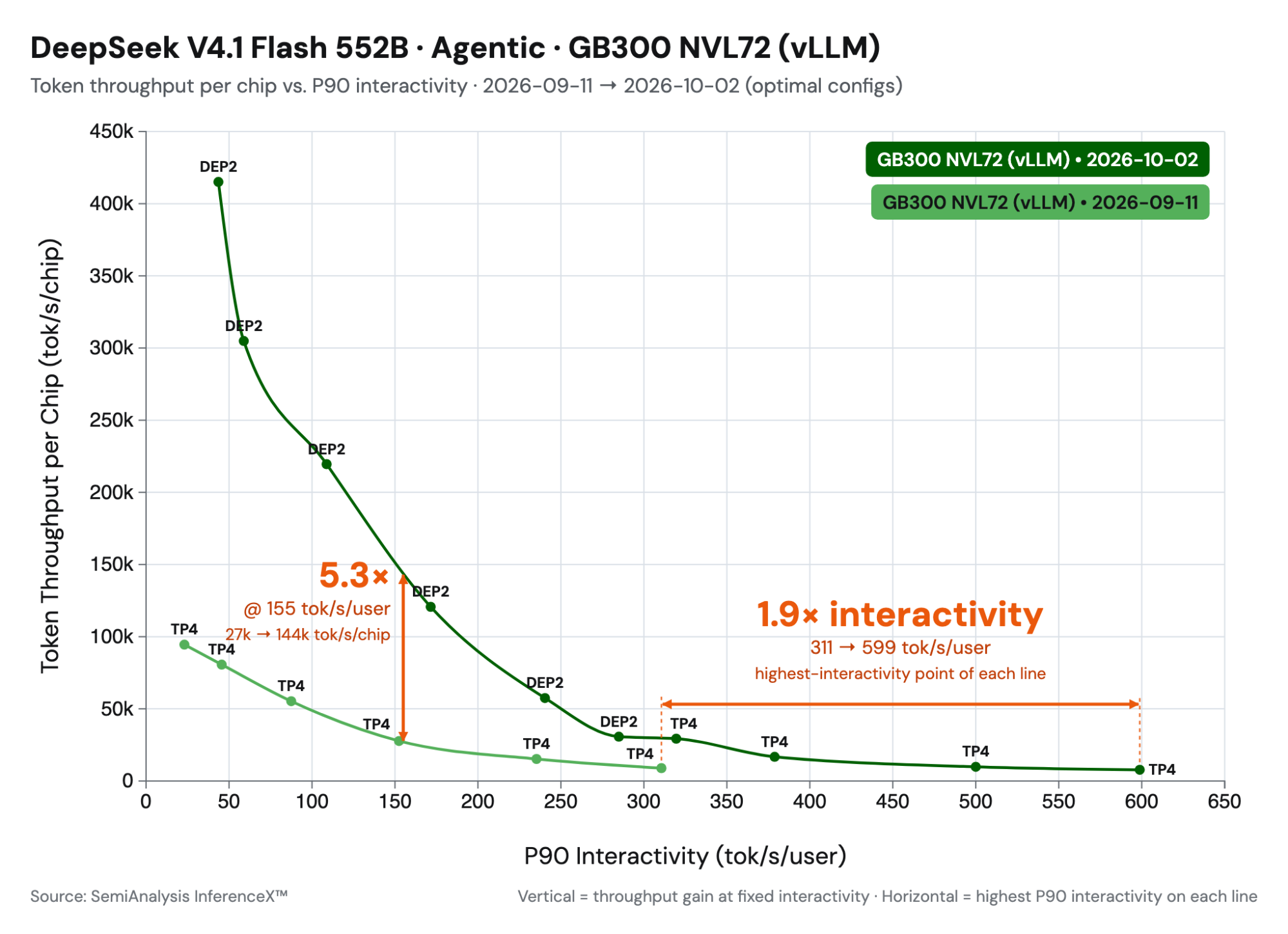
vLLM and Inferact report a 1.9× speedup at low concurrency and 5.3× higher throughput under a 150-TPS constraint for DeepSeek-V4.1-Flash in three weeks. The work combines DeepSeek’s compressed KV-cache architecture with bounded sliding-window replay, CUDA graphs, and fused or parallelized kernels. Replay trades bit-exactness for memory and speed, but vLLM reports no meaningful quality difference on GSM8K and GPQA; decoder replay with CUDA graphs cuts prefill compute by 30–40%.
Read the source →Consumers Will Never Pay for AI
The video focuses on an uneven consumer-AI market: the top 1% of buyers spend as much as the bottom 50%, while 98% of US households do not pay for an AI subscription. It asks whether non-paying households are future subscription demand or evidence that consumer AI needs different products and business models. It also covers Reflection AI’s early-access, US-trained open model Beam, a 501B-parameter model with reported 44.4 on DeepSqueeze and 80.1 on TerminalBench 2.1.
Read the source →Introducing Claude Haiku 5.5
Anthropic calls Haiku 5.5 its cheapest, fastest, and most capable small model, aimed at high-volume work such as summarization, compaction, database queries, classification, support, browser use, and coding subagents. The company says it costs about 75% less than Haiku 4.5 on average and is the first Haiku-class model with adjustable effort. Anthropic also halves Sonnet 5.5 cache-read prices—claiming about 20% lower cost on most agentic work—and adds monthly API credits for Max and Team subscribers.
Read the source →Claude Haiku 5.5 in GitHub Copilot
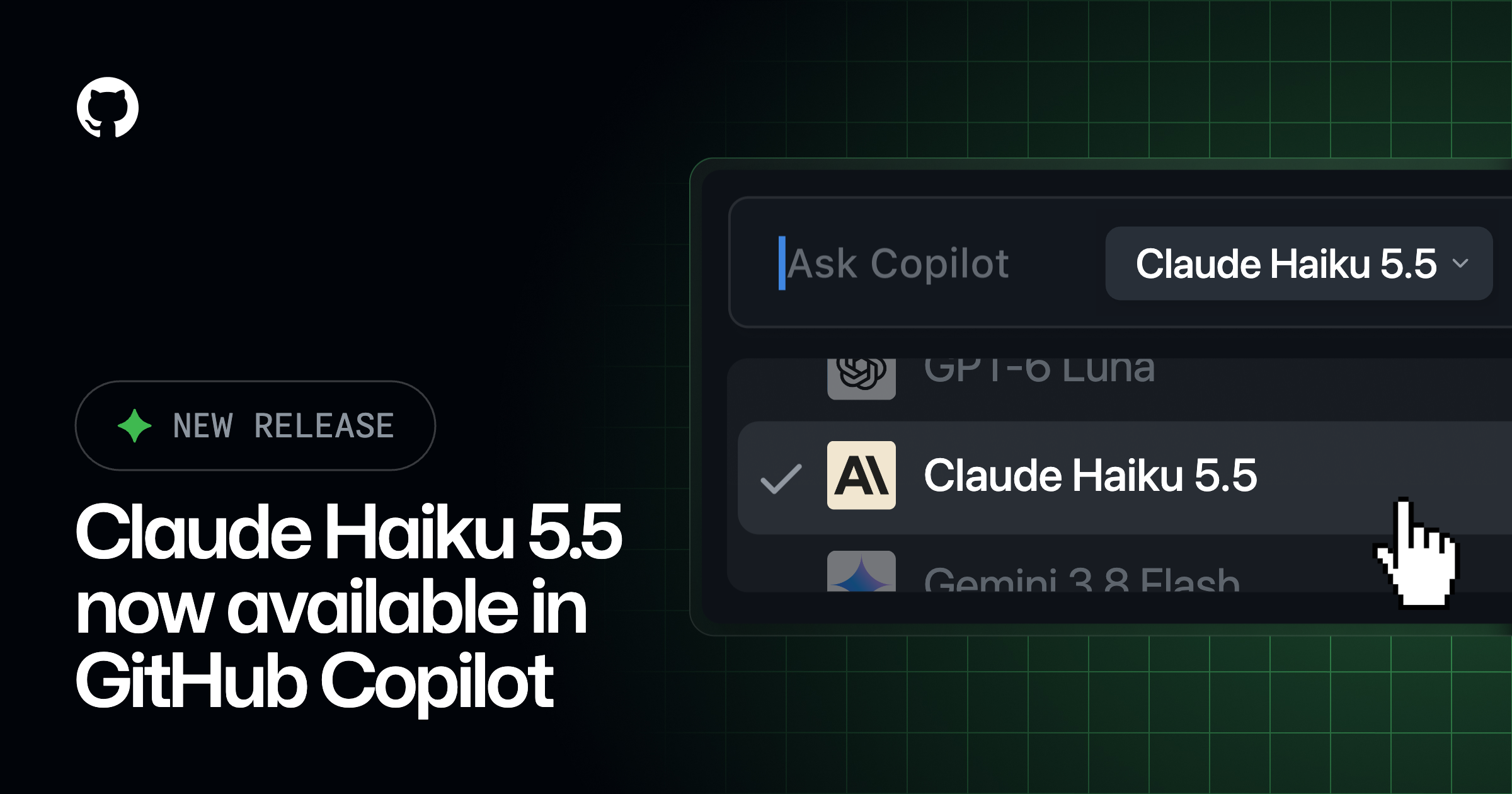
GitHub Copilot is gradually rolling out Haiku 5.5 to Pro, Pro+, Max, Business, and Enterprise plans. GitHub positions it for fast, high-volume jobs such as subagents, quick edits, and terminal tasks, saying early tests matched Sonnet 5 on many coding tasks with fewer steps and tokens. It is billed at provider list pricing, and organization administrators can control access through model policy.
Read the source →Purpose-built model for leaked secret detection
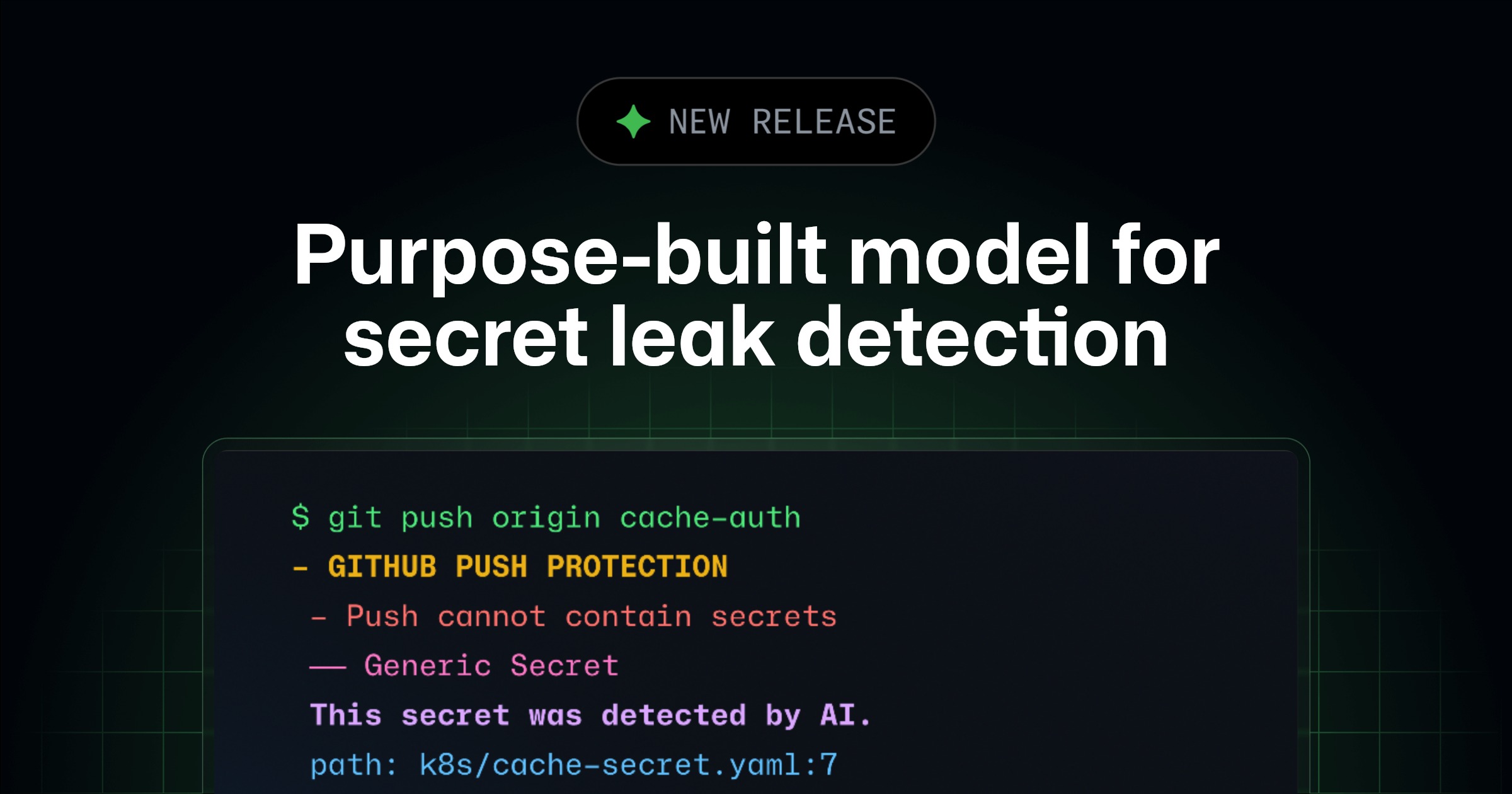
GitHub is replacing existing AI-detected-secret scanning with a fine-tuned, context-aware classifier that identifies likely credentials—including unstructured passwords—without generating prose or code. Included alert scans remain free for GitHub Secret Protection and Advanced Security customers, but opt-in push protection and Copilot security-review checks will consume AI Credits. Administrators can set policies and budgets, while agents are explicitly told not to enable credit-consuming features or alter budgets without authorization.
Read the source →Local sandboxing for GitHub Copilot now generally available

GitHub Copilot local sandboxing is now generally available in the Copilot CLI, Copilot app, and VS Code Agent Host sessions. Built on Microsoft eXecution Container, it translates common policies into native controls on Windows, macOS, and Linux, restricting agent access to files, networks, credentials, and system capabilities. Organizations can mandate policies developers cannot weaken, separating tool-execution isolation from whichever model runs the agent.
Read the source →Discover local models in GitHub Copilot CLI

From Copilot CLI version 1.0.94-0, /model can discover compatible models from a running local Ollama instance alongside configured and GitHub-hosted models. Discovery does not install Ollama or download a model: users review its provider and endpoint, then add it for the session or without switching. Local-model selection does not automatically make Copilot offline or disable telemetry; remote providers can still receive prompts and code context unless offline behavior is explicitly configured.
Read the source →GitHub Copilot weekly releases — September 28
GitHub’s weekly release adds Claude Sonnet 5.5 and GPT-6.1 Sol to eligible Copilot plans, plus HydraFusion model coordination in research preview. Dynamic workflows let users save reusable, reviewable processes such as release checks or incident investigation across the CLI, app, and SDK. Computer use is also in public preview for macOS and Windows, with user approval before Copilot controls desktop applications.
Read the source →Claude Platform release notes — October 8, 2026
The captured release-notes entry identifies the Claude Platform page as the consolidated record of API, SDK, and Console changes. It reiterates that Opus 4.1 cannot accept both temperature and topp in one request. The extraction does not include the specific October 8 feature details beyond saying some features are now available without a beta header.
Read the source →Claude Platform release notes — October 7, 2026
The captured October 7 release-note text points readers to the shared Claude API, SDK, and Console change log. It repeats the constraint that Opus 4.1 requests must use either temperature or topp, not both. The available extraction omits the actual list of newly graduated beta features.
Read the source →Claude Platform release notes — October 6, 2026
The captured October 6 entry is likewise a partial view of Claude’s consolidated platform release notes. It carries the same Opus 4.1 parameter incompatibility warning. It says that features have become available without a beta header, but the extracted content does not name them.
Read the source →Secret protection must scale with software

GitHub reports that one in three pull requests now involves an AI agent, up from fewer than one in 10 a year earlier, while secret prevalence per screened push has shown no statistically detectable rise. Screened pushes grew 2.84× from Q2 2024 to Q2 2026 and credential-carrying pushes 2.59×; developer overrides of push blocks fell from 6.63% to 3.93%, supporting its claim that developers are outpaced rather than less careful. GitHub’s new classifier assesses candidate secrets in under two milliseconds and could more than double prevention coverage, addressing a problem where manual revocation averages roughly 40 days and one fifth take over 90 days.
Read the source →v2.1.294 (+ v2.1.293)
The captured GitHub release page identifies version 2.1.294 of Claude Code but fails to load its change log. It therefore provides no reliable release details beyond the project’s general description as a terminal coding agent. The page explicitly reports an error and asks readers to reload.
Read the source →[AINews] Claude Haiku 5.5 — better than GPT-6 Luna at the same pricing
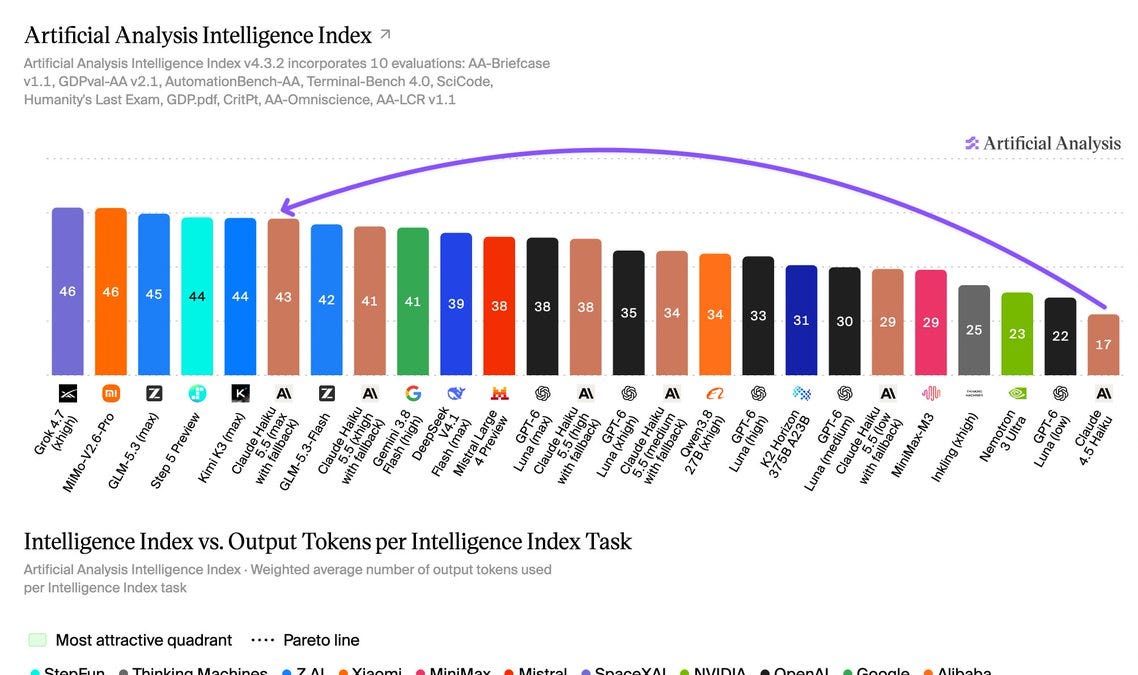
Latent Space’s roundup says Haiku 5.5 matches GPT-6 Luna pricing at $0.10/$0.50 per million tokens below 100K input tokens, while charging five times more above that threshold. It highlights a 1M context window, effort controls, reported Intelligence Index score of 43 at max effort versus Luna’s 38, and a TerminalBench 4.0 rise from 0% for Haiku 4.5 to 33%. The roundup also notes tradeoffs: Haiku can use more tokens at comparable scores, its tokenization is less generous, and a safety over-refusal issue depressed an AutomationBench result pending a fix.
Read the source →Can a Cloud-Native Harness Make Agents Reliable Beyond the Desktop?
Stacklok is betting that agent harnesses should be built for the cloud rather than lifted from desktop-first, tightly coupled local processes. Its open-source Mecatl project separates the agent loop from the client, model provider, state store, and tool-execution environment, borrowing Kubernetes-style control loops for resiliency and lifecycle management. The argument is especially aimed at enterprises that need centrally manageable sessions, execution isolation, governance, and the ability to safely pause agents awaiting human input.
Read the source →Your customers won't ask for Gemini 4 Argon. Their best AI product idea probably isn't in their feature requests either. Four questions surface the work they gave up on.
The post says Gemini 4 Argon’s benchmark lead matters less than explaining what a particular customer will actually delegate to it, trust it with, and encounter in a product. It urges builders to observe failed delegated work and identify jobs customers have stopped expecting to get done. Its central claim is that product opportunities emerge from close attention to lived customer constraints rather than feature-request lists or model-score announcements.
Read the source →Multimodal open d1 decision models for the edge

Liquid AI released open-weight d1-3B and experimental d1-omni-600M decision models, which return a decision in one forward pass rather than generate tokens. Across seven public datasets, d1-3B scores 82.9 on average, while the 600M multimodal model scores 78.4, above a 2B-parameter comparator with one quarter of its parameters. On measured NVIDIA hardware, d1-3B answers questions in under 50 ms at the edge and under 10 ms on GPU, positioning it for fast structured multimodal routing and classification.
Read the source →One Model Family, Two Gold-Level Results: Fine-Tuning Nemotron for IOI and IMO

NVIDIA says specialized Nemotron systems reached gold-medal level at IOI 2026 and IMO 2026 through supervised fine-tuning, reinforcement learning, and feedback-driven inference rather than a new base model. The IOI system achieved 535.4/600 under competition-like constraints; the IMO system scored 30/42, including full credit on four of six problems, with proofs graded by official IMO graders. The article’s main lesson is that task-specific data, complementary specialist checkpoints, search, critique, and refinement together outperformed both fine-tuning alone and brute-force sampling alone.
Read the source →Thinking will become a hobby
Diomidis Spinellis argues that improving performance, falling costs, and round-the-clock availability will let AI take over much cognitive work. He expects resistance from knowledge workers and governments, but sees it as unlikely to halt a technological transition driven by projected data-center expansion and widening task competence. His conclusion is that thinking may become more like hunting, calligraphy, woodworking, or riding: a valued voluntary pursuit rather than an economic necessity.
Read the source →Clojure in the Age of Language Models
The post argues that as models become competent at local code generation, developers’ comparative value shifts toward problem framing, architecture, algorithms, and data flows. It advocates Clojure’s live REPL workflow because agents can inspect state, redefine functions, and test changes without recompiling or reconstructing application state. Immutability and data-oriented, homoiconic syntax are presented as additional advantages because they make isolated reasoning, serialization, and machine inspection easier.
Read the source →Best Books/Courses/Channels to Leapfrog on AI/ML Material

This is a request from someone seeking a structured route back into AI/ML after being away since 2018–19. The author asks whether learning modern LLMs requires a different approach from understanding earlier deployed ML systems. The only concrete recommendation visible in the captured discussion is Andrej Karpathy’s “Zero to Hero” YouTube playlist.
Read the source →Quoting Ben Affleck
Simon Willison republishes Ben Affleck’s account of becoming interested in computing through film’s shift from analog to digital workflows. Affleck describes writing basic Python and using convolutional neural networks to interpret image tensors for tasks such as edge detection and green-screen replacement. The quotation frames transformers as an advance over those earlier computer-vision techniques through much greater simultaneous computation.
Read the source →Claude Haiku 5.5

Simon Willison notes that Haiku 5.5 matches GPT-6 Luna at $0.10/$0.50 per million tokens up to 100K prompt tokens, but rises to $0.50/$2.50 beyond that point, where he considers Luna a better value. He also measures the new tokenizer as using about 1.25× as many tokens as Haiku 4.5 for the same long prompt, a hidden cost consideration. The post welcomes the lower Sonnet 5.5 cache-read price and new monthly platform credits—$100 for Max 5x, $200 for Max 20x, and up to $500 pooled for Team—while stressing that credits do not roll over.
Read the source →Anti-Patterns in Software Blogging
Simon Willison highlights Michael Lynch’s advice against meandering openings, misjudging reader knowledge, assuming readers saw earlier posts, excessive formality, and using links as a substitute for explanation. The recommended test is that an article should remain comprehensible even if readers do not open any links. Willison also emphasizes that AI-generated developer writing risks becoming bland and homogeneous, while readers want a distinctive human voice.
Read the source →Building resilient systems with Sam Newman
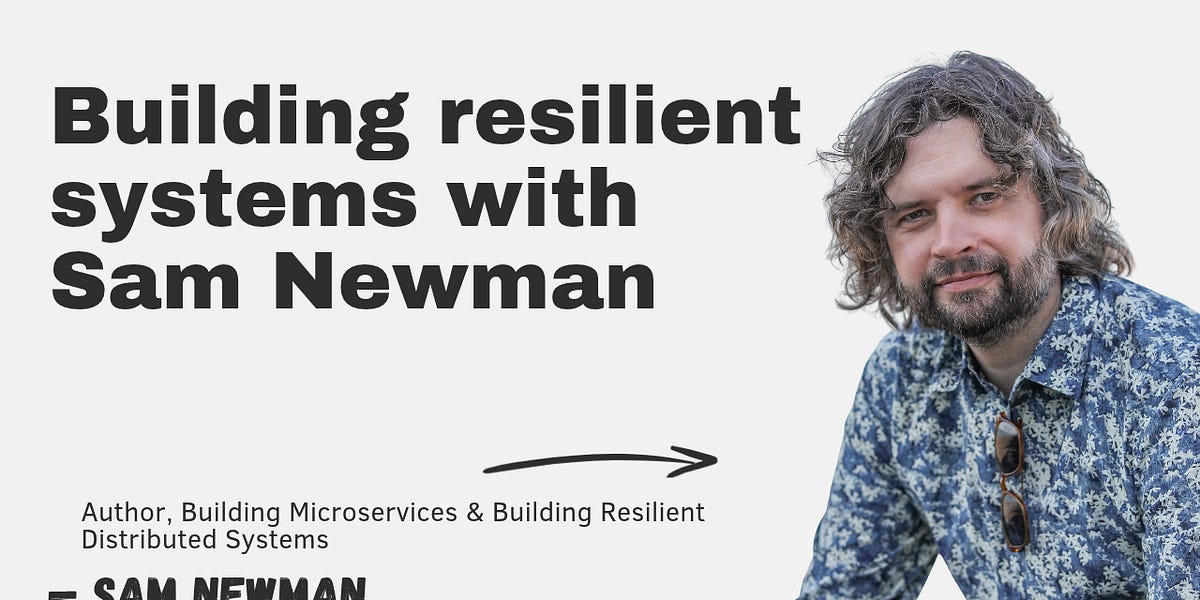
Sam Newman calls microservices an architecture of “last resort,” defining them primarily as independently deployable services and more loosely as services bounded by business domain. His three condensed rules of distributed systems are that information takes time to travel, dependencies can be unavailable, and resources are finite; he says resource exhaustion causes most outages. The discussion connects resilient design, observability, and business-aware fail-open versus fail-closed choices to AI-era concerns about cognitive debt and preserving understanding of systems.
Read the source →Helping teens learn, plan, and shape the future of AI
OpenAI says it is adding College Planner to ChatGPT for Teens to help students manage college applications. The announcement also names new flashcards and quizzes. It pairs the product work with a teen AI council.
Read the source →Radisson Hotel Group brings hotel discovery into ChatGPT
Radisson and Accenture built a ChatGPT plugin using OpenAI technology. It is intended to help travelers find, compare, and book hotels while planning trips. The captured announcement provides no further product or availability detail.
Read the source →GPT-6 and Intelligent UI for everyone
OpenAI says GPT-6 is rolling out globally in ChatGPT. The rollout includes “Intelligent UI,” intended to provide faster responses together with visuals and interactive experiences users can explore directly. The captured announcement does not specify capabilities, plan tiers, or regional exceptions.
Read the source →The Sequence Opinion - Issue 947: Jev and the Rise of Decision Models
The Sequence argues that customer-support automation requires many small judgments—classification, workflow selection, information gathering, and escalation—before it ever writes a response. It says using a reasoning model for every branch is unnecessarily expensive and slow, creating an opening for decision models such as Jev that return cheap semantic judgments with uncertainty estimates. The post sees entries from Amazon, Cloudflare, and OpenAI as evidence that the economics of these small decisions are becoming strategically important.
Read the source →