OpenAI launches Dots and cheaper GPT-6.1 Sol
Summary
The day’s releases make the competitive unit less a chat model than an agent operating over time, in shared workspaces, with tools, cloud computers, and delegated authority. That increases the importance of the unglamorous control plane: provenance checks, permissions, observability, review workflows, low-latency inference, and hard limits on autonomy. At the same time, cheaper high-capability models are pushing the economic question from “can an agent do this?” toward “who captures the value once it does?”
Getting started with Claude Tag
Claude Tag puts Claude inside a shared workspace channel, where it can follow the conversation and draw on connected chat history, Google Drive, Asana, and other tools. A team can ask it to compile action items, research across sources, draft documents, or make changes through its own accounts, with a log of actions and permission requests for actions taken on someone’s behalf. Its channel-level memory is readable and editable by participants, so instructions, style guides, and preferences persist; Team and Enterprise administrators control access, autonomy, and which channels’ data it can use.
Read the source →I Gave Meta's Muse The Most Boring Job I Had. It Found $5,350 A Year.
The presenter gave Meta’s Muse the job of auditing subscriptions, a deliberately mundane task involving account access, cancellation policies, and customer support. Muse found $5,350 in annual subscription spending and had canceled $1,285 per year so far, framed as avoiding future charges rather than recovering cash. The argument is that this kind of concrete delegation, rather than benchmark performance, explains why consumer agents can become valuable—and why retailers such as Amazon may resist an assistant that changes where users direct their attention and spending.
Read the source →AI Can Write the Proof. Who Checks It? — Leonardo de Moura
Leonardo de Moura discusses the tension created when AI can produce enormous formal proofs that people cannot realistically inspect line by line, including a 1.2-million-line Lean proof. The conversation highlights how an AI-generated exploit reportedly used bugs in both Lean’s official kernel and another component, making implementation assurance as important as mathematical formalization. De Moura describes Lean’s governance as distributed across the nonprofit and core contributors rather than centrally controlled, while acknowledging that stronger models may make proof checking and trusted kernels increasingly consequential.
Read the source →The Strange Economics of LLM Inference-as-a-Service
The video examines why inference providers running mostly open-weight models can reach very large revenue even though they do not train the frontier models themselves. It contrasts those providers with products such as Cursor, which add application-level value, and asks why serving capacity, reliability, and distribution can sometimes be more commercially successful than model development. The discussion situates inference-as-a-service among startups with at least $500 million in revenue run rate and raises the strategic question of whether labs can retain the economic advantage from their own models.
Read the source →Taking vLLM Apart: A Practical Guide to Disaggregated Serving
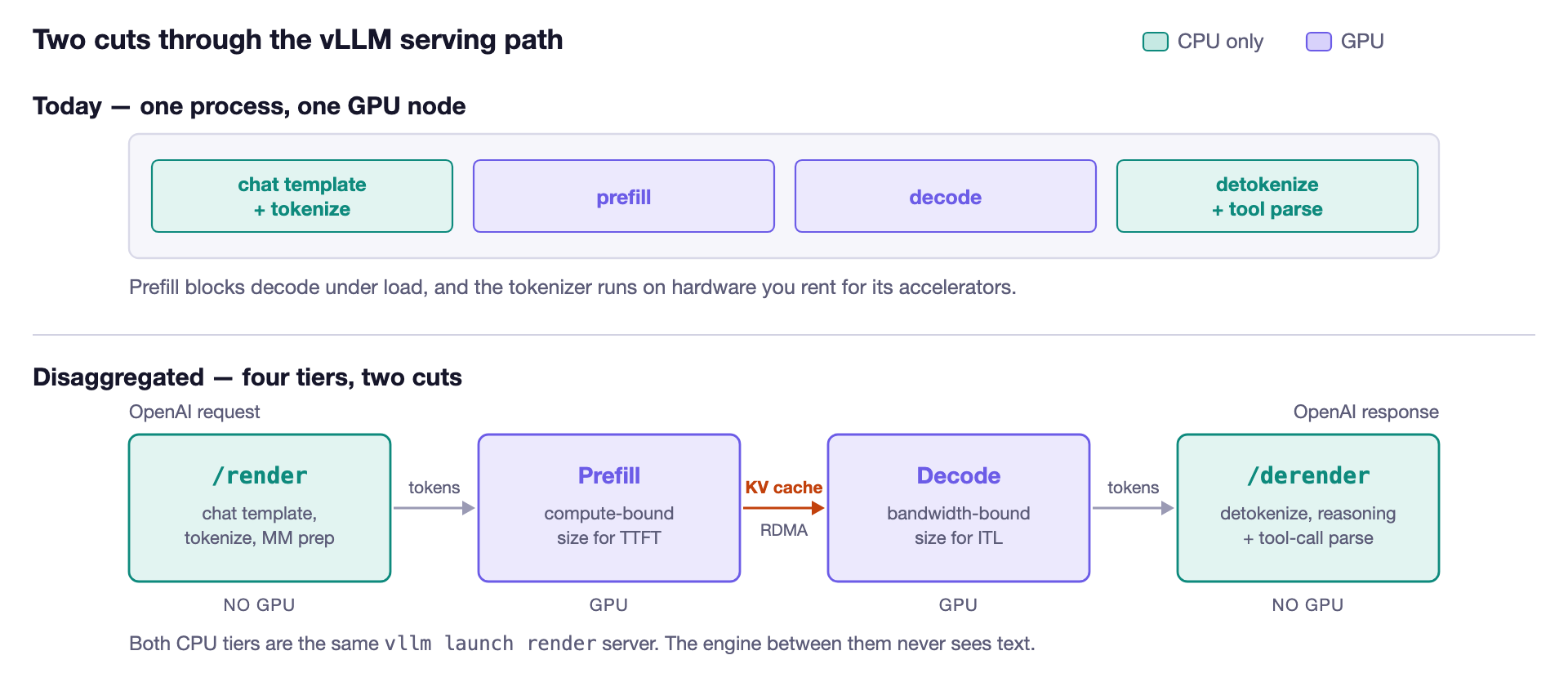
vLLM’s guide argues that one serving process mixes prompt prefill, token-by-token decode, and CPU parsing work that have very different bottlenecks. Separating prefill from decode prevents long prompts from stalling active streams, but it requires fast KV-cache transfer: a 10,000-token Llama-3.1-70B BF16 prompt carries roughly 3 GB of cache, about 65 ms on a 400 Gb/s link before overhead. The tradeoff is not necessarily higher peak throughput but better goodput under latency targets; cited tests found roughly six-times lower collocated p99 at modest load and, in one MI300X benchmark, 73 of 100 requests meeting latency targets versus 30 of 100 for collocated serving.
Read the source →How to Build Team Agents
This discussion argues that the next agent design problem is not merely making a capable solo assistant, but making agents that can operate in teams alongside people and other agents. It frames “multiplayer AI” around shared context, coordination, delegation, and workflows that cover the parts of work no individual owns alone. The episode uses a conversation with New York Gaspar to explore how those requirements differ from a personal agent, as autonomous tools become a normal part of knowledge work.
Read the source →GPT-6.1 Sol in GitHub Copilot
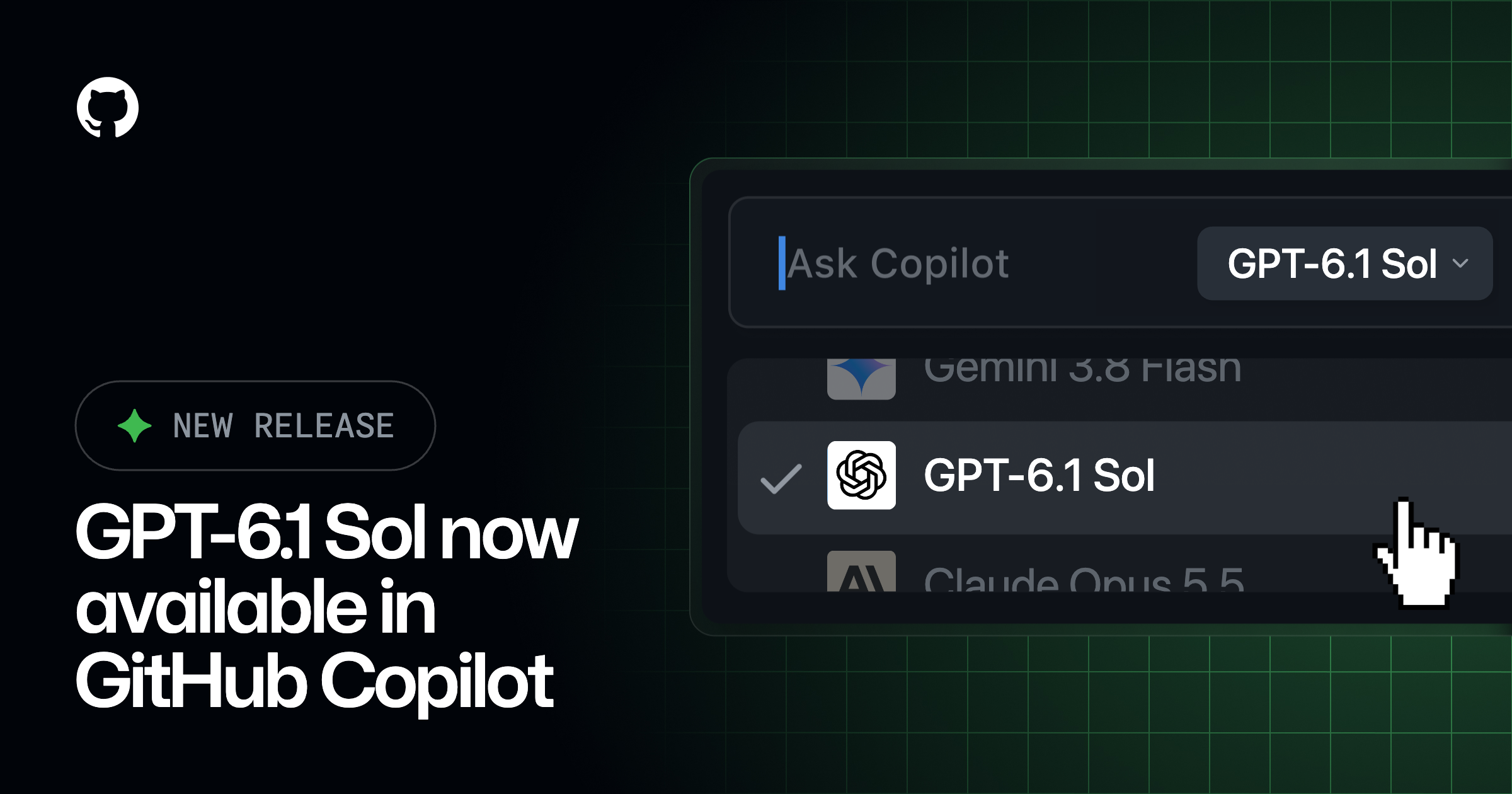
GitHub Copilot is rolling out GPT-6.1 Sol generally for agentic coding and terminal workflows, saying early tests showed reliable multistep task completion with fewer tokens and steps than GPT-6 and GPT-5.6 models. It is available to Pro+, Max, Business, and Enterprise users at provider list pricing under usage-based billing. Administrators can manage it through Copilot model policy; under default enablement, it is automatically turned on unless the global default or this model has been disabled.
Read the source →v2.1.285
Claude Code 2.1.285 adds a switch to disable WebFetch, a claude --desktop shortcut for opening the current directory or resumed session in Claude Desktop, and plugin configuration commands that can accept settings at install time. It also introduces an allowedProviders managed setting for restricting which API providers a machine may use. The release fixes a wide range of operational edge cases, including SSH configuration being ignored by plugin installs, model switches retaining stale token/compaction limits, unreliable remote-control attachment downloads, and several subagent, hook, MCP, and cloud-session failures.
Read the source →[AINews] OpenAI DevDay 2026: Dots, 6.1 Sol, Ultrafast, Decisions API, Agents API, Spaces, Marketplace, and 1.2 Billion ChatGPT WAU

OpenAI’s DevDay headline was Dots: always-on, Astra-powered cloud agents with optional connection to a user’s machine, thousands of app integrations, and explicit user-set boundaries for autonomy and approval. It also introduced shared ChatGPT Spaces and Pages, GPT-6.1 Sol at $2/$10 per million input/output tokens with $0.10 cached input, and an Ultrafast tier claiming up to 300 tokens per second at a sixfold price premium. The roundup notes a broader platform push—Decisions API, cloud Codex, Security Cloud, Agents API computer use, sign-in partnerships, and an enterprise marketplace—while flagging independent evaluation and pricing-plan controversy alongside OpenAI’s performance claims.
Read the source →What are you still paying for that you meant to cancel? I handed mine to an AI assistant: $1,285 a year cancelled so far. The prompt guide for the tedious part of yours.
The author had Muse review subscriptions and found $5,350 in annual spending, canceling $1,285 per year so far; the figures describe avoided future expense, not refunds or proof that every subscription was unwanted. The point is that assistants gain adoption through legible, everyday follow-through—cancellations, planning, and administration—rather than abstract claims of intelligence, and Muse reached the top US free iPhone chart ten days after launch. The piece also identifies the conflict of interest ahead: an assistant that helps users stop buying can threaten retailers and may later make recommendations while being paid by the businesses users buy from.
Read the source →Text-to-meowdio models
This interactive study applies expressive-range analysis to text-to-audio systems by generating 2,100 cat-vocalization clips across seven prompts, three models, and 100 samples per prompt-model pair. Stable Audio Open and TangoFlux generally make recognizable meows, though TangoFlux is more tightly clustered; EzAudio often produces silence, room noise, or a faint isolated meow, plausibly reflecting uncurated video-caption training data. More explicit prompts such as “sound of a cat meowing” substantially improve EzAudio’s results, illustrating that generative range and prompt specificity can reveal model behavior hidden by a single sample.
Read the source →NVIDIA Kumo Tabular Sets a New Accuracy-Efficiency Frontier for Tabular Prediction

NVIDIA released Kumo Tabular, an open commercially licensed tabular foundation model that predicts classification or regression labels from labeled rows in context without task-specific training, tuning, or feature engineering. The 28M–215M-parameter models were pretrained entirely on synthetic tables and are reported to rank first on TabArena, BeyondArena, TALENT, and ScoringBench. Its architecture combines column attention, row attention, and context-to-query attention, handles missing values directly, reuses context KV state for later predictions, and adjusts attention temperature as tables become longer or wider.
Read the source →Getting the Source Right, Not Just the Fact: Source-Aware Verification for MCP Agents

ProvenanceGuard targets a failure that ordinary factuality checks can miss: a claim may be true somewhere among an agent’s retrieved evidence but be attributed to the wrong MCP source. The post gives examples in customer support and medicine where pooling account records, policy documents, and research makes an answer appear supported even though its stated provenance is misleading. The post-generation layer reads captured MCP traces, decomposes answers into claims, routes each claim to a source, verifies support and attribution, then allows, blocks, or repairs the answer; its reported medical-agent evaluation used 281 real traces and 361 expert-checked claims.
Read the source →Why has Shopify dropped React Native?
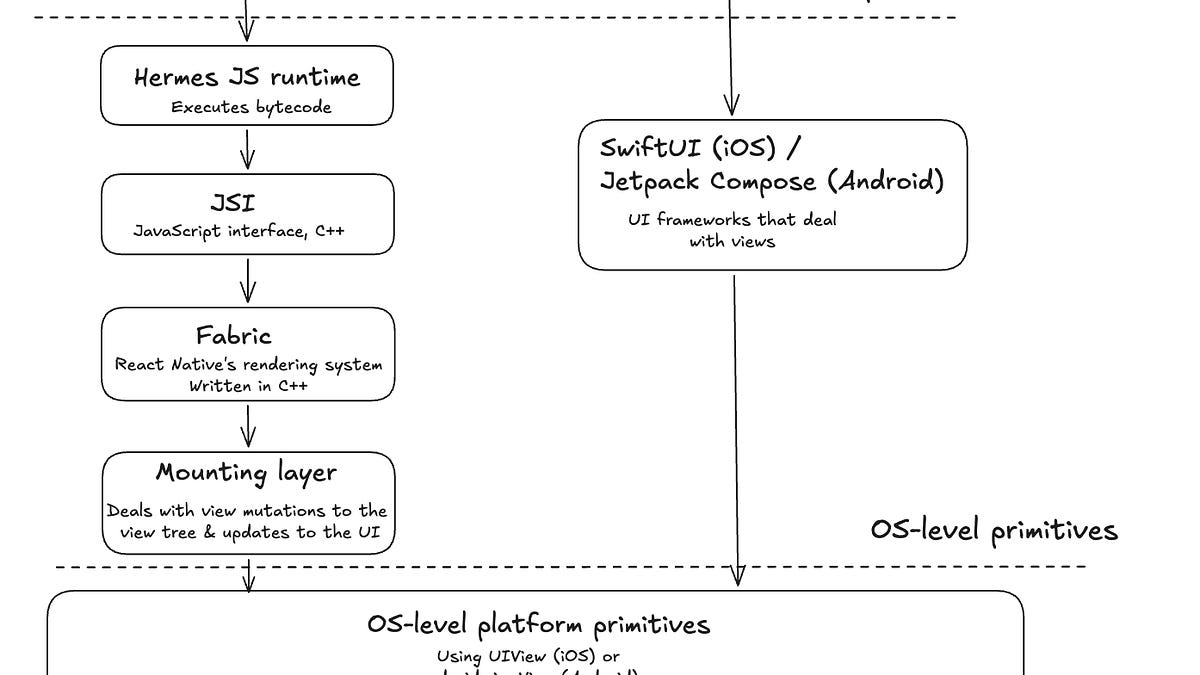
Shopify is returning to native mobile development after moving six apps to React Native in 2020, a decision it had still considered successful last year. The article argues that AI coding has changed the cost equation: React Native’s abstractions now look less attractive when agents can generate native iOS and Android code, and Shopify reportedly rewrote the Shop app natively in 12 weeks. It contrasts the move with Airbnb’s earlier React Native reversal and notes Kotlin Multiplatform as a possible middle ground, while warning that AI lowers implementation friction for native, React, Flutter, and KMP alike.
Read the source →I asked muse to tell me about updates to its skills

The author explored Meta Muse’s filesystem and found the agent polished enough to become a regular tool, especially for web browsing and working through CAPTCHAs. After noticing frequent Rust rebuilds and skill updates, they asked Muse to automate a daily diff and push changes into a public GitHub repository. The resulting archive exposes many short instructions for Muse-specific Rust CLI tools, plus more revealing documentation such as a schema describing the agent’s extensive Postgres database.
Read the source →Introducing GPT-6.1 Sol
OpenAI introduces GPT-6.1 Sol as a model for coding, computer use, and professional work positioned near GPT-6 Astra capability. The announcement says it costs one-fifth of Astra’s standard API input and output token prices. The product page provides no further detail in the available material.
Read the source →DevDay 2026 Recap
OpenAI’s DevDay recap points readers to more than 20 announcements spanning GPT-6 Astra, ChatGPT, Codex, APIs, security, and tools for builders. It presents the event as a broad product and platform release rather than a single-model launch. The available material does not provide additional announcement-by-announcement details.
Read the source →Introducing dots
OpenAI describes Dots as proactive assistants that can continue working across complex projects and routine tasks. The positioning emphasizes retaining user control while work proceeds asynchronously. The available material does not provide implementation, pricing, or availability details.
Read the source →The Sequence Learning Loop - Issue 942: Learning About Opus 5.5, DeepSeek’s Training Grounds, and Claude’s DNA Discovery

This issue argues that useful intelligence is increasingly defined by whether an AI can sustain a chain of work: inspect evidence, recover from errors, and produce an output that survives testing while its user is away. It connects Claude Opus 5.5, a report of AI-assisted biological discovery, and DeepSeek’s environments paper to make the case that progress depends as much on the surrounding environment, observations, and verification as on the base model. The excerpt frames the relevant question for agent users as what happened during unattended execution, not simply whether a model can answer a prompt.
Read the source →Quoting Anthropic Frontier Red Team
Simon Willison quotes Anthropic Frontier Red Team results on 100 randomly selected internal binary-exploitation tasks. GLM-5.3 achieved full control-flow hijacks in 4% of trials and Claude Mythos Preview in 6%, while earlier Claude Opus 4.6 and GLM-5.2 achieved none. The quoted assessment is that a meaningful cyber-capability threshold has been crossed despite the low success rates.
Read the source →GPT 6.1 Sol: Near-Astra intelligence for a fifth of the price
Simon Willison’s brief post points to his Hacker News comment on OpenAI’s claim that GPT-6.1 Sol offers near-Astra intelligence for one-fifth of the price. He compares its “pelican” visualizations with those for the GPT-6 family and says they are not notably different. The post is primarily a link and visual follow-up to the DevDay announcement rather than an independent technical evaluation.
Read the source →OpenAI DevDay 2026 live blog
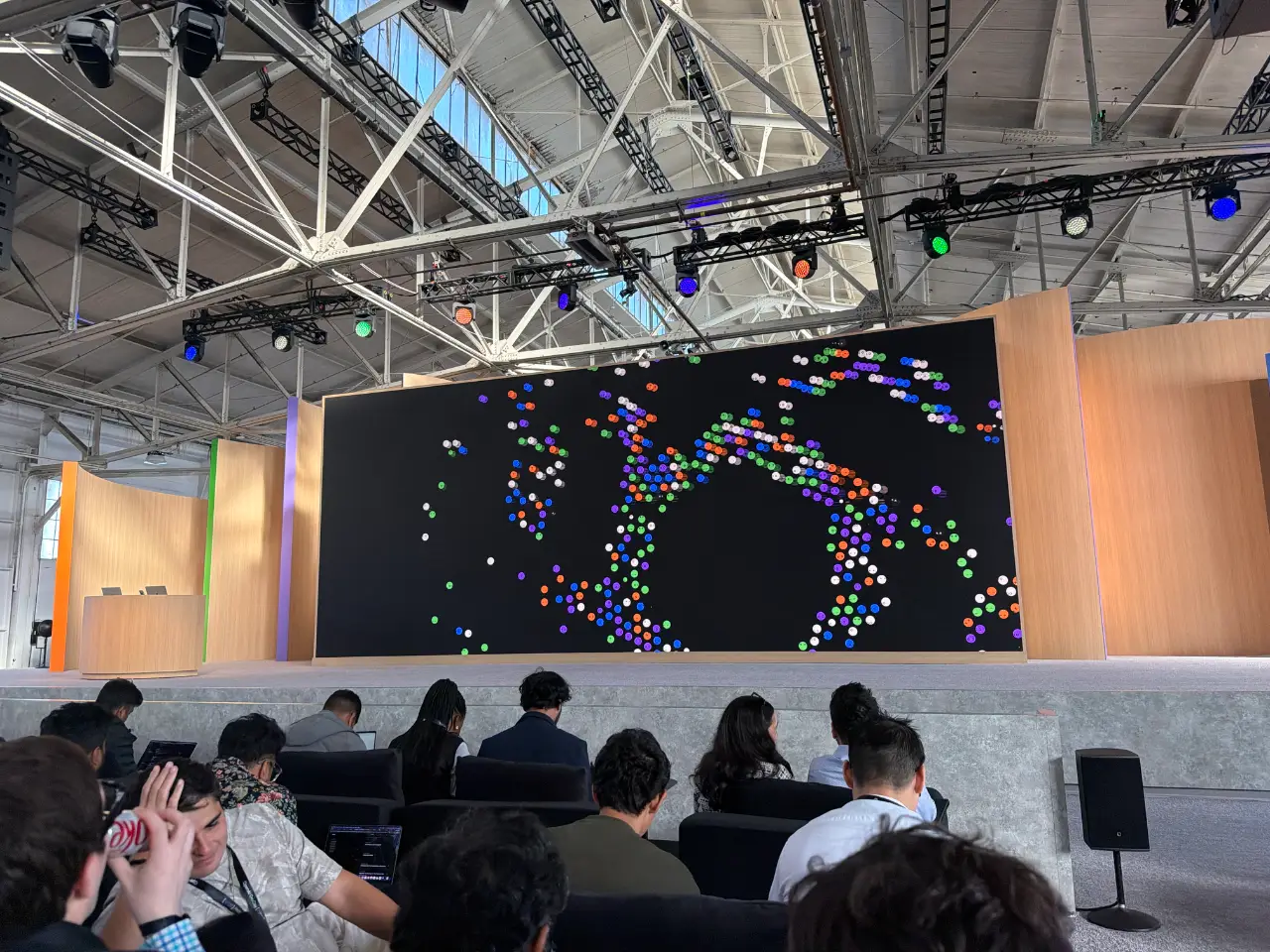
From the DevDay keynote, Simon Willison reports Dots as Astra-powered personal agents with names and avatar-like blobs, plus shared ChatGPT Spaces for collaboration. The presentation showed Dots using integrations including Slack and Teams and, in one ambitious example, Codex on a laptop to build and launch an app in an iPhone simulator; Pro and Enterprise access was announced for the day. Other announced items included GPT-6.1 Sol at “near-Astra” intelligence for one-fifth the price, an Ultrafast API mode claiming up to 300 tokens per second, Decisions API, cloud Codex, Security Cloud, and an Agents API with computer use.
Read the source →Claude Sonnet 5.5 🧠, Anthropic IPO leaks 📝, AMD buys World Labs 💰

The newsletter calls Claude Sonnet 5.5 a strong release, close to Opus 5.5 for coding and notably improved on images and charts, recommending that $20-plan users try it at high thinking for some tasks normally sent to Opus. It also says Manus 2.0 has added a video editor, game builder, and automations, while Cue joins Muse and Grok Bot in giving consumer agents their own email, phone number, wallet, and compute. The roundup flags GPT-6 Astra as particularly capable at browser and computer use, claims AMD will acquire World Labs for $8.2 billion with Fei-Fei Li joining as chief scientist, and lists agent-safety and enterprise-agent developments.
Read the source →The Sol 6.1 Benchmarks Are STUPID, So I Tested It vs Sonnet 5.5
The presenter tests GPT-6.1 Sol against Claude Sonnet 5.5 because OpenAI’s DevDay benchmarks showed Sol beating or approaching Astra despite GPT-6 having just disappointed users. Reported aggregate results are mixed: Sonnet leads Artificial Analysis indices and AutomationBench by 8.7 points, while Sol leads DeepSuite by 4.2 points. Although both are listed at $2 input and $10 output per million tokens, the video argues that task-level token consumption, speed, and real harness behavior matter more than raw benchmark scores.
Read the source →I Got Early Access To ChatGPT Dots: Here's Everything You Need To Know
The video compares OpenAI Dots, Grok Bot, and Meta Muse as always-on cloud agents with app connections and computers that keep operating when a local machine is off. It says the main differentiators are the model underneath, price, and intended work: Dots uses GPT-6 Astra and is positioned for developers who want orchestration, subagents, and autonomous building; Muse is positioned for lighter personal-assistant tasks, with Grok Bot between them. The takeaway is that their shared category conceals a practical tradeoff between capability and the cost of that capability.
Read the source →AI ROI, Why the Agent Isn't the Answer
This AI Native Dev event opens with the organizers describing a community built around events, articles, podcasts, and learning how people are setting up and using agents. The session is presented as a live, question-friendly discussion for both in-room and YouTube audiences rather than a standalone product announcement. Its stated theme is AI ROI and why deploying an agent alone is not the answer, but the available transcript excerpt contains introductory remarks rather than the speakers’ substantive argument.
Read the source →Join us in NYC for AI DevCon Fall 2026
This promotional video announces a three-day AI DevCon in New York in November, following a sold-out London event in June. It promises practical talks about agentic coding for developers, engineering leaders, and strategists, and names speakers including Steve Yegge, Ryan LePape, Jeffrey Huntley, Nick Carmont, Shivam Jindal, and Ben Mose. The pitch is that developers are moving from writing code to prompting agents and ultimately running “software factories.”
Read the source →Building a Software Factory with Gas City
Stephanie Jarmak describes becoming a Gas City maintainer by using agents to study Git history and review feedback, turn that feedback into reusable review skills, triage issues, and submit fixes before she fully understood the codebase. The episode stresses that this “software factory” still needs human judgment: users must distinguish upstream from dependency failures, calibrate review depth to change risk, and avoid alert systems so noisy that they get ignored. It also argues that agent-enabled contribution broadens who can participate in open source, while reliability, model changes, observability, and clear constraints remain the limiting work.
Read the source →Sonnet 5.5 is worth a try
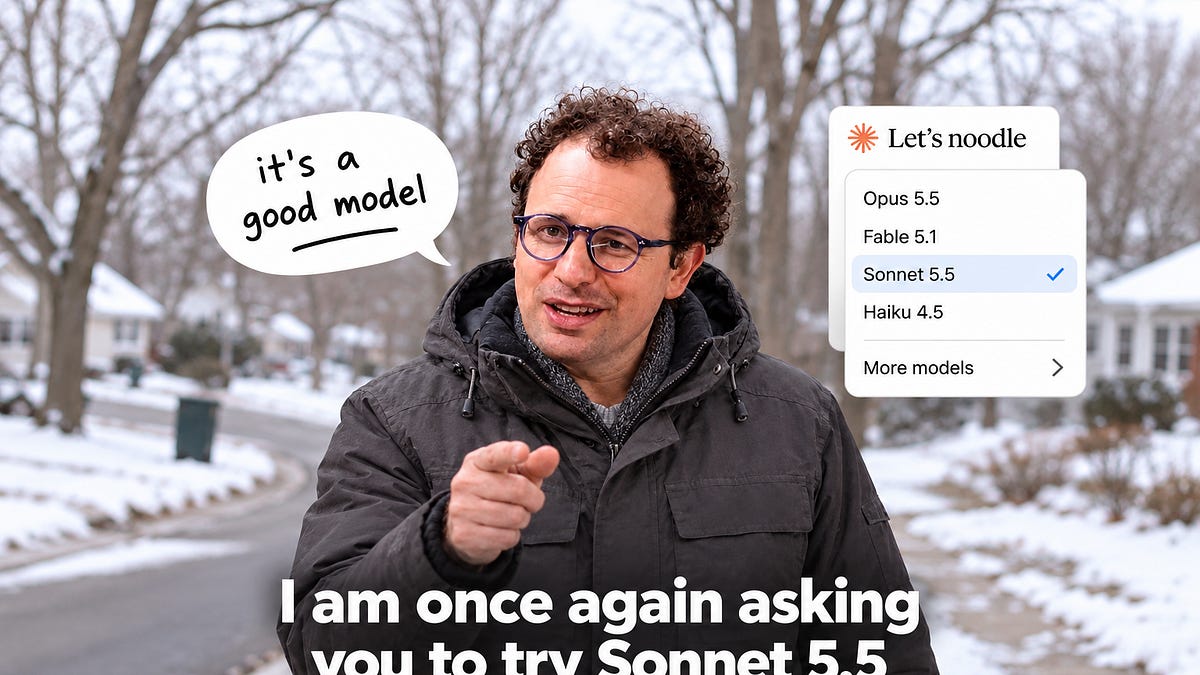
Ben’s Bites recommends testing Claude Sonnet 5.5 at high thinking, describing it as near Opus 5.5 on coding and significantly better at image and chart understanding; the author suggests moving some usual Opus requests to it for $20-plan users. The roundup also says the consumer-agent field is filling with products such as Manus 2.0 and Cue, and highlights GPT-6 Astra’s comparatively strong computer-use behavior. Other notes include Meta’s enterprise platform for Muse and APIs, ElevenLabs’ Eleven v4 speech model, NVIDIA’s OpenShell agent-permission sandbox, and AMD’s reported $8.2 billion acquisition of World Labs.
Read the source →