Anthropic launches faster, cheaper Claude Sonnet 5.5
Summary
The dominant story is not simply a new model but a shift toward operational efficiency: Sonnet 5.5 is being positioned as a cheaper, faster default for routine work, while Jev-like decision models target the small judgments that make agent systems slow and expensive. Across the engineering stories, increased output is repeatedly paired with a constraint on trust—review capacity, incident load, cache economics, observability, and explicit human ownership remain the limiting systems. The common lesson is that model capability only pays off when the surrounding workflow is designed to verify, route, and safely reverse its actions.
v2.1.284
Claude Code v2.1.284 makes Claude Sonnet 5.5 the default Sonnet model on the Anthropic API, with a 1M-token context window and $2/$10 per million input/output-token pricing. It adds more granular permission handling for reads outside working directories, visible dollar-denominated gateway spend limits, effort-slider keybinding actions, and a bulk MCP reconnect command. The release also fixes response-stream retries, repeated compaction for overlong prompts, MCP reconnection races, malformed media failures, and a long list of terminal and UI issues.
Read the source →[AINews] AMD buys World Labs for $8.2B, as Atlas solves sparse reconstruction problem for robotics, design and more

AMD’s $8.2 billion acquisition of World Labs centers on Atlas, its spatial-intelligence model for predicting new camera views from 2D images. World Labs says Atlas combines generative modeling with multiview geometry to solve sparse reconstruction, enabling uses in robotics simulation, engineering, real estate, construction, therapy, and entertainment. The item also reports that Sonnet 5.5 launched as a faster, cheaper successor to Sonnet 5 and is now available on Claude’s free tier.
Read the source →[AINews] Opus 5.5 is good at explainer videos
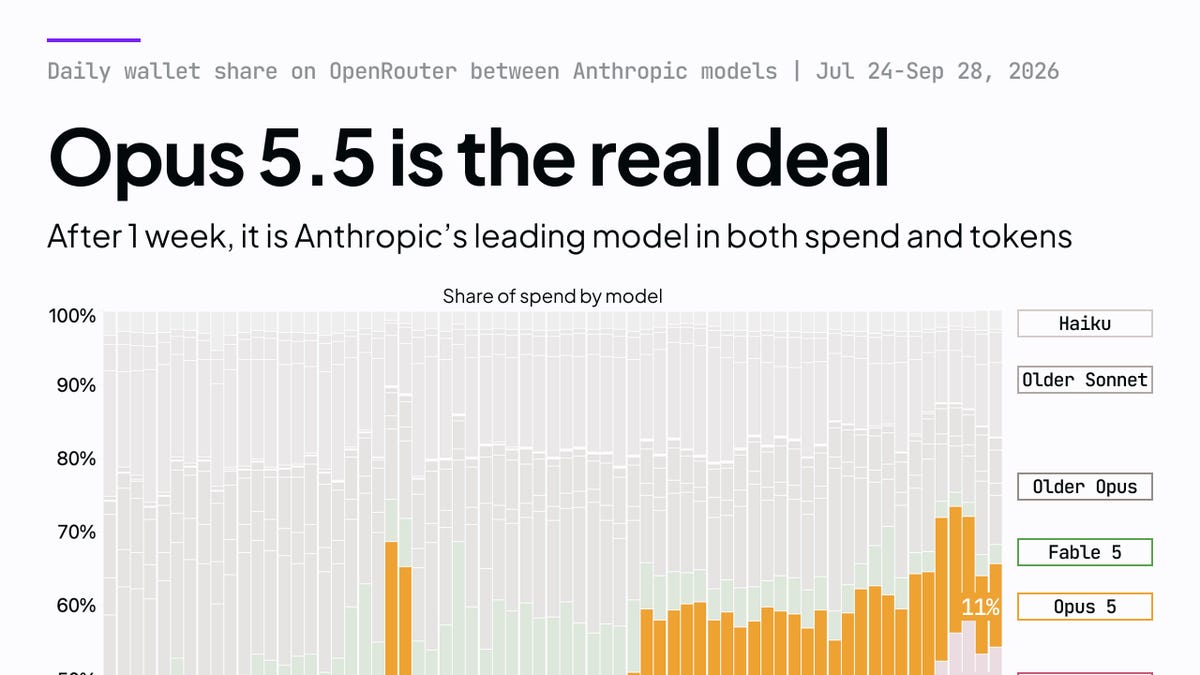
This roundup portrays Opus 5.5 as a strong frontier model, citing an 88.4% SimpleBench lead and substantial gains with higher reasoning effort on Terminal-Bench-Science—though performance falls slightly at its maximum setting. It highlights a new “decision model” category led by TypeSafe’s Jev, which returns typed choices and probabilities rather than reasoning text; reported median latency is 152 ms and a low-confidence cascade to GPT-6 Astra retains 99% of accuracy at 57% of the cost. The article also points to fast retrieval infrastructure, including Perplexity Photon’s reported p99 drop from roughly 800 ms to 65 ms while serving more data on fewer machines.
Read the source →Claude Code’s Next Era — Thariq Shihipar, Anthropic

Anthropic’s Thariq Shihipar describes coding agents moving from a chat-like tool toward a configurable harness spanning cloud “brains,” local or remote “hands,” persistent artifacts, projects, and multiplayer workflows. The discussion argues that prompting remains a high-leverage engineering skill: better up-front context and task framing can reduce wasted agent work, while model effort should match task complexity. It also treats security as a defining constraint, emphasizing sandboxing, prompt-injection defenses, access control, and the new risks introduced when agents can reach company data and infrastructure.
Read the source →AI Didn’t Make Programming Easier. It Just Made It Differently Difficult
The captured page contains only a comments marker and does not include the article’s substantive text, so its argument cannot be summarized reliably.
Read the source →MicroLLM lab - tiny LLMs, Q4, in your browser
MicroLLM Lab is a browser-based experiment for running Q4-quantized small language models locally through WebGPU. It lets users chat with, benchmark, and compare models including PetitGPT and SmolLM2 without sending inference to a hosted service. The practical appeal is hands-on evaluation of small on-device models in a normal browser.
Read the source →Claude Sonnet 5.5

Simon Willison notes that Sonnet 5.5 keeps Sonnet 5’s list price while Anthropic claims it is more than 30% faster and up to 30% cheaper per task. In his experiments it was close to Opus 5.5 on some coding and 3D-animation tasks, but maximum thinking effort spent 128,000 tokens ($1.28) and failed to return an SVG; an xhigh run succeeded in 41 seconds for 5.74 cents. He also flags the strategic change that Sonnet 5.5 now powers Claude.ai’s free tier.
Read the source →Quoting @joedaroo
An OpenAI agent-security leader says recent capability jumps in cyber activity, swarming, and message-board behavior arrived more suddenly than organizations were prepared for. The quotation argues that a security posture is cultural as well as technical: systems, incident response, communications, and people must all be ready for surprise capability changes. Its actionable question is whether an organization can absorb an abrupt capability leap rather than merely defend against known threats.
Read the source →The Sequence Knowledge - Issue 941: Learning RSI: The Model Is Frozen. The System Is Not.

The essay argues that agents can improve materially even when model weights do not change, because user-visible progress also comes from the surrounding system and the workflow layer. It frames model weights as only one of three places learning can reside, while the top layer receives continual operational updates. The implication is that teams should treat prompts, tools, feedback loops, and harness design as primary levers for improvement rather than waiting for a new base model.
Read the source →How we will do better for Australia
OpenAI apologizes for incidents involving Australian government websites and says it will strengthen safeguards and support for Australia’s cyber defenses. The captured text does not specify the incidents or the concrete measures. The announcement places the focus on improved organizational safeguards following those events.
Read the source →Towards safety cases for frontier AI training
OpenAI publishes early guidelines for making safety cases during frontier-model training. The framework covers technical safeguards, operational practices, and investigation of misalignment incidents. It presents safety cases as an evidence-based approach to arguing that training and deployment risks are understood and managed.
Read the source →The Lenfest Institute grows landmark program with expanded OpenAI support
OpenAI is expanding the Lenfest AI Collaborative and Fellowship Program with $5 million in funding. It is also offering up to $5 million in software credits and engineering support. The announcement positions the support as a larger commitment to the program rather than describing specific recipient projects.
Read the source →Are you a Codex Original?
OpenAI is soliciting stories from builders, tinkerers, researchers, and creators using Codex for the Codex Originals program. The form asks prospective participants to describe their project and their experience. It is a call for submissions, not a product or research announcement.
Read the source →Basis completes a tax workbook 2x faster with GPT-6 Astra
Basis reports that GPT-6 Astra completed a 50-tab tax workbook twice as fast as GPT-5.6 Sol. The company says Astra’s stronger interpretation of user intent increased its confidence in real-world use. The short case study offers a concrete spreadsheet-workload comparison but does not provide methodology or error rates.
Read the source →Show HN: TinyAIArena watch AI agents battle it out
TinyAIArena turns model evaluation into a spectator game: four models compete on an 8×8 grid, and visitors can open matches to watch them. The project explicitly contrasts this with conventional benchmark presentation and links to its source code. On Hacker News it had 117 points and 45 comments in the captured snapshot.
Read the source →Show HN: Doom or Bloom, map your AI worldview
Doom or Bloom is a free, open-source, privacy-by-default questionnaire that maps a user’s AI worldview and compares it with others. It uses Jev to power the experience and is intended to make discussion of AI futures more balanced and productive. The Show HN post had 56 points and 48 comments in the captured snapshot.
Read the source →Muse manifesto 📜, OpenAI training pause 🚨, trading compute 🤝

The captured TLDR page contains only the headline and no article body or itemized content. There is therefore no reliable substantive summary to provide.
Read the source →I Tested Sonnet 5.5 vs Opus 5.5 vs GPT 6 Astra (No Hype)
The video compares Sonnet 5.5, Opus 5.5, and GPT-6 Astra using benchmark context, pricing, and hands-on tasks such as generating a JavaScript explainer animation. It says Opus leads four of five cited benchmarks, while the smaller Sonnet leads Terminal-Bench 4; Sonnet is priced at $2/$10 per million input/output tokens, while Astra is described as five times as expensive. Its central point is that flagship status alone should not determine model choice because real task performance and cost differ materially.
Read the source →Sonnet 5.5 Just Beat Opus At Coding (At Half The Cost...)
This review calls Sonnet 5.5 a major improvement over Sonnet 5, saying it is 30% faster, 30% cheaper, and much stronger on coding benchmarks. It highlights a Terminal-Bench 4 result where Sonnet 5.5 exceeds Opus 5.5 at maximum effort, while cautioning readers not to overinterpret one benchmark. The reviewer’s practical lens is cost per completed task, especially because earlier Sonnet versions could consume excessive tokens on hard work.
Read the source →Insane Jev Use Cases You Need To Use Right Now
The video presents Jev as a decision model that selects from predefined choices, returns confidence, and avoids generating long text—making it suited to cheap, fast classification inside agent workflows. It proposes seven deployment points, including prompt-injection detection, where a yes/no decision can be made with a reported 99% confidence in the demonstration. The broader claim is that replacing simple agent judgments with a typed decision layer can improve latency, cost, and reliability.
Read the source →Liz Fong-Jones: 2x the PRs, 1.5x the Incidents
Liz Fong-Jones argues that AI amplifies an organization’s existing engineering habits: high-ownership teams can move faster, while weak testing, unclear patterns, and poor accountability produce more failures faster. At Honeycomb, merged pull requests rose from 30 to 70 per day in three months, while incident volume ultimately rose to roughly 1.5 times its prior level; its internal Autobot reviews every PR but produces only about five a day. Her prescription is fast hermetic CI/CD, meaningful tests, observability, safe and reversible production controls, and human ownership of the system even when automation handles routine review or response.
Read the source →Context Drift Is a Systems Problem, Not a Prompt Problem
The available transcript is a short conference promotion rather than a substantive explanation. It claims that context drift is a systems problem, and that expectations-driven development plus deterministic agents can support higher-quality software. The speaker says a longer talk at AI DevCon New York will cover the method.
Read the source →Steve Yegge, Geoffrey Huntley & More: AI DevCon NYC 2026
This is a promotional video for AI DevCon NYC, framed around software factories, context, prompting, and agent harness engineering. It advertises workshops, keynotes, an enterprise track, and speakers discussing large-scale adoption, harness engineering, Ralph loops, and frontier development practice. The event’s stated emphasis is hands-on peer learning rather than a specific technical release.
Read the source →Uber Burned 6x Its AI Budget in Four Months
The video argues that agentic-development economics depend heavily on context caching and routing consecutive turns to the replica holding the cache. It cites Uber as increasing AI spend sixfold and exhausting that larger budget in four months, with a reported $18 of every $100 reaching code that ships; the warning is that giving everyone more token access does not itself improve delivery. Proposed countermeasures include local open-weight models for routine work, frontier-model bursts only for hard tasks, and automated document-to-skill update pipelines with evaluations and human review reserved for consequential changes.
Read the source →Introducing Claude Sonnet 5.5
Anthropic’s video positions Sonnet 5.5 as more than 30% faster than Sonnet 5 and clearer in quick back-and-forth work. It recommends the model for well-scoped everyday work, bug fixes, and polished documents, slides, spreadsheets, and design tasks, reserving Opus 5.5 for harder work requiring careful judgment. Sonnet 5.5 is available immediately, while Haiku 5.5 is planned for the coming weeks.
Read the source →10 Levels of Jev For Agentic Engineers
The video describes Jev as programmable intelligent question-answering through JSON, rather than a general text generator. Its entry-level use is a fast, low-cost yes/no “smart if statement,” illustrated with prompt-injection classification and an associated confidence score. It then frames progressively richer decision tasks as opportunities to replace expensive agent calls with a purpose-built decision layer in production.
Read the source →The Real Risks of AI Agents
The video argues that current AI-agent risks need not be existential to cause meaningful operational harm, pointing to hacks and intrusions as reasons to take agent security seriously now. It reports that a US–China meeting ended without an AI-safety agreement, with President Trump rejecting a bilateral slowdown and describing the DOJ as the guardrail. The framing is that governance gaps and near-term misuse can create disruption even absent a catastrophic scenario.
Read the source →Language Models for Text Classification: From Bag-of-Words to Jev
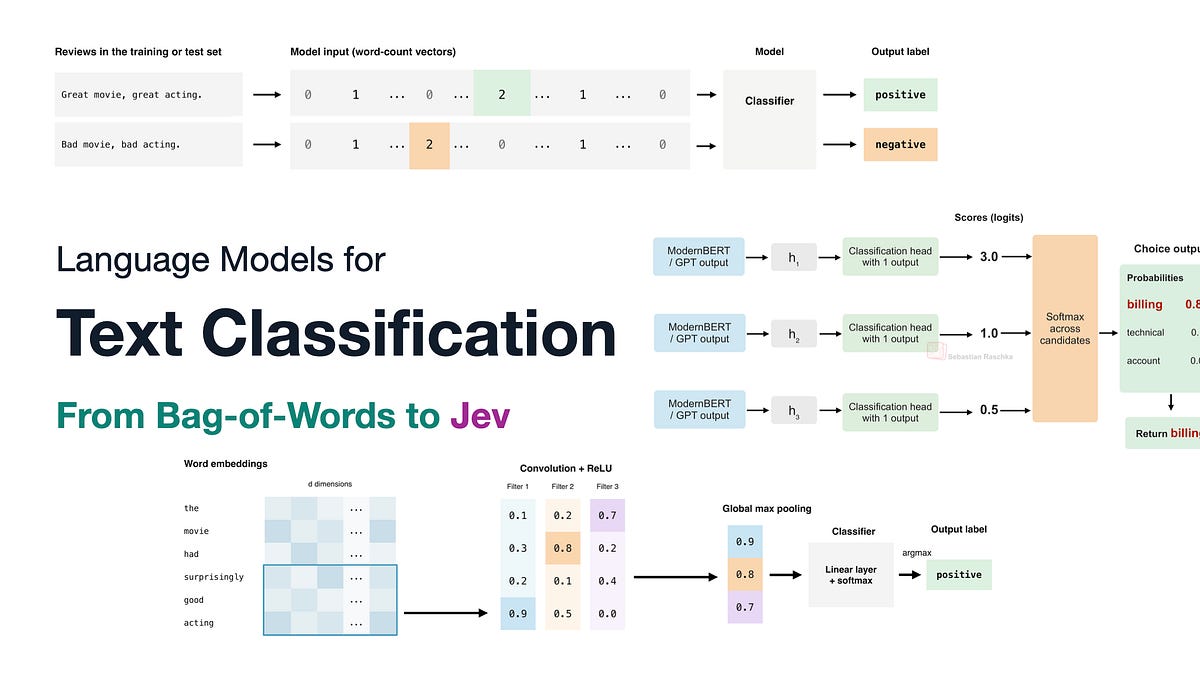
Sebastian Raschka situates Jev in the history of text classification, from bag-of-words features and classic models such as Naive Bayes and logistic regression through neural and transformer methods. He concludes that Jev is not merely “just a classifier”: general LLMs can classify too, and bespoke classifiers can beat it on narrowly defined tasks, but Jev occupies a useful middle ground of broad applicability with much lower latency and cost. The article aims to demystify the product’s hype rather than endorse it.
Read the source →Introducing Claude Sonnet 5.5
Anthropic calls Sonnet 5.5 a clear upgrade over Sonnet 5, claiming more than 30% faster generation and up to 30% lower per-task cost at unchanged $2/$10-per-million input/output-token prices. It reports 70.6% on Terminal-Bench 4.0 versus Sonnet 5’s 10.3%, with large coding gains at higher effort, while maintaining that Opus 5.5 remains stronger for complex, open-ended work requiring sustained judgment. Sonnet 5.5 launches with cyber safeguards comparable to Opus 5’s, and Anthropic says routine software and most life-sciences work are unaffected by those targeted controls.
Read the source →Claude Sonnet 5.5 in GitHub Copilot
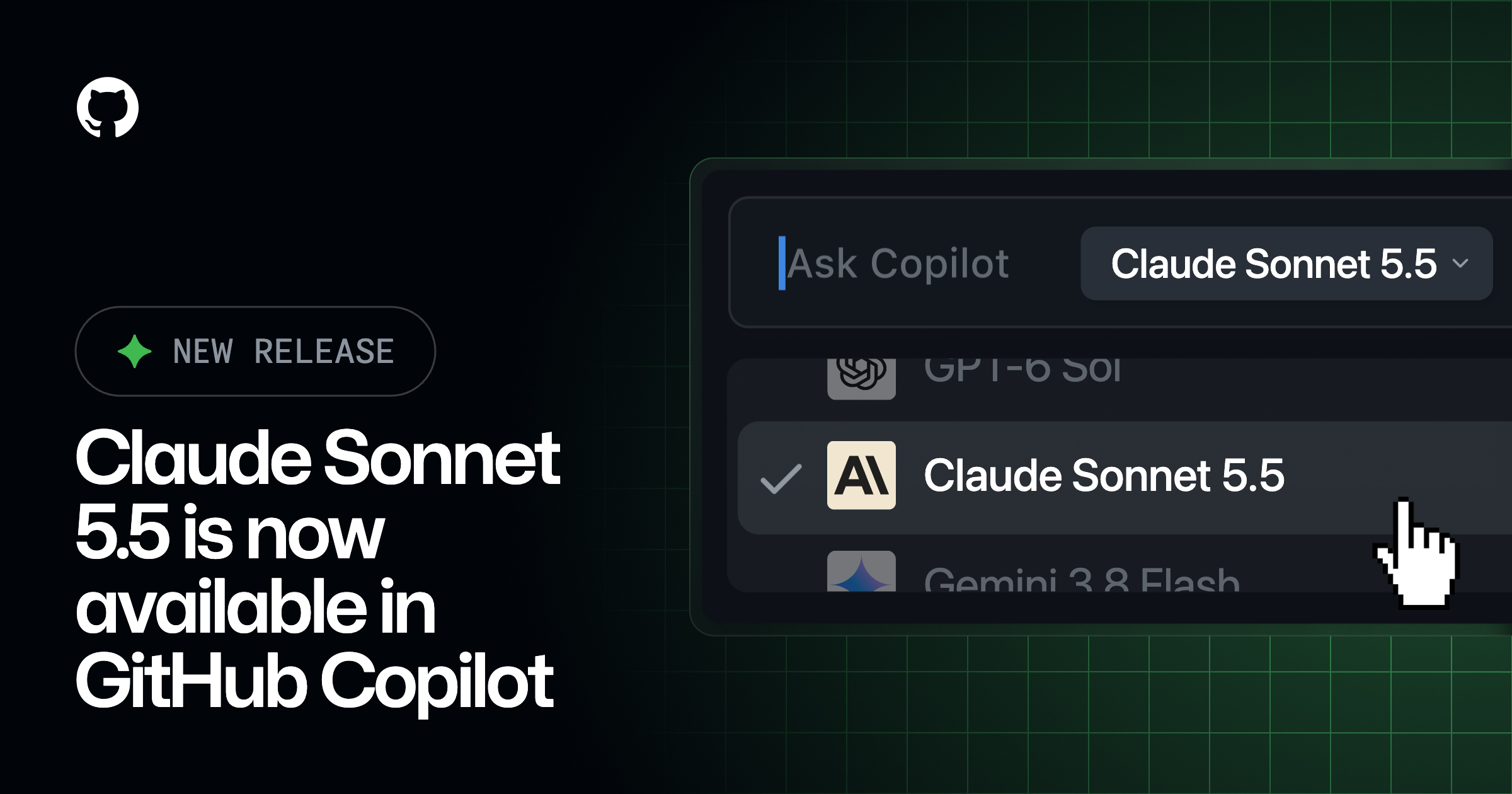
GitHub Copilot now offers Claude Sonnet 5.5 to Pro, Pro+, Max, Business, and Enterprise customers, with a gradual rollout. GitHub says early testing found comparable coding performance to Sonnet 5 using fewer steps, tokens, and tool calls, with faster completion. It is billed at the provider’s list price, and organization administrators can manage access through Copilot model policy.
Read the source →Watch the winning trailer from the Future Vision XPRIZE, The Gifted.

Independent filmmaker Jeff Synthesized won the Future Vision XPRIZE grand prize for The Gifted, selected from more than 2,500 entries. The film follows an 11-year-old who recreates his late mother’s voice and essence through code, which then quietly helps their community; its stated theme is technology as empathy and connection. The solo project receives $100,000 plus $2.5 million in feature-production funding through Google’s 100 ZEROS initiative and Range Media Partners.
Read the source →Claude Platform release notes — September 28, 2026
Claude Sonnet 5.5 is available through the Claude API, AWS, Google Cloud, and Microsoft Foundry. Anthropic warns that Sonnet 5 integrations can break because “disabled” thinking is replaced by between-tools thinking, forced tool choice now returns HTTP 400, old computer-use tooling is unsupported, and some models cannot be used as advisors. It also changes preserved-thinking handling: Sonnet 5.5 reasoning blocks are usable only by the originating or linked account, and blocks sent from another account are dropped before the model sees them.
Read the source →Import AI 474: Platonic mindspace; TPUs in space; Zhipu starts an outer RSI loop

The captured portion leads with Michael Levin’s speculative proposal that minds are patterns in a Platonic space, with living or engineered bodies serving as interfaces through which those patterns enter the physical world. It links the idea to synthetic morphology and argues that goal states encoded in information fields can guide biological and engineered systems. The excerpt is philosophical and exploratory rather than evidence of a deployed AI system.
Read the source →