Meta makes Muse the center of its AI glasses push
Summary
Today’s releases turn AI agents from single-model assistants into managed systems: teams are adding explicit policy, sandboxes, monitoring, provider portability, cost routing, and human review around them. At the same time, frontier work is moving into embodied hardware, biological research, and public-health operations, where the value claims are increasingly tied to integration with real workflows rather than benchmark scores alone.
Show HN: AI·rete·RAG – a Rete rule engine decides, RAG explains why
AI·rete·RAG separates automated decisions from their explanations. A Rete rule engine produces the decision through repeatable, auditable rules, while retrieval grounds the explanation in an organization’s own documents. The design is aimed at workflows that need deterministic policy enforcement without giving up natural-language rationale.
Read the source →Show HN: Training a model to identify AI web content from structure alone

The retrieved arXiv page contains only arXivLabs boilerplate, not the paper abstract or method. It says arXivLabs supports community-developed features and emphasizes openness, privacy, and data quality. No evidence about the claimed structure-only classifier is available in the extracted text.
Read the source →The AI That Replaces Hours of Model Tuning - Frank Hutter
Frank Hutter describes TabPFN as a foundation-model-style approach to tabular prediction that learns an entire algorithm executed in a forward pass, rather than requiring conventional per-dataset model tuning. He argues it has made deep learning competitive with CatBoost and XGBoost on tabular data, while LLMs are a poor direct fit for billion-cell tables because numerical tokenization explodes context length. The discussion also distinguishes observational prediction from causal questions such as estimating the effect of a medical intervention.
Read the source →Every Jev Concept Explained (use with Claude)
The video frames Jev as a fast classifier rather than a conversational model: it turns ambiguous inputs into scores, booleans, or choices that deterministic software can act on. Its example is using a confidence threshold to flag a suspicious order, where a normal if-statement cannot directly assess qualitative signals such as tone or apparent fraud. The proposed workflow is to use Claude and human-defined criteria to formulate the questions and thresholds that govern those decisions.
Read the source →Announcing vllm-metal: Concurrent Serving on Apple Silicon
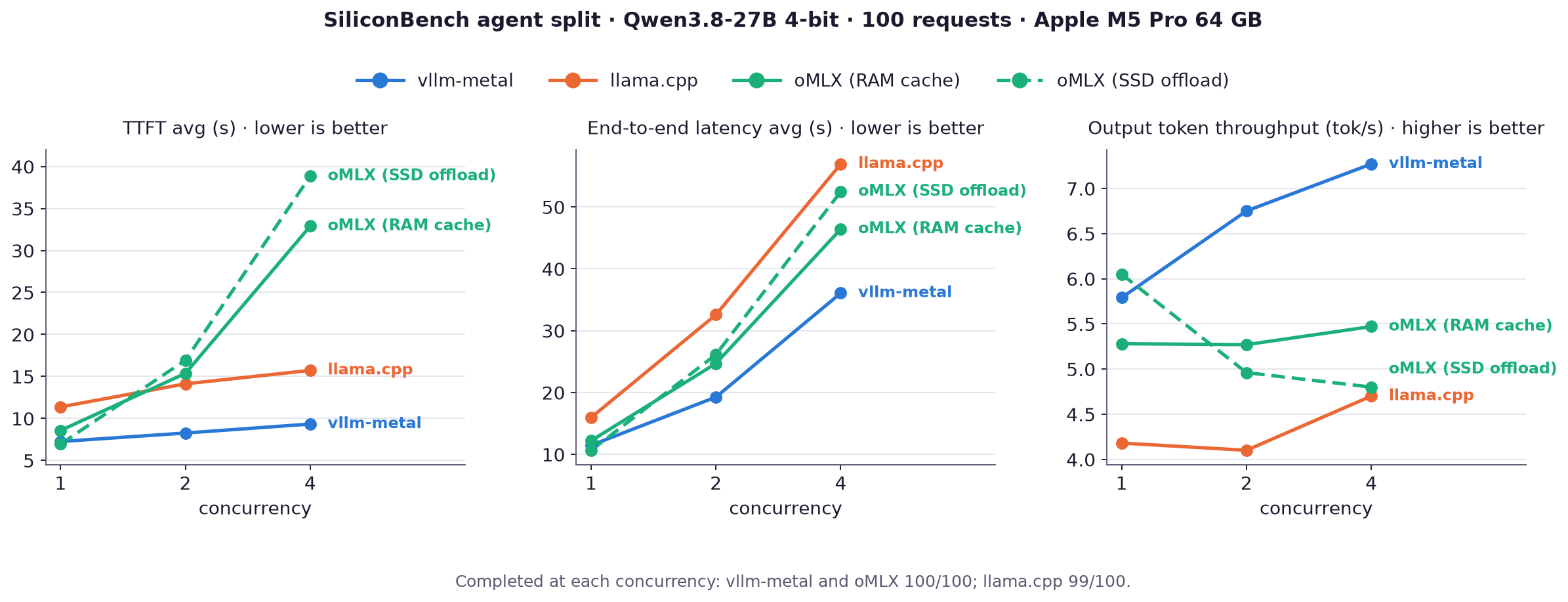
vllm-metal brings vLLM’s scheduler, paged KV cache, chunked prefill, and OpenAI-compatible server to Apple Silicon, with MLX and Metal doing execution. The project’s first release added batched multi-token prediction, GGUF and hybrid-model support, and faster M5 prefill; it can expose a local /v1 endpoint for coding agents. Its central benefit is serving concurrent, ragged workloads without padded attention waste, and tests on an M5 Pro found the lowest time-to-first-token and end-to-end latency at concurrency two and four.
Read the source →vime × RL-Kernel × AMD: Bitwise Train–Rollout Consistency on ROCm
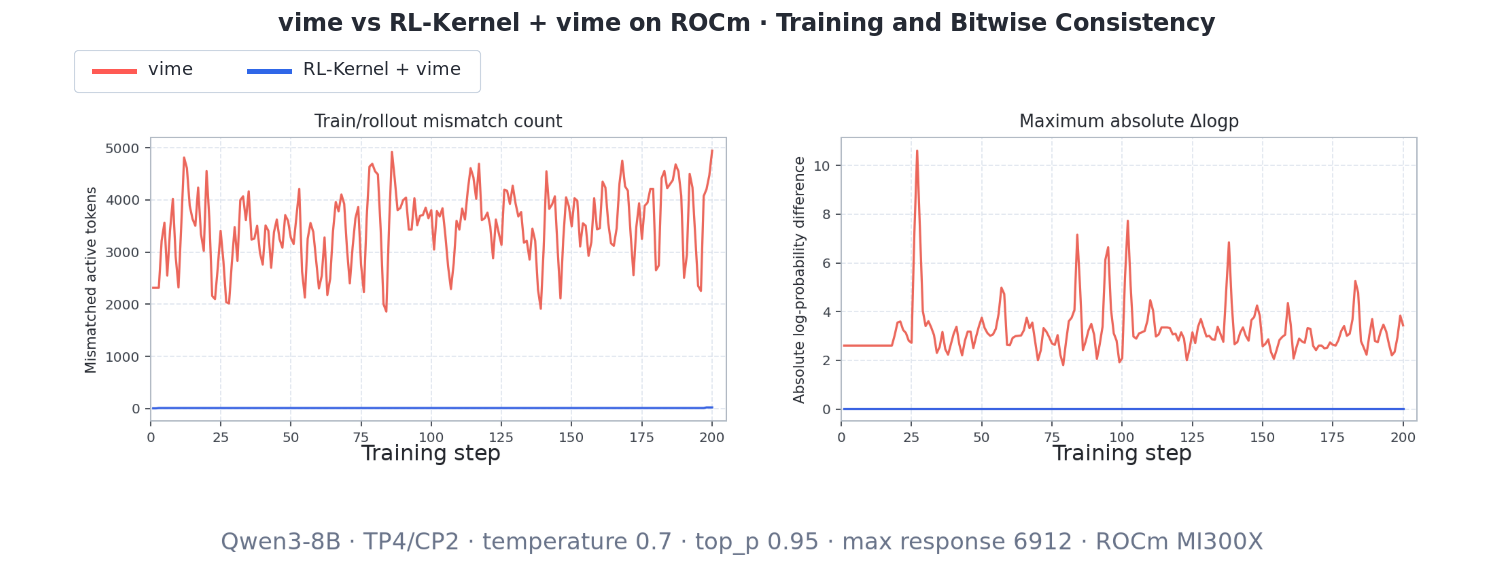
vLLM and RL-Kernel report a strict ROCm path that makes reinforcement-learning rollout and training produce identical log probabilities, eliminating numerical drift caused by different kernels, reduction orders, and execution layouts. The integration aligns attention, FFN, logprob, and communication paths on eight AMD MI300X GPUs, including deterministic GEMM and fixes for compiler, KV-cache, and HIP Graph behavior. In a Qwen3-8B test, it maintained zero mismatches and zero maximum absolute difference for 200 consecutive train–rollout steps.
Read the source →The Situation Report

Anthropic describes a Claude-assisted Ebola response in the DRC, where the Bundibugyo outbreak has caused nearly 8,000 confirmed cases and almost half have died. A WHO Africa team built a skill that extracts and checks case and lab data from local PowerPoints, flags trend changes, and summarizes district reports, reducing a situation report from a day of work to under an hour. The account stresses that experts retain scientific judgments, while Claude organizes complex evidence, supports modeling, and helps teams decide where resources and treatment centers may be needed.
Read the source →Claude discovers a novel enzyme system with CRISPR-like repeats

Anthropic says Claude agents identified a previously uncharacterized bacteriophage enzyme system, array-associated reverse transcriptases (ART), after searching DNA sequence data under high-level scientific direction. About 950 agents used 210 million tokens over 21 hours to find an unusual reverse transcriptase adjacent to repeat arrays and an accessory protein; lab work then validated the pattern. The system’s function is still unknown, but its features resemble rare programmable systems associated with DNA cutting, copying, and pasting, and Anthropic has released a preprint.
Read the source →Claude Opus 5.5: Fable 5.1 Performance at 40% Less
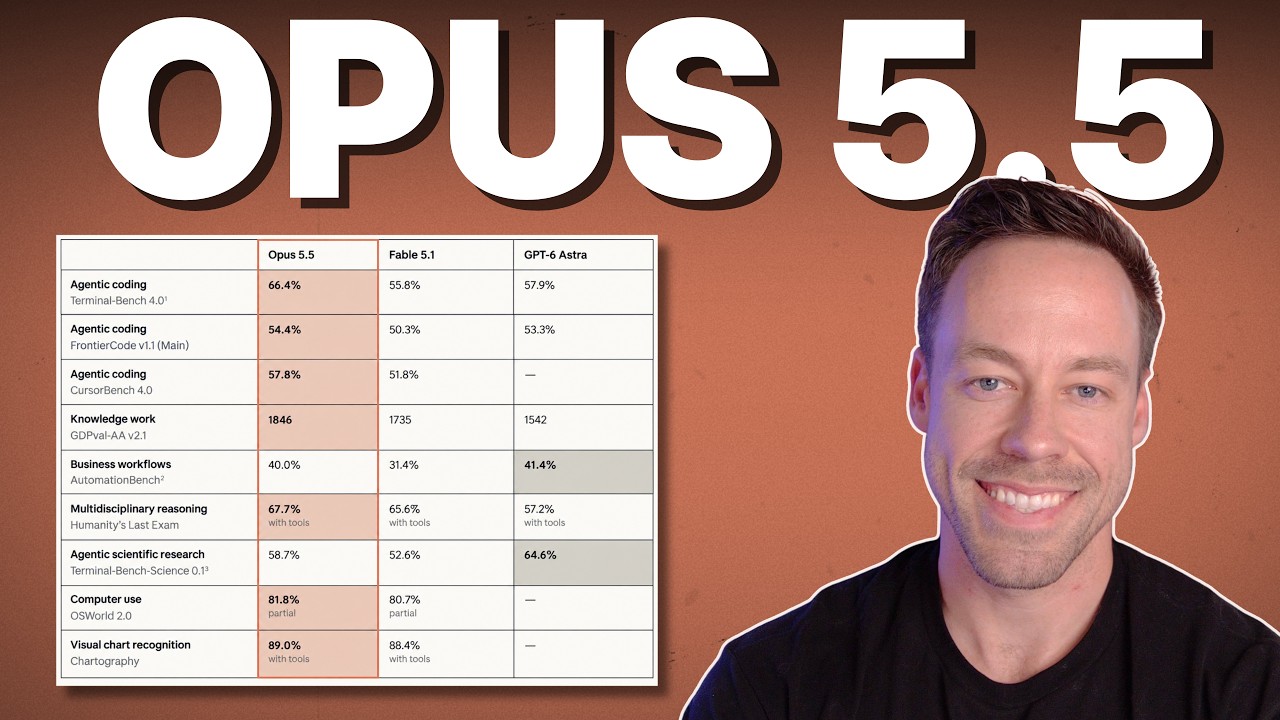
This analysis claims Opus 5.5 matches or exceeds Fable 5.1 on most cited benchmarks while costing about 40% less, including a Terminal Bench 4.0 result of 64.2% versus 49.4% at roughly one-third the cost. It argues that cost per completed task and token efficiency matter more than leaderboard position, and that medium or high effort often beats maximum-effort settings on value. The author also highlights clearer writing and lower token prices, but notes real-world durability of the performance claims still needs validation.
Read the source →GPT-6 Soul & Luna: Cheaper Models That Still Deliver

The piece positions GPT-6 Soul and Luna as lower-cost routing options for work that does not need GPT-6 Astra. It cites Soul at about a five-point Frontier Code deficit to Opus 5.5 but around one-third its $6.19 per-task cost, and says GPT-6 Luna holds roughly prior-generation performance at 15 cents per task instead of $2.57. It also reports lower factual-error rates—Soul falls from 8.5% to 4.6%—and says changing reasoning effort no longer invalidates a warm cache.
Read the source →More ways to request and configure Copilot code reviews
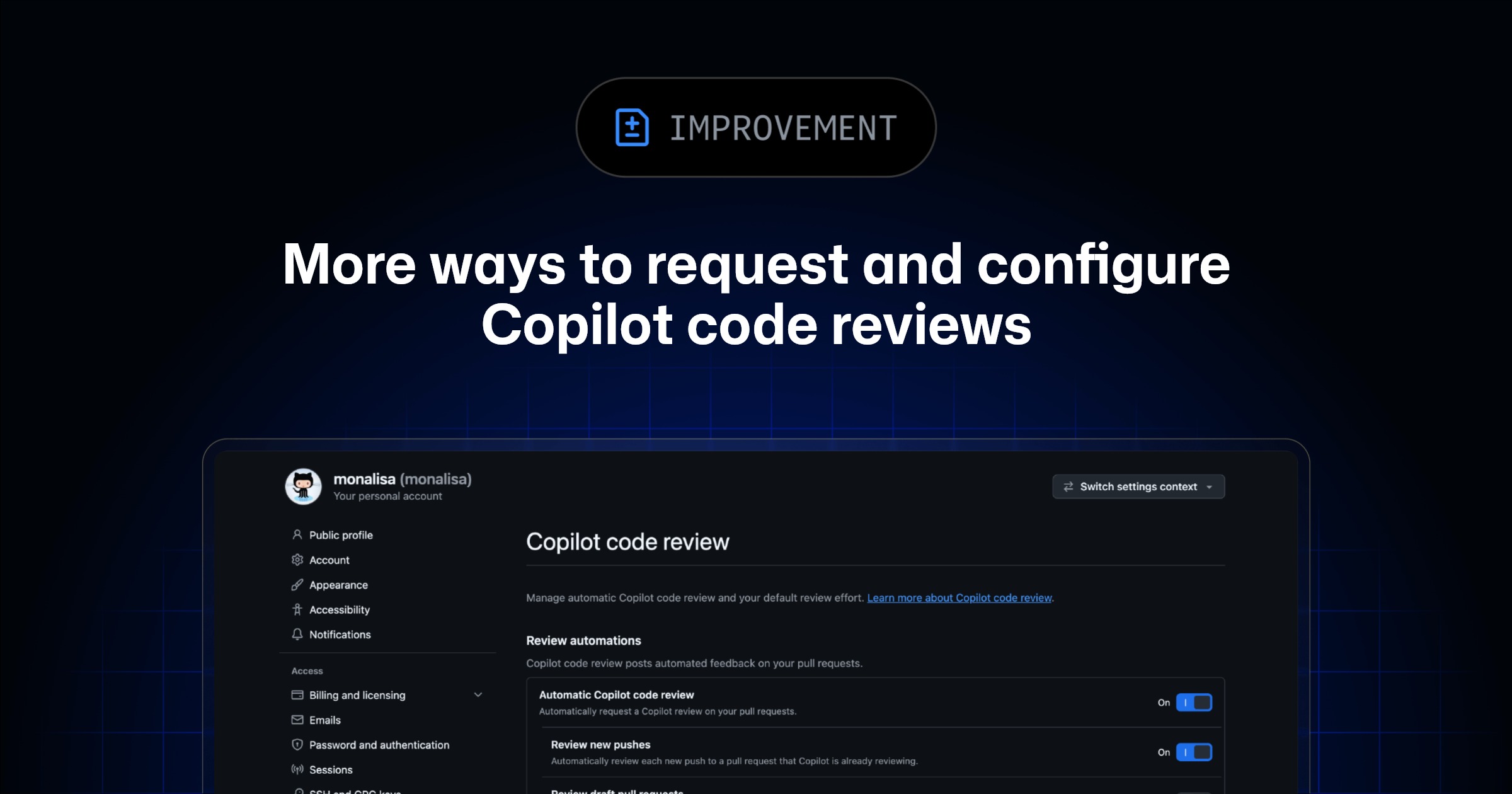
GitHub has made personal Copilot code-review settings generally available across all Copilot plans, including Business and Enterprise. Users now get a dedicated review settings page and can apply a default effort to both requested and automatic reviews, while still choosing a different effort on an individual pull request. Enterprise administrators can set an inherited Lite, Balanced, or GitHub-default effort, with organization and repository overrides preserved.
Read the source →Local sandboxing in the GitHub Copilot app
The GitHub Copilot app now offers per-project local sandboxing in public preview to constrain filesystem, network, and credential access for local repository sessions. It is disabled by default, applies to newly started sessions, and fails closed if the operating system cannot enforce the requested policy. Users can enable it in project settings or turn it on for an active session with /sandbox on; it does not cover cloud sandboxes, remote hosts, or Copilot CLI settings.
Read the source →Rollouts and Security Review
Cursor launched two Teams and Enterprise bots: Rollouts monitors a pull request as it deploys, while Security Review looks for exploitable vulnerabilities in every non-draft PR. Rollouts creates an editable monitoring plan from the diff, then uses deploy events plus logs, metrics, and traces to judge each environment as healthy, regressed, or inconclusive; it can propose a revert or hand off a fix but does not take rollback action itself. Security Review traces input flows and flags injection, auth bypasses, secrets, SSRF, unsafe deserialization, and vulnerable dependency changes, with attack paths and proposed fixes.
Read the source →Rendering huge pull requests in the GitHub Copilot app

GitHub rebuilt the Copilot app’s PR view to handle a test case of 2,200 files, more than one million changed lines, and 400-plus inline comments. Ordinary diff virtualization relies on known row heights, but comments have dynamic heights driven by wrapping, interactive controls, and loading assets, so naive estimates cause gaps, clipping, or scroll jumps. The team instead uses a separate geometry model with bounded, lazy measurement and small, viewport-anchored corrections, while retaining the efficient imperative renderer and typed-array offset math for code rows.
Read the source →Claude Platform release notes — September 22, 2026
Claude Opus 5.5 is available across Anthropic’s API, Bedrock, Google Cloud, and Microsoft Foundry with a default one-million-token context window, 128K maximum output, adaptive thinking, and pricing of $4 input/$20 output per million tokens. Thinking is always on: callers must omit the thinking field and use the effort parameter, while certain toolchoice modes are rejected. The release also previews adding or changing tools mid-conversation without invalidating the prompt cache through new beta headers.
Read the source →Advancing Private AI Compute with secure, server-side memory
The retrieved post provides only its announcement summary: Google is introducing private, server-side memory to Private AI Compute for personal AI. It identifies the intended capability as memory that lives on the server while remaining within Google’s private-compute approach. The extraction supplies no technical architecture, retention policy, or availability detail.
Read the source →Gemini 3.8 text-to-speech says hello

Google introduced Gemini 3.8 Flash TTS and Flash-Lite TTS, which create custom voices and direct expressive multi-speaker dialogue across AI Studio, the Gemini API, Enterprise, Notebook, and Vids. Google says Flash TTS leads Hume’s Voice Design Benchmark at 71.4 and accent modeling at 60.8, while the two models rank first and second on its quality index and support more than 100 languages. Voice replication requires a matching consent recording from the voice owner, and every generated clip receives an imperceptible SynthID watermark.
Read the source →Google Beam expands with new regions, partners, and customers

Google Beam, delivered as HP Dimension with Google Beam, is expanding to the US, Canada, UK, France, Germany, and Japan with 18 channel partners and support for both Meet and Zoom. An eight-week internal study reported that Beam users felt 50% more connected, found feedback 33% easier to understand, and needed 21% fewer follow-up meetings. Google is also creating an extended network with Industrious, where select US sites will offer bookable units from October.
Read the source →How to Use NVIDIA Warp and MjWarp to Accelerate Robotics Simulation and Learning Workflows

NVIDIA’s tutorial shows how MuJoCo Warp moves robot simulation from a few CPU worlds to as many as 2,048 GPU-parallel environments using NVIDIA Warp. The gain is aggregate world-steps per second for reinforcement learning and large-scale sampling, not necessarily lower latency for a single simulation. It advises using CUDA graph capture, tightly sizing contact and constraint buffers, and validating the exact migrated state when needed; Warp also offers opt-in deterministic execution and differentiable kernels.
Read the source →[AINews] Meta Connect 2026: Muse glasses, voice, video, and Charm

Meta Connect put Muse at the center of a hardware-plus-agent strategy: the personal agent gains voice, real-time video, Mac computer use, an email address, and forthcoming access through Meta glasses. Meta also announced third-generation Ray-Ban glasses, $1,299 VR glasses, an FDA-cleared hearing-aid use case, and Charm, a Muse-focused keychain device shipping in December. The connector platform reportedly has more than 1,500 applications, but Meta only teased its next frontier model, and the post cautions that its favorable Muse Realtime Avatar evaluation lacked margins and rater counts.
Read the source →🔬Bio-security is an AI Arms Race - Eric Nguyen (CEO, Radical Numerics)
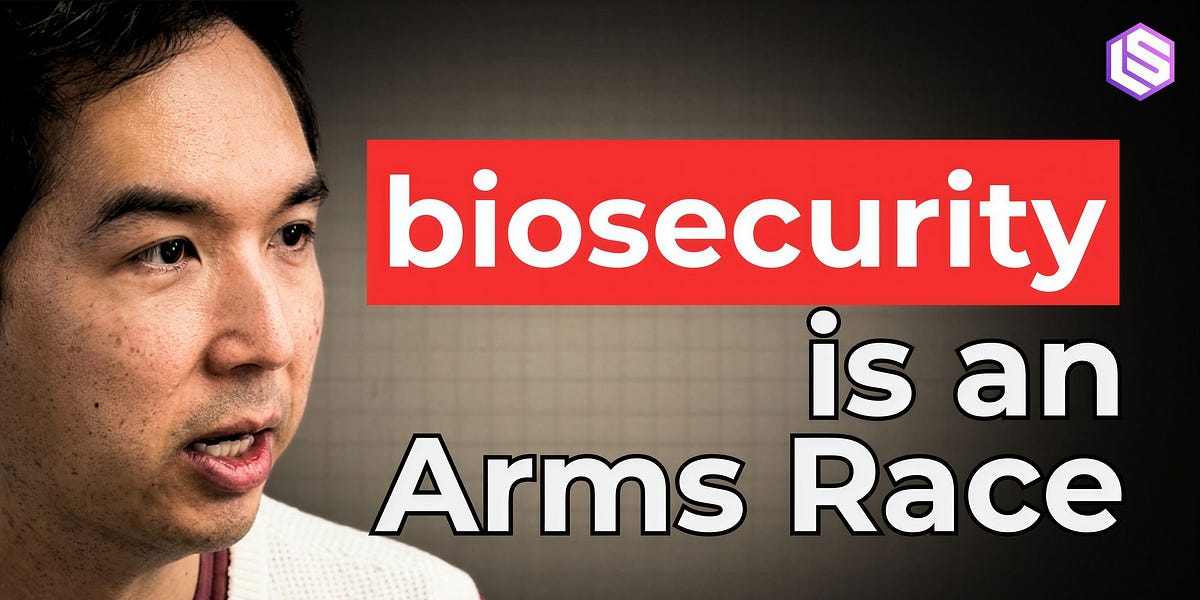
Eric Nguyen argues that genome language models can expand both biological capability and biological defense, making biosecurity an arms race rather than a reason to halt progress. The discussion points to Evo and Evo 2, which helped enable generated bacteriophage genomes, and to an RNA experiment in which a model extrapolated toward high-scoring aptamers withheld from training examples. Radical Numerics is building models that span DNA, RNA, proteins and eventually other modalities, while acknowledging that improved reasoning and long context increase misuse risk.
Read the source →Clankers Made Me Build a Second Brain

A skeptical developer argues that occasional AI convenience has exposed a more durable need: personal notes that preserve understanding rather than outsourcing it to a fallible chatbot. The author describes receiving invented command-line flags and self-correcting hallucinations, then concludes that short, synthesized notes would be more reliable for knowledge already learned. Obsidian is presented as a useful home for that personal knowledge, including information that cannot be searched externally such as one’s ideas and memories.
Read the source →v2.1.281
Claude Code v2.1.281 adds Claude Apps Gateway support for newer Desktop policy keys, Bedrock role assumption and guardrails, fixed telemetry labels, and a setting to hide commit and PR attribution. It also adds browser-flow elicitation for URL-mode MCP servers, stronger MCP validation in claude plugin validate, and an auto-mode recommendation in /insights. Much of the release is resilience work: it fixes failures around retries, stream interruptions, session resume, prompt-cache loss, oversized tool output, rate limits, and non-interactive or scheduled sessions.
Read the source →Design Engineering with Maggie Appleton
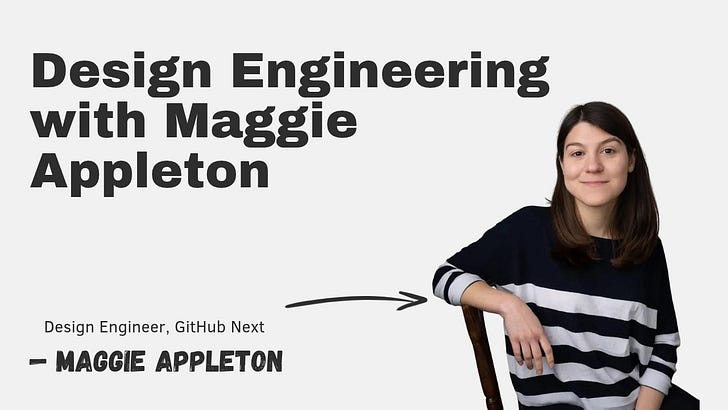
Maggie Appleton describes design engineering as problem solving with different materials, where anthropology, naming, visual prototyping, and engineering constraints all shape better products. She starts projects with paper sketches because they are faster than prompting and remain visible the next day, and she uses small custom “jigs”—agent-built interfaces with sliders and controls—to steer AI prototypes interactively. Her experience building an early AI research interface also argues for familiar primitives: researchers preferred ordinary tables over novel canvases and card systems.
Read the source →Gemini 3.8 TTS Playground
Simon Willison built a bring-your-own-key playground for Gemini’s new Flash TTS models using the Gemini API’s permissive CORS policy. The API offers more than 2,000 voices, custom voice creation from a 30-second authorized sample, and conversational scripts with distinct characters and delivery instructions. In his test, Gemini 3.8 Flash generated 78 seconds of two-character audio in about 20 seconds for 2.74 cents.
Read the source →Shadow roots, explained with live examples
The retrieved item is a short prompt to build an interactive artifact explaining CSS shadow roots with live examples. It does not supply a technical explanation of encapsulation, slots, styling boundaries, or browser behavior. The practical takeaway from the available text is only that the author intends an example-driven teaching format.
Read the source →Two years of OpenAI Academy
The retrieved summary marks OpenAI Academy’s two-year anniversary and says it is expanding AI-skills access to more communities. It frames the effort as education and workforce enablement rather than a product launch. No program counts, locations, or new curriculum details appear in the extracted text.
Read the source →Sam Altman’s remarks at the United Nations Security Council
The extracted summary says Sam Altman addressed AI safety, human control, and international cooperation at the UN Security Council. The focus is governance of AI’s risks rather than a technical or commercial release. The available text does not include his specific proposals, commitments, or policy requests.
Read the source →Harvey turns legal context into stronger drafts with GPT-6 Astra
OpenAI says legal-tech company Harvey uses GPT-6 Astra to produce more structured, context-aware legal documents. The stated benefit is freeing lawyers to devote more time to strategy rather than first-draft production. The extraction provides no quantitative evaluation, deployment scope, or description of review controls.
Read the source →How invideo improves color grading 3x with GPT‑6 Astra
OpenAI says InVideo uses GPT-6 Astra to improve edit planning and color correction and grading by threefold. It also reports that the company produced 50 custom effects in one day with the model. The extracted summary does not establish the baseline, measurement method, or level of human review behind those results.
Read the source →Ringg’s AI agents resolve up to 65% of customer calls with OpenAI
Ringg uses GPT-5.6 for multilingual agents operating across voice, chat, WhatsApp, and web. OpenAI says those agents resolve up to 65% of customer calls and run at 90% less cost than GPT-4.1. The available summary does not describe escalation rules, definition of resolution, or how quality is measured.
Read the source →Introducing MentalHealthBench
OpenAI introduced MentalHealthBench, an expert-informed benchmark for judging helpfulness and safety in realistic mental-health conversations. It is intended to evaluate how models respond in a sensitive, high-stakes conversational domain. The retrieved text does not provide task categories, scoring methodology, results, or guidance on clinical use.
Read the source →ChatGPT Ads expands to Southeast Asia and Taiwan
ChatGPT Ads is expanding to Southeast Asia and Taiwan, extending eligible businesses’ ability to reach users across more than 60 countries. The announcement is a geographic expansion of the advertising product. The retrieved summary does not identify the specific markets, advertiser eligibility conditions, or ad-format changes.
Read the source →Airbnb widens access to GPT-6 Astra and OpenAI frontier models
OpenAI says Airbnb is widening engineering-team access to GPT-6 Astra and other frontier models. The stated use cases are bug resolution, system design, and faster shipping. The extraction does not report adoption figures, measured productivity impact, or the operating safeguards around the models.
Read the source →The Sequence Opinion - Issue 939: Beyond the Next Token
The article contrasts autoregressive text generation, which commits to tokens one at a time, with text diffusion, which repeatedly denoises an incomplete sequence and can revise multiple positions jointly. It argues that diffusion could enable faster generation and more flexible editing, but must coordinate those parallel decisions without giving away its computational advantage. It also clarifies that diffusion and autoregression are generation/training procedures, not alternatives to the transformer architecture—many diffusion models use transformers.
Read the source →How to train your own Jev for $17
Together AI released together/Tev1-4B-experimental, a Jev-like classifier based on Qwen3.5 4B that returns a score, boolean, or multiple-choice result from supplied state and questions. Its tutorial samples and normalizes 38,340 examples from six datasets, then uses Together’s fine-tuning service to train a model for about $17 in roughly 25 minutes. It walks through deploying the resulting model to a dedicated HTTP endpoint and using the repository’s test cases to verify it.
Read the source →GPT-6 ⚡, Opus 5.5 🧠, AI leaders at UN 🌐
The retrieved TLDR item contains only its headline, identifying GPT-6, Claude Opus 5.5, and AI leaders’ UN activity as the edition’s subjects. It supplies no body text, claims, numbers, or analysis to substantiate a fuller summary. The item therefore adds no detail beyond those named topics.
Read the source →Meta's VR Codebase Nobody Wanted to Touch — Until This
The video argues that AI-native engineering must target brownfield systems rather than empty demo repositories, treating legacy code as a functioning city with known routes and dangerous areas. Speakers recommend extracting use cases and entity models from existing code, tests, and documents, having the business validate the recovered specification, then generating a modernized system rather than mechanically translating COBOL or other legacy code. A Meta VR example reports that an engineer taught agents a refactoring pattern, parallelized similar work, and shifted into review; an MCP server added Horizon-world context and enabled work outside a single powerful Windows machine.
Read the source →Using Claude Opus 5.5 as your daily driver
The video’s side-by-side coding test says Opus 5.5 fixed a refund-rounding bug in under a minute, using fewer tool calls and producing a shorter, clearer report than Opus 5. In the presenter’s repeated tests, Opus 5.5 was about 30% faster and consumed 4% of a five-hour Max allowance versus 6% for Opus 5 on the example task. It says the model defaults to medium effort, which is sufficient for much daily work, with high effort reserved for harder changes.
Read the source →AI Coding Rate Limits are RIDICULOUS Now - Here's How You Keep Scaling Anyway
The presenter says both a $200 Claude Code plan and a $200 Codex Pro subscription were exhausted days before reset, despite no obvious increase in work, and treats worsening rate limits as an industry constraint on agentic coding. The proposed response is model routing across a workflow: reserve the strongest models for stages that genuinely need them and use cheaper, faster models elsewhere. The framing is that scaling planning, implementation, validation, and review now depends as much on token-budget allocation as on raw model capability.
Read the source →