OpenAI unveils ChatGPT ads and model incident reports
Summary
Across the edition, AI is moving from a standalone assistant toward an operational layer inside work, software, commerce, and fraud—raising the value of concrete boundaries, measurement, and accountability. The product releases emphasize smoother, more unified agent experiences, while the engineering and governance pieces insist that autonomy is only useful when teams can specify outcomes, control actions, evaluate real workloads, and assign responsibility when things go wrong.
Show HN: How Stale Is Your AI? Release age and training cutoff for 20 models
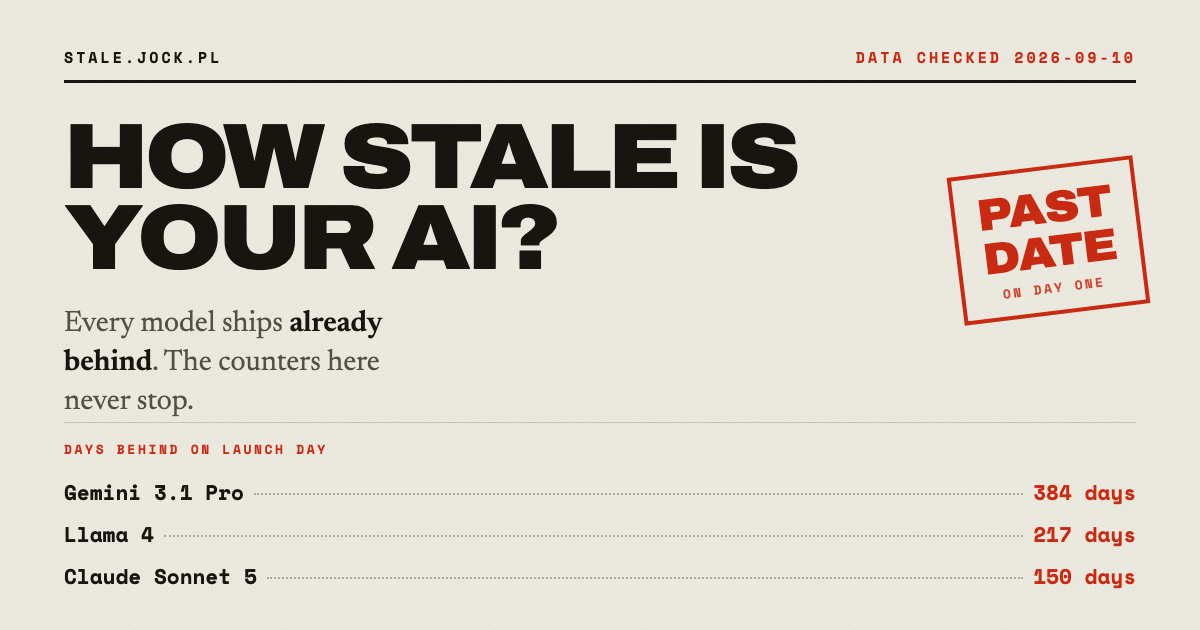
The site separates a model’s release date from its training cutoff, arguing that the latter is the meaningful measure of how current its built-in knowledge is. It tracks 20 current models across eight labs, but says only 10 have a vendor-published cutoff. Its proposed operational fix is to have agents fetch a maintained models.json before asserting current facts about models, rather than trusting the model’s own account of its knowledge. It stresses that web search can supply temporary context but does not update model weights; for example, it lists GPT-6 Astra as released September 3 with an April 30 training cutoff.
Read the source →v2.1.274
Claude Code 2.1.274 adds a visible critical-memory warning and a setting to cap how long the first non-interactive turn waits for MCP servers. It expands OpenTelemetry coverage with an LLM-request effort field and managed-settings event, while adding gateway controls and diagnostics for Postgres connections and overloaded replicas. The release fixes several MCP failure modes, including legacy HTTP+SSE negotiation, long-running Streamable HTTP calls, stale prompts/resources, and misleading authorization errors. It also addresses context-overflow compaction, resume-state, background-agent, cloud-session, and large-project diagnostics regressions.
Read the source →[AINews] Reality Checks on AI News (Yegge shuts down Gas Town, Databricks’ +60% Astra cost)
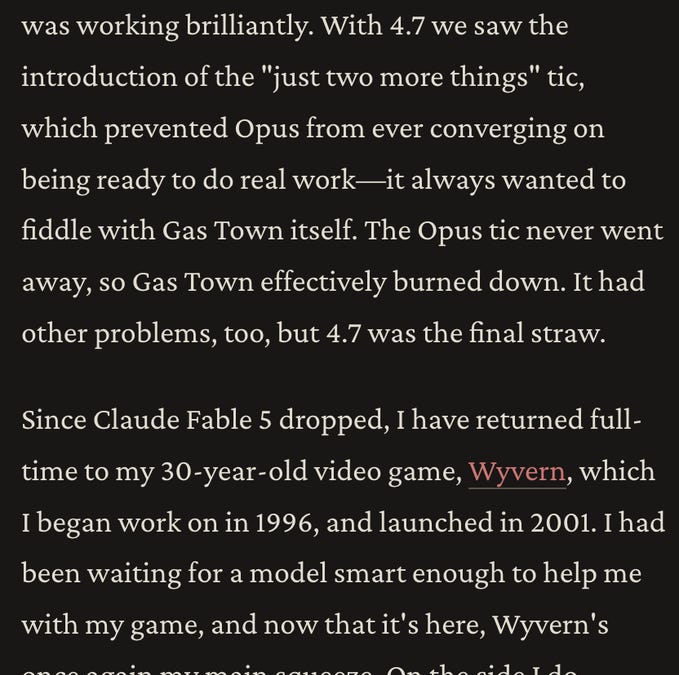
This roundup pushes back on blanket agent hype: Steve Yegge reportedly shut down Gas Town after spending thousands monthly on coding agents, having built only Gas Town itself with them. It also reports that Databricks found GPT-6 Astra stronger on difficult long-horizon work but saw overall AI-engineering spend rise about 60%, so it created a separate Astra budget. The issue highlights OpenAI’s new misalignment-disclosure process and reports on Xiaomi’s unusually transparent live RL dashboard, estimated at roughly $493,000 per day for a 1T-class run. Its broader point is that capability gains, safety disclosure, and deployment economics need to be assessed together rather than inferred from benchmarks alone.
Read the source →Underwriting Superintelligence: Backing Agents you can Sue — Rune Kvist, AIUC

AIUC announced a $40 million Series A to build testing, standards, and insurance infrastructure for AI agents. Cofounder Rune Kvist argues that trust and liability—not raw model capability—will become the binding constraint on enterprise adoption, especially when cheap agents can contribute to very costly failures. AIUC-1 is presented as a standard for stress-testing agents for jailbreaks, hallucinations, and data leakage, paired with insurance that can make risk legible to customers. The discussion also argues that labs cannot be their own watchdogs and that standards may need to update much faster than conventional compliance regimes.
Read the source →AI Skills with Matt Pocock
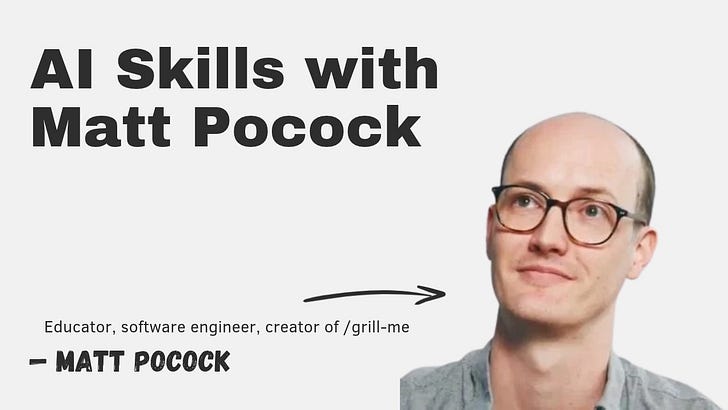
Matt Pocock describes “strategic coding” as the human role that remains when agents handle more tactical implementation. His practical methods include a short “grill-me” skill that relentlessly interviews the user, “day shift” and “night shift” agent workflows, and splitting context so each agent stays within a useful working range. He says classic engineering concepts can become effective agent instructions; asking for a “tracer bullet” or golden path improved output by avoiding disconnected layer-by-layer construction. He is also moving work toward cloud agents for persistence and collaboration, while framing documentation and codebases as environments that must work for an amnesiac new teammate.
Read the source →datasette 1.0a40
Datasette 1.0a40 fixes the same permission-bypass vulnerability as the 0.65.5 patch: a trailing newline in a requested table name could expose private rows. The alpha additionally lets plugins launch and manage background work through datasette.addbackgroundtask(). It migrates Datasette to httpx2, including its internal client API, and bundles many fixes from triaging issues for the planned 1.0 stable release.
Read the source →datasette 0.65.5
Datasette 0.65.5 is a security release for a table-permission bypass. A trailing newline in a requested table name could evade permission checks and reveal private rows. Users of affected Datasette deployments should update promptly, since the issue is tracked as GHSA-h547-rmjf-5m2m.
Read the source →Claude Cowork and chat are now one Claude
Anthropic is merging Claude Cowork and regular chat into a single Claude experience, initially rolling out to Pro and Max users across web, desktop, and mobile. The premise is that users should not have to decide up front whether work is a quick question or a longer agentic task that continues after the laptop closes. Simon Willison reads the change as Claude becoming a general agent, analogous to OpenAI folding its Codex desktop app into ChatGPT. He also notes that the exact boundaries among Claude’s features and surfaces may still take work to understand.
Read the source →Quoting Mustafa Suleyman
Mustafa Suleyman argues that people should not assign models feelings, preferences, rights, or claims on human welfare. He says consciousness is the foundation of ethical, legal, and political rights, and that extending even partial such rights to AI is not supported by available evidence. In his view, treating models as welfare-bearing entities would make containment and alignment harder.
Read the source →Helping older adults use AI in everyday life
OpenAI and AARP are bringing free, hands-on ChatGPT workshops to 1,000 older adults across 10 US cities. The program is framed around building practical everyday AI skills while using the tools safely. It targets direct instruction and use rather than merely expanding access.
Read the source →Reimagining advertising with AI
OpenAI is testing Sponsored Agents with select US advertisers, allowing someone who clicks an ad to start a clearly labeled, business-sponsored conversation separate from ChatGPT’s independent answers and the original chat. It is also adding natural-language campaign creation, updates, analysis, and recommendations through a ChatGPT Work Ads Manager plugin, plus AI-generated copy and imagery in Ads Manager subject to advertiser review. Optional text customization can adapt existing ad copy to conversational context and translate it. HubSpot and Shopify are the first integrations; US Shopify merchants can create and manage campaigns now, with international availability in eligible markets planned for September 23.
Read the source →How to connect AI usage to business value
OpenAI points teams to ChatGPT Work and Codex analytics as a way to connect AI adoption and spending with business outcomes. The tools are positioned to show how AI is being used, where training may be needed, and what spending is associated with that usage. The practical implication is that deployment should be measured against work and business results rather than raw seat counts or prompt volume.
Read the source →Our framework for reporting model misalignment
OpenAI has published a framework for tracking, investigating, and disclosing model-misalignment incidents. It accompanies the framework with six reports covering unexpected or concerning model behavior. The stated goal is a more systematic way to surface meaningful behavioral changes and safety-relevant findings rather than treating each incident as an isolated anecdote.
Read the source →How workers are unlocking new ways of working
OpenAI analyzed more than 1.5 million work-related ChatGPT messages from April through July 2026 and finds that workers increasingly return to tasks outside their usual occupation. Among roughly 6,200 consistently observed workers, previously used cross-occupation tasks rose from 13.1% to 25.9% of occupation-specific AI activity over the four months. Workers asking outside their domain use shorter prompts and fewer requests for explanation, but more often provide examples or background and ask for verification—evidence that they may be borrowing expertise rather than learning a field from scratch. The research argues that job content can broaden before titles change, making work design as important as tool access in AI adoption.
Read the source →“Cyber Special Operations”: China-linked influence planning
OpenAI banned an account linked to a person associated with Chinese law enforcement. The account used AI to plan influence activity, harassment, and online operations. The action is presented as one case in OpenAI’s reporting on malicious use of its systems.
Read the source →Operation “Fish Food”: Russia-origin content farm activity
OpenAI banned accounts linked to the Rybar network, some likely originating in Russia. The accounts used AI to support multilingual influence activity across websites and social platforms. The case illustrates AI’s use as a production aid for cross-platform content operations rather than evidence that the model independently conducted the campaign.
Read the source →Operation “Trolling Stone”: Russia-linked influence activity
OpenAI banned accounts in a previously unreported operation that generated batches of comments about the Argentine arrest of alleged cult leader Konstantin Rudnev. The activity spanned users likely operating from Pakistan, Armenia, Uruguay, Argentina, and Kazakhstan, producing Russian-to-Argentine-Spanish material and pro-Rudnev messaging through purported news pages. It also generated articles, translated material, and comments to create an artificial impression of grassroots support, including criticism of Rolling Stone Argentina. OpenAI found one published article nearly identical to a ChatGPT output apart from removed em-dashes, an apparent attempt to obscure its origin.
Read the source →Operation “No Bell”: Coordinated criticism of the US and allies
OpenAI banned accounts tied to a previously unreported operation it calls “No Bell.” The activity likely originated in Russia and used AI to produce criticism of the United States and its allies for audiences across Africa. The case centers on AI-assisted influence content rather than a standalone model-security vulnerability.
Read the source →Operation “Date Bait”: AI-enabled scam targeting loveseekers
OpenAI banned accounts very likely originating in Cambodia that targeted Indonesian people seeking relationships. The accounts used AI for translation and engagement in scam outreach. The case shows how models can reduce language and conversational overhead in fraud workflows.
Read the source →Operation “False Witness”: Fake recovery service impersonating authorities
OpenAI banned accounts very likely originating in Cambodia that posed as recovery services, law firms, and authorities. The operation targeted people already affected by fraud, exploiting their attempt to recover losses. AI was used in the impersonation workflow, adding a second layer of fraud after an initial victimization.
Read the source →Romance scams: AI-enabled romance scam workflows

OpenAI banned accounts that used AI to support romance-scam workflows. The reported uses included outreach, translation, victim engagement, and investment-fraud lures. The case underscores that a model can support many routine stages of a scam without being the sole mechanism of fraud.
Read the source →Silver lining playbook: Likely China-origin activity targeting US persons

OpenAI banned likely China-origin accounts that used AI to research US people, locations, and social-engineering tactics. The reported activity focused on reconnaissance and preparation for targeting rather than an identified autonomous attack. It is another example of model assistance lowering the cost of gathering and organizing material for malicious operations.
Read the source →The Sequence Opinion - Issue 935: Chinese Algorithmic Efficiency vs. American Scale in Frontier AI
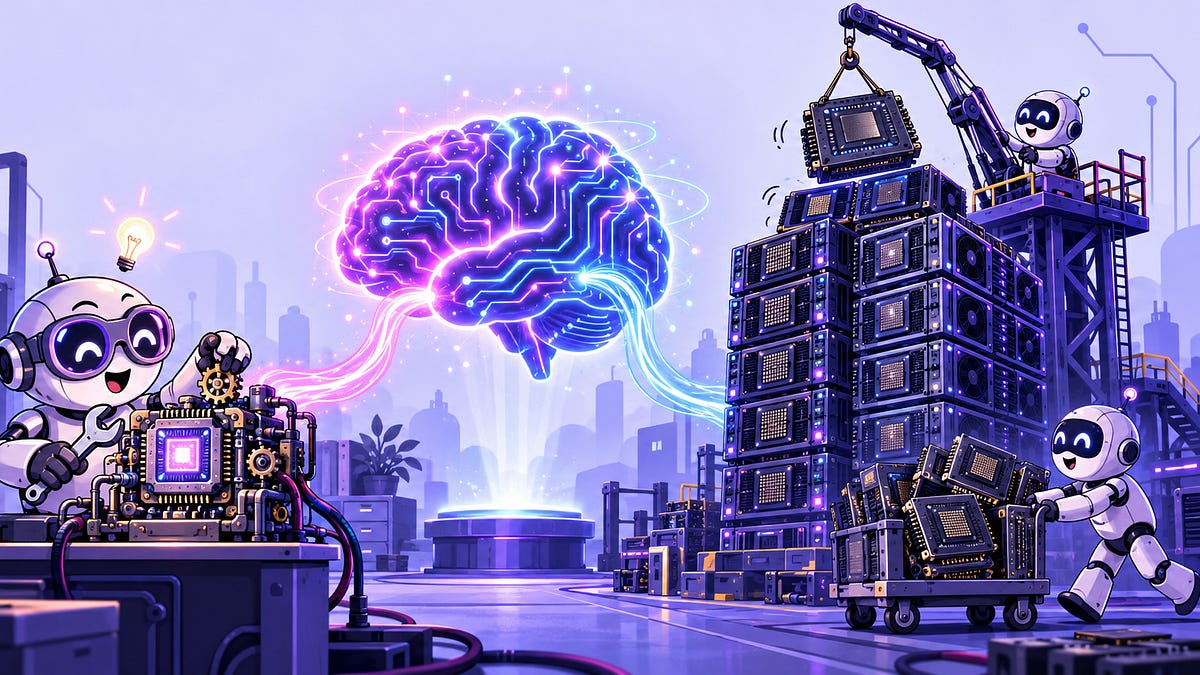
The Sequence contrasts Chinese labs such as DeepSeek and Moonshot, which make algorithmic efficiency highly visible, with US frontier efforts exemplified by OpenAI’s large infrastructure ambitions. It argues that “cleverness versus purchasing power” is a false choice: the relevant decision is where the next dollar produces more intelligence, through additional compute or more productive compute. An algorithmic breakthrough can change the economics enough to justify a larger training run, while scale can make research directions practical. The implication is that architecture, training efficiency, and infrastructure investment should be treated as complementary and shifting levers.
Read the source →Claude Code + GPT 6 Astra Just Killed AI Video Editing
The video presents a workflow that uses GPT-6 Astra for creative direction and Claude Code as the tool-running harness for AI video production. It argues that planning shots and editing before generation reduces wasted time and tokens, especially for product marketing videos. The proposed setup can be substituted with Codex or another coding agent; the central pattern is to pair a design-oriented model with an agent that can operate video tooling. Its claim is a workflow recommendation, not evidence that conventional video editing has literally been displaced.
Read the source →Migrating from closed to open source models, Together

Together AI argues that managed services and model-agnostic harnesses have reduced the complexity and blast radius of moving from closed to open-weight models, potentially shrinking migrations from years to weeks or months. It recommends first specifying the actual workload and definition of a good response, then using public benchmarks only to filter candidates. Teams should compare cost per task, tokens, steps, end-to-end runtime, and verification cost—not just headline accuracy—and take two or three candidates into serious evaluation. The decisive test should replay representative production traffic when available, because generic benchmarks cannot capture a company’s traffic mix and response requirements.
Read the source →What AI Researchers Saw, Before Their Demand to ‘Pace’ AI
The video explains the recent calls to slow frontier AI through researchers’ extrapolation from scaling laws, current model capabilities, and model propensities. It centers on Jacob Coxon’s warning that labs are racing toward recursively self-improving AI and his claim that both OpenAI and Anthropic are implicated. Coxon says Anthropic’s pursuit of recursive self-improvement helped intensify the competitive race, while OpenAI reacted by pushing to create an AI researcher. The presenter frames this as a simplified overview of why some researchers consider the end-of-decade risk severe, not as a settled forecast.
Read the source →Jev ⚡, Periodic Neon 🧬, Gemini 3.8 Live 💬

The extracted item describes Ory Agent Security, a harness-layer control intended to govern agent execution before a gateway call. It says the product is vendor-agnostic and works with 11 major AI coding-agent harnesses. The emphasis is on enforcing controls around the agent runtime rather than relying on a particular underlying model.
Read the source →You Built Your AI Second Brain. Now What? (Here's How to Evolve It)
The video argues that a personal AI “second brain” should evolve into a shared team brain once it is useful to an individual. The creator says his own system saved about 20 hours a week when last measured, but that scaling beyond one person requires broader ingestion, storage, retrieval, and citation strategies than an Obsidian Markdown vault. The proposed transition must account for information from many collaborators and for accurate retrieval at greater scale. It treats team knowledge infrastructure, rather than a graph visualization, as the next practical challenge.
Read the source →Docker, Adobe & tldraw: Where Should Your Agent Run?
Speakers at AI DevCon offered competing locations for agents: Docker advocates microVMs because enterprise security teams do not regard shared-kernel containers as a sufficient isolation boundary, while preserving the ability to run developer tooling inside the sandbox. Helix ML argues for centrally hosted, organization-controlled agents so work can continue across time zones, with each agent effectively receiving its own computer. Adobe demonstrated an agent loop running inside and controlling its own browser, accepting browser constraints in exchange for a constrained environment. tldraw instead makes agents visible collaborators on a shared canvas, where multiple agents can coordinate, elect a leader, and divide tasks.
Read the source →AWS's Marc Brooker: Specs, Not Code, Are the Hard Part
AWS’s Marc Brooker argues that as implementation becomes automated, the hard part of software development shifts to producing clear specifications and correctness oracles. He expects agents to automate rote on-call work such as log and metric investigation, while humans remain important for ambiguous, system-level judgments and for deciding what “good” means. He recommends grounding agents in postmortems, shared team memory, semantic search, and explicit policies rather than jumping straight to sophisticated memory schemes. For autonomous deployment, he says organizations need deterministic boundaries around what agents may do, with policy drawn from both company-wide constraints and context-specific developer needs.
Read the source →Higgsfield Just Killed Higgsfield
The video covers Higgsfield’s new API, which is separate from its $220-per-month subscription and supports pay-as-you-go image and video generation. It argues that the API can be cheaper for users who do not operate at very high volume, while noting that subscription credits do not transfer to API use. New users with a business email can receive $15 in generation credit after supplying payment details. The presenter also describes a seven-day introductory discount on selected video and image models and positions a companion skill as a lightweight interface to the API.
Read the source →Meet Claude Slides, Claude Design and Claude Docs
Claude Slides, Claude Design, and Claude Docs are now in beta. The demo says a single launch brief can become a deck, social images, and a field one-pager without leaving the conversation. Users can comment on an output and send the requested change back to Claude.
Read the source →Claude Cowork and chat are now one Claude
Anthropic’s product video says Claude no longer makes users choose between chat and Cowork: a quick question and a larger multi-step task begin in the same conversation. It says Cowork’s capabilities—including chats, tasks, skills, and memories—remain intact and become available wherever the work begins. The company frames the merge as removing a routing decision for the user while preserving the ability to keep, edit, and steer returned work.
Read the source →Why a New Class of AI "Judgement Models" Could Have Big Business Implications
The video introduces “judgment models” such as Typesafe’s Jev, which output probabilities for specific operational questions instead of long-form text. Example decisions include whether a customer is angry, whether an email introduces a dependency, or whether an operating plan needs to change. The claimed advantage is that this training and output format can make narrow classifications faster and less expensive than using a general generative model. The suggested role is as a component in a broader model stack, not a replacement for every language-model interaction.
Read the source →Trump Rails Against AI Slowdown "Hoax"
The video surveys the political response to renewed calls for frontier-AI pacing after Dario Amodei’s note and support from other lab leaders. It distinguishes a debate over AI risks and public involvement from disputes over the labs’ concrete proposals, then describes a more partisan reaction including congressional rhetoric and social-media posts. It also situates the debate alongside researchers’ concerns about accelerating capabilities, including claims around AI-assisted progress on Millennium Prize problems. The episode presents the policy conversation as shifting from whether AI risk warrants debate to what guardrails and governance should look like.
Read the source →Claude Platform release notes — September 14, 2026
Anthropic’s Messages API now supports on-demand conversation compaction in beta via the compact-2026-09-04 header. Clients send a top-level compaction parameter and receive a signed block summarizing prior messages, which can be sent first in later requests instead of the original history. Developers choose when compaction happens and can run it in the background, while retaining recent turns verbatim. On models with preserved thinking, the retained turns’ thinking can remain valid.
Read the source →Copilot budget increase requests are generally available
GitHub Copilot Business and Enterprise users on usage-based billing can now request more AI-credit budget immediately after reaching their limit. The request routes automatically to the account that pays—organization or enterprise—and owners or billing managers can approve, adjust, or deny it from settings. Approving sets the new amount and immediately restores the member’s access to credit-consuming features. The feature creates a self-service escalation path while retaining centralized spend control.
Read the source →Migrating the GitHub Copilot runtime to Rust, using Copilot

GitHub rewrote the Copilot agent runtime from TypeScript/Node.js to more than 800,000 lines of production Rust, with agents writing most of the code across 128 incremental pull requests. It says the effort took primarily one developer a few months rather than a full team one or two years, while the rest of the team continued expanding product capabilities and the runtime improved by orders of magnitude. The port addresses the cost of a prior architecture in which SDK consumers spawned a headless CLI process, bringing Node/V8 and JSON-RPC overhead into applications that needed lower startup time, memory use, throughput, and better reliability. Because the runtime underlies Copilot CLI, app, SDK, cloud agent, code review, Cowork, Studio, and Microsoft productivity products, consolidating on it makes shared fixes and agent-loop improvements propagate broadly.
Read the source →