OpenAI launches cloud Agents API as AI tools multiply
Summary
The day’s clearest shift is from treating a model as a standalone assistant toward treating AI as managed infrastructure: durable context, routed compute, delegated subagents, controlled tool permissions, and explicit verification. That makes cost and governance first-class design variables alongside raw model quality—whether the work is GPU serving, agentic coding, public-sector deployment, or scientific search. At the same time, the sources repeatedly argue that stronger autonomy increases the need for human-reviewed architecture, real-world testing, and safeguards against misuse.
Tiered KV Cache Offloading in vLLM
vLLM’s new tiered cache retains evicted long-context KV state in CPU memory, storage, or remote peers instead of recomputing it when a request resumes. Data first moves from accelerator memory into a canonical host-memory layout, freeing scarce HBM before slower storage or network transfers occur. That layout lets differently configured nodes share chunks directly, while host memory acts as an LRU/ARC cache and secondary tiers promote misses back asynchronously. The feature, available since vLLM 0.22, is intended to cut recomputation and latency while making cache capacity shareable across a cluster.
Read the source →Claude 5 Changed Prompting Forever, Fix Yours Now
The video argues that newer Claude models perform worse when prompts over-prescribe steps, demand self-checking, or retain scaffolding written for weaker models. Its reading of Anthropic’s guidance is to give the complete goal and constraints, then let the model choose the execution path rather than narrowing it to a human-authored recipe. The practical recommendation is to audit old prompts and skills, strip instructions that merely dictate process, and preserve only requirements that genuinely matter. It presents this as a lesson that may also apply to newer OpenAI models.
Read the source →You pay for two frontier models and route almost everything to one. Both Mac apps are yours for an email, and the guide walks the verbatim prompt, the 65-check list, the job-by-job casting call, and where my own test was unequal.

The author gave Fable 5.1 and Astra the same brief for a Mac clipboard app and found that the comparison changed what they understood about the product, even where neither output was retained. Astra’s faster initial build enabled more feedback cycles, so its eventual advantage partly reflected iteration time rather than a clean capability verdict. The author now tends to use Astra for drafting and Fable for thinking through unsettled arguments, while warning that familiarity and accumulated prompting practice can bias model comparisons. The central advice is to compare models through the assignment and correction loop, not a single first-generation result.
Read the source →How a researcher uses Codex and ChatGPT to search for new antimicrobial molecules

César de la Fuente’s lab uses deep-learning models to search genomic and protein datasets for antimicrobial candidates, compressing early candidate discovery from years to hours. ChatGPT and Codex supplement that work by helping researchers formulate hypotheses, write and refine code, process data, and bridge gaps between biology, chemistry, and computing. The article stresses that AI prioritization is only the start: candidates still require efficacy, toxicity, resistance, manufacturing, regulatory, and clinical validation. Its message is that AI can broaden and accelerate the search space, but laboratory experiments remain the ground truth.
Read the source →Now everyone can put data to work
OpenAI introduces a Data agent in ChatGPT Work for connecting company data, finding insights, and creating interactive dashboards through natural-language requests. The extracted announcement presents it as a way to make organizational data usable without requiring users to construct analyses manually. No additional implementation, pricing, or availability detail appears in the supplied text.
Read the source →Introducing ChatGPT for Financial Services
OpenAI announces ChatGPT for Financial Services, a product that combines built-in financial data with GPT-6 Astra. The stated use cases are research, modeling, and client-ready materials. The supplied extract does not give further details about data sources, controls, availability, or pricing.
Read the source →Expanding AI access and cyber defense for federal, state, local, and tribal governments
OpenAI says eligible US federal, state, local, and tribal government organizations will receive licenses at no charge, a 50% discount on usage, and expanded cyber-defense support. The offer combines access incentives with security assistance rather than describing a new model or product. The supplied extract does not specify eligibility criteria, duration, or the scope of the cyber-defense program.
Read the source →Build more natural voice experiences with GPT‑Live‑1 in the API
OpenAI introduces GPT-Live-1 for API voice applications, positioning it around natural full-duplex conversation. The announcement highlights improved instruction following, custom voices, and telephony support. The provided extract does not include performance figures, rollout timing, or pricing.
Read the source →Introducing the Agents API
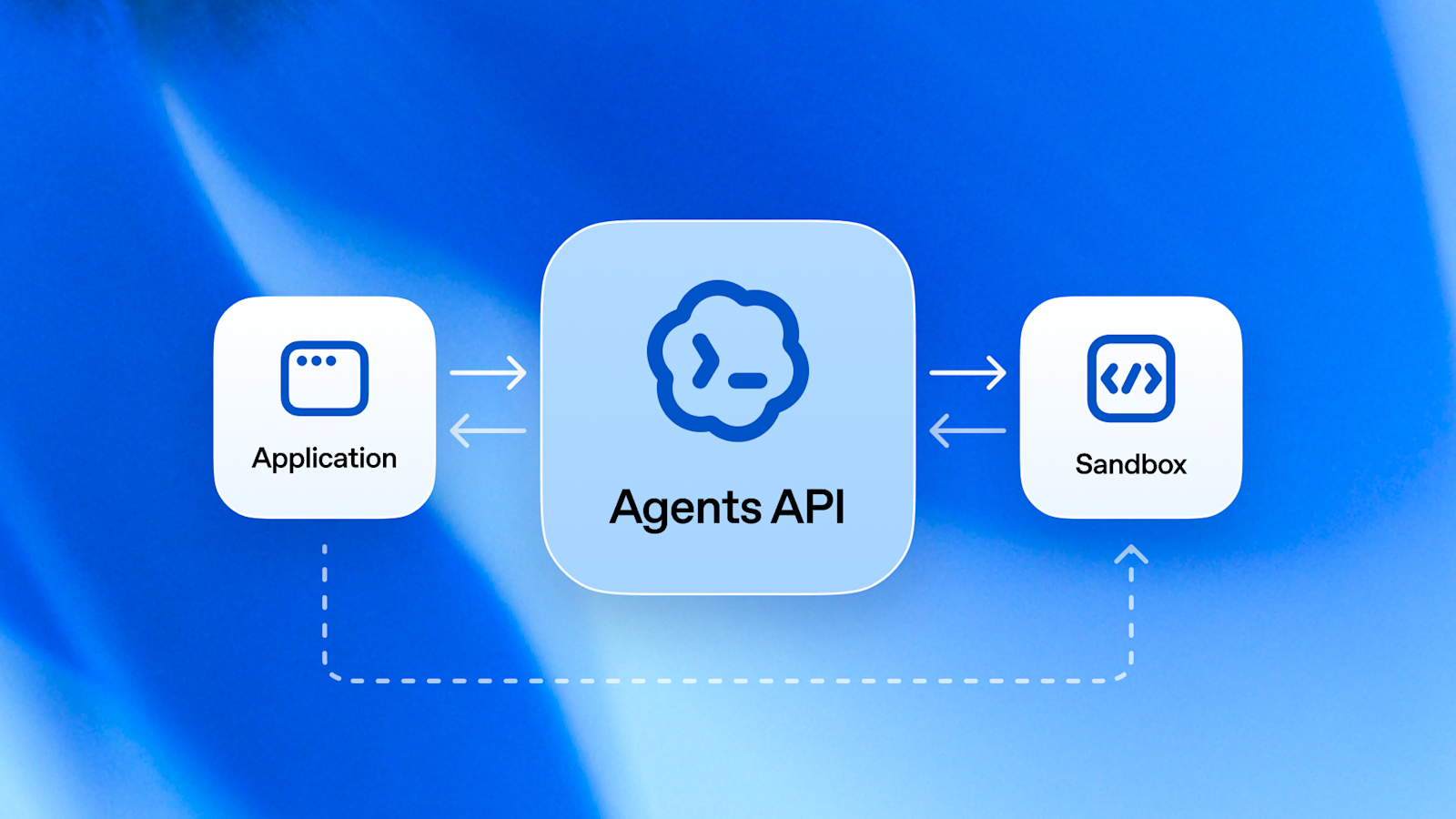
OpenAI has put its Agents API into public beta, exposing the Codex-style harness for long-running agents as a managed service. Developers specify a task, model, tools, and environment; OpenAI operates the harness while workloads can run in OpenAI’s sandbox, customer infrastructure, or partner sandboxes including Cloudflare, Modal, Vercel, and others. The API supplies context compaction, lazy tool search, programmatic parallel tool calls, MCP/custom tools, and multi-agent delegation, so developers need not rebuild those orchestration layers. There is no separate API fee during beta beyond the tokens and tools consumed.
Read the source →Datasette 1.0a39 and 0.65.4 security releases
Datasette released security patches 1.0a39 and 0.65.4 for its alpha and stable branches, with particular urgency for public instances that mix private and public tables. After reports from security researchers, the maintainers used Claude Fable 5.1, GPT-5.6, and GPT-6 Astra in an extensive audit and then spent nearly a week implementing and reviewing fixes. They split testing and implementation between two humans so each issue received independent human review in addition to agent assistance. The team says frontier-model security audits will become part of its development workflow.
Read the source →Any Nix package, live in your browser
trynix.dev runs an x8664 Linux VM in the browser via QEMU compiled to WebAssembly and can boot Nix packages from the past 13 years. Packages are URL-addressable, letting someone open an interactive shell for a specific historical environment such as Python 3.6.2 from 2017. A related trynix-preview GitHub Action comments a PR link that boots the PR build in a browser, without servers. The project makes reproducible package environments and review previews directly explorable from a browser.
Read the source →Native is now the future of mobile at Shopify
Shopify is moving from React Native back to separate Swift and Kotlin codebases for its mobile apps. The cited rationale is that agents can now take on enough implementation, translation, testing, and review work that maintaining two native apps is no longer the decisive cost it was in 2020. Shopify credits React Native for six useful years, but will transition ownership of react-native-skia and flash-list and archive restyle at the end of 2026. The change is a concrete bet that AI-assisted development alters the native-versus-cross-platform cost equation.
Read the source →The Pulse #191: a new trend of CPU shortages
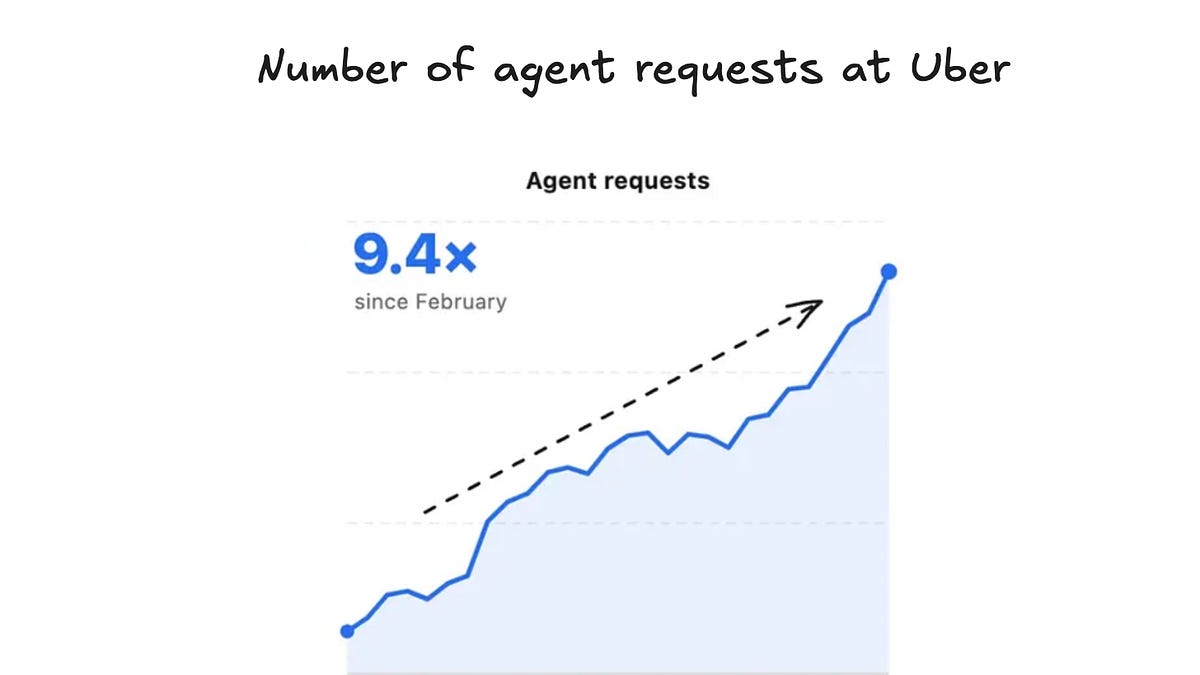
The newsletter flags an emerging CPU shortage after earlier GPU and memory constraints tied to AI demand. Its explanation is that AI agents consume substantial CPU through tool use, creating a capacity problem beyond model inference hardware. The actionable warning is for organizations expecting future compute needs to secure CPU capacity now. The supplied extract contains no further figures or regional detail.
Read the source →The Sequence Opinion - Issue 931: Robotics Is Waiting for Its ChatGPT Moment

The essay argues that a robotics “ChatGPT moment” would let ordinary people assign useful physical tasks conversationally, with little setup. Cleaning a kitchen illustrates the gap: a robot must interpret objects, destinations, exceptions, manipulation constraints, and safety consequences rather than merely produce text. Generalist robot models make the prospect more credible, but learning, control, and the economics of adapting to a new location remain unresolved. Robotics needs an encounter with broad, intuitive versatility, but its mistakes have physical mass.
Read the source →Introducing preemptible compute: the same compute, half the price
Together AI has launched a public preview of preemptible GPU nodes for Kubernetes clusters, priced at a fixed 50% of on-demand rates and billed in one- to two-minute increments. The nodes use spare capacity and may be reclaimed, but receive up to a five-minute drain period and automatically refill toward their configured target when capacity returns. Together recommends them for checkpointed or retryable work such as experiments, fine-tuning, evals, batch inference, and temporary bursts, while keeping strict-SLO serving and critical coordinators on standard nodes. The product’s tradeoff is predictable half-price capacity in exchange for designing workloads to survive interruption.
Read the source →To Infinity and Beyond: ThunderKittens Now on NVIDIA Vera Rubin NVL72!

Together’s ThunderKittens team added NVFP4 and FP8 GEMM support for NVIDIA Vera Rubin NVL72 after studying the platform’s ISA and microbenchmarks. Existing Blackwell kernels run on Rubin but initially reach only 42.1% and 44.4% of roofline for NVFP4 and FP8, because they cannot feed the faster tensor cores quickly enough. Rubin preserves Blackwell’s model but adds doubled K consumption per MMA, more tensor memory under an exclusive qualifier, up to 328 KiB shared memory, B-side collector support, and earlier synchronization options. By adapting tiling and reuse to those features, the team reports a kernel above 22 PFLOPS and competitive with cuBLAS and CuTE DSL.
Read the source →5 Things RUINING Your GPT 6 Astra Results (And How To Fix Them)
The video’s main warning is against setting GPT-6 Astra’s effort level to maximum by default. It cites DeepSWE results of 73% at $12 per task on max versus 67% at $2.19 on low, while high matched the 73% score at $5.72 in the described run. It also argues that browser and computer use should replace manual copy-paste between web services and coding tools, and that legacy skill collections can crowd context or constrain stronger models. The practical approach is to start at low or medium effort, escalate only when needed, delegate browser-based information gathering, and audit old scaffolding.
Read the source →DeepSeek Flash v4.1 🤖, Siri AI 📱, Anthropic AI economics 📈

The supplied item consists only of a headline identifying DeepSeek Flash v4.1, Siri AI, and Anthropic’s AI economics as its subjects. No article body or supporting details were included in the extracted materials. The title therefore establishes the topics but not the claims, metrics, or implications behind them.
Read the source →Baz, Docker & Meta on Verifying Agent Code
Speakers at AI DevCon argue that the bottleneck in agentic software development is proving behavior, not generating code. Examples included an agent repeating an explicitly documented UI bug, a 350,000-line agent-assisted Rust project where 100% coverage generated trivial tests, and Meta’s use of AI to detect low-value AI-written tests in CI. The recommended shift is toward tests against real behavioral oracles, such as S3 compatibility, and toward human-reviewed architectural decision records before implementation begins. Agents can then check code against those reviewed decisions, rather than leaving humans to assess unreviewable 7,000-line pull requests at the end.
Read the source →5 GPT-6 Astra Mistakes Killing Your Results (And Fixes)

The article argues that Astra users waste money by defaulting to maximum effort, citing a 73% DeepSWE result at $12 per task on max versus 67% at $2.19 on low; high reportedly matched max at $5.72. It recommends starting at low or medium and increasing effort only when output warrants it, rather than treating effort as a blanket quality knob. It also urges users to hand browser-based retrieval to computer use instead of manually moving material between sites and Codex. Finally, it argues that old, unused skills and heavy prompting frameworks should be audited because they consume context and can constrain more capable models.
Read the source →AAIF Reading Group - Prompt Injection as Role Confusion: Rethinking Agent Security
The reading group treats a paper framing prompt injection as role confusion as a useful starting point, but says it lacks sufficiently pragmatic mitigations. Speakers highlight instruction hierarchies—explicit priorities among roles and instructions—as one mechanism to substantially reduce injection risk. The session also points to other research and operational approaches that would be shared for later reading, rather than claiming a single complete defense. Its takeaway is that role-confusion theory needs to connect to concrete control mechanisms in deployed agent environments.
Read the source →I Asked Fable 5.1 and GPT-6 Astra to Get Me Out of Copy Paste Hell. The Results Surprised Me.
The creator gave Fable 5.1 and GPT-6 Astra the same request to build a native Mac clipboard manager and received two working but materially different designs. Astra produced a bottom “Shelf” interface faster, enabling more iterations and ultimately a more usable result; Fable produced a right-side “Ledge” design that the creator also liked but found weaker on details such as hotkeys. The video emphasizes the second round of evaluation—testing and correcting a working app—as more meaningful than a one-shot prompting comparison. It concludes that time-to-first-result affects productivity because speed buys more feedback cycles.
Read the source →Everyone needs a Muse
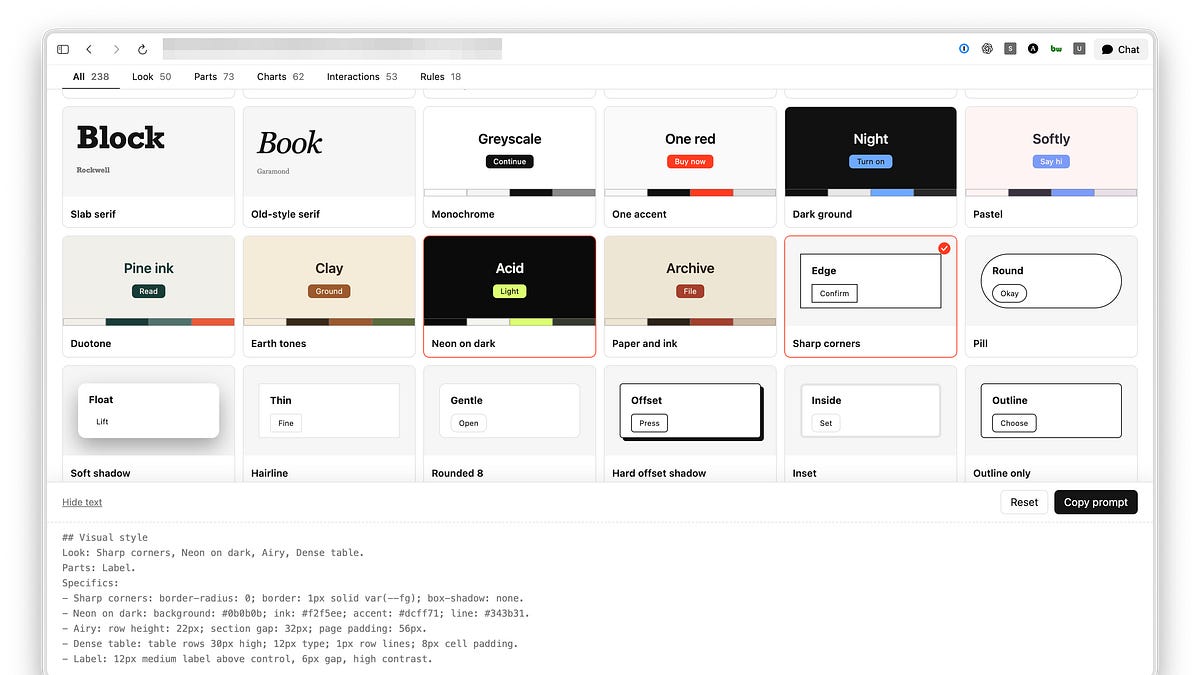
Ben’s Bites reports experimenting with frontier models as orchestrators that brief other agents, while finding open-source GLM 5.3 promising but generally less able to infer intent from imprecise requests. The author is building a prompt reference-sheet tool aimed at making visual styles, layouts, and controls more consistent. The newsletter also flags OpenAI’s ChatGPT Images 2.5 as faster and stronger at localized image editing, and describes Meta’s US-adult-only Muse as a personal computer agent with connected Facebook and Instagram accounts. The rest of the issue links a broad set of AI developments, including a claimed Navier–Stokes solution, safety debates, and agent tooling, without providing detailed substantiation in the extract.
Read the source →Detecting and countering misuse of AI: September 2026

Anthropic’s report describes nine disrupted influence operations that used Claude to plan campaigns, choose targets, and create deceptive material, originating across Russia, Iran, Turkey, the Gulf, South Asia, Africa, and Europe and targeting six continents. The campaigns used fake social accounts and news sites, including election-timed efforts, while concealing their coordination or sponsors. Anthropic says visibility during preparation can permit intervention before content spreads, whereas it relies on open-source research and cross-platform reporting after a campaign goes live. The company bans involved accounts, attributes operations where possible, and uses the cases to improve detection; it evaluates reach with the six-level Breakout Scale.
Read the source →AI Model Month is Already Delivering Big Gains
The video argues that AI use is moving from choosing one best model to composing a stack of models and harnesses for specific tasks. It says the choice must consider efficiency and cost as well as capability, especially for agentic workloads, and points to a wave of new releases as expanding that menu. The creator expects the next enterprise shift to be shared-work agents that operate across teams rather than isolated personal assistants. The transcript also mentions an OpenAI claim of a Navier–Stokes solution, but the supplied excerpt does not provide enough evidence to assess it.
Read the source →Issue #60

This issue reviews a test of 26 ways to guide coding agents on a difficult Rust/Zstd implementation task. The reported result is that merely naming sophisticated techniques such as TDD or fuzzing, or invoking published skill libraries, usually did not improve correctness; an unadorned agent performed above average. Agents tended to follow the requested ritual and generate many tests, but those tests often rested on incorrect assumptions about risks and expected behavior. The issue also highlights deterministic model routing for low-reasoning tasks as a potential 90% token-and-cost saver, while cautioning that claimed savings must be weighed against possible quality loss.
Read the source →Cursor Projects

Cursor has launched Projects in beta, a cloud-based coordinator for long-running software work such as features, migrations, and whole applications. The coordinator plans and delegates rather than writing code itself, can run many agents in parallel, and continues working after the user closes their laptop. Projects maintain shared files and learned codebase instructions across cloud and local agents, so knowledge such as test procedures accumulates over time. Users can also connect triggers such as Slack bug reports, schedules, or PR monitoring to initiate work without a fresh prompt.
Read the source →Claude Platform release notes — September 10, 2026
Claude Managed Agents permission policies now offer an auto setting that lets the server approve, deny, or pause each agent or MCP tool call for human approval. The related tool-use events now expose how the call was evaluated alongside the resulting permission. The ant CLI also gains ant beta:sessions connect for attaching a terminal to a managed-agent session, following it live, sending messages, and approving or rejecting waiting calls. A --web option can serve and open the Claude Console session viewer locally.
Read the source →MAI-Code-1-Flash deprecated
GitHub deprecated MAI-Code-1-Flash across all Copilot experiences on September 10, including chat, inline edits, ask and agent modes, and code completions. Users and integrations must move to a supported model. Enterprise administrators may need to enable the replacement through model policies and can confirm access through Copilot settings and the model selector. GitHub says no action is needed to remove the retired model itself.
Read the source →GitHub Copilot app for Beginners: Using the diff, terminal, and browser

GitHub’s guide presents the Copilot app’s diff, terminal, and browser panels as a complete review loop for agent-generated code. The diff panel lets users inspect and comment on exact changes, the terminal runs project commands or saved scripts, and the browser previews the resulting interface with a Pick & Polish iteration tool. The proposed acceptance test is simple: identify what changed, confirm it runs, and confirm it actually works. Once satisfied, users can accept the work and create a pull request without switching among separate apps.
Read the source →v2.1.268
Claude Code 2.1.268 adds gateway pricing propagation to signed-in clients, gateway safety warnings for permissive public access, internal-network login configuration, session-state cleanup for self-hosted runners, and JSON output for plugin-management commands. It also adds published-artifact browser-tab icons and includes a large set of reliability and security fixes. Notable repairs cover HTTP 400 failures against third-party Anthropic-compatible endpoints, WebFetch requests that never finish, high CPU in idle sessions, stale model-access state, and numerous secret-exposure paths in plugin and MCP error displays. Permission enforcement for symlinked paths and tricky shell constructs was also tightened.
Read the source →3 ways to prep for your next big race with Search

Google promotes Search AI features for race preparation as interest in running-related queries reaches all-time highs. AI Mode’s Canvas can generate a personalized training schedule based on fitness and local routes, while a connected YouTube Music account can produce a motivating run playlist. Search shopping can also narrow gear by constraints such as wide-fit road shoes or hydration vests under $80, using Google’s Shopping Graph of more than 60 billion listings for comparisons and local availability. The product framing is a single planning workflow for training, motivation, and purchase decisions.
Read the source →