Fal pushes MiniMax H3 video past real time
Summary
The day’s releases point to a shift from treating AI capability as a single model property to treating it as a deployable system: models are being compressed for devices, supplied with reusable kernels, wrapped in agent harnesses, and optimized across their entire serving path. That systems focus creates a common tension between broader access—through chat interfaces, Workspace integrations, or lightweight models—and the governance needed to make it dependable, whether in business workflows, billing policy, or teen safety.
MiniMax H3 on vLLM-Omni: From System-Wide Optimization to Real-Time Serving with FastVideo’s FastH3
vLLM-Omni argues that serving MiniMax H3 must be optimized end to end: encoding, joint audio-video denoising, VAE decoding, inter-process transfer, and MP4 construction all add material latency. Its system-level changes cut complete-response latency by 30.8% (1.445×) versus Diffusers on an eight-B300 matched deployment. FastVideo’s FastH3 then reduces the denoising schedule from 49 DiT forwards to four; on the reported eight-B300 setup, it generated a validated 10.125-second H.264/AAC MP4 in 8.678–8.710 seconds. The authors explicitly define “real time” as receiving the complete playable file faster than its duration, not streaming or time to first frame, and caution that the base and FastH3 results are not a matched A/B comparison.
Read the source →AI Agents for Bayesian Data Science
Thomas Wiecki’s case for agentic Bayesian data science is that causal, mechanism-aware models can answer intervention questions—such as how to reallocate marketing spend—rather than merely describe correlations. He describes a chat interface that turns a business request into Python, retrieves a model posterior, runs scenarios, and returns a chart, while the data scientist remains responsible for building, validating, and monitoring the model. At larger organizations, connectors into systems such as Slack, HubSpot, GitHub, and analytics need a semantic layer, business context, monitoring, and verification; connectors alone are not reliable enough. He also frames skill files as institutional memory that can preserve hard-won codebase knowledge and reduce bus-factor risk.
Read the source →Insane Claude Skills You Need For Your Vibe Coding Setup
The video presents six reusable skills intended to expand, rather than replace, an existing AI-coding workflow. Its central maintenance problem is that skills become stale unless someone notices repeated agent mistakes and converts the lessons into new or amended rules. The highlighted “task observer” records those lessons during work in a log file, and can be installed globally or per project; the recommendation is per-project installation so lessons remain scoped and manageable. The transcript also points to skills for enforcing project rules and improving how coding agents use websites.
Read the source →Muse Code 👨💻, Runway Solaris ☀️, OpenClaw 2.0 🤖

The extracted page provides only the headline and a sponsor prompt about an Algolia white paper on minimizing hallucinations at scale. It contains no substantive reporting about Muse Code, Runway Solaris, or OpenClaw 2.0 to summarize. The title therefore cannot be treated as evidence for any product details or claims.
Read the source →[AINews] Fal’s H3 Max Live breaks the infinite videogen barrier

Fal reportedly post-trained MiniMax H3 for cost and quality, then optimized it in its inference engine to 35× the speed of the official endpoint, crossing the threshold for faster-than-playback video generation. The immediate product experiment was an infinite, chat-directed Twitch-like stream; platform removals reportedly led Fal to launch its own live-video service. The post is candid that the current output is incoherent, low-quality “slop” rather than compelling viewing. Its strategic claim is that a merely good-enough, faster-than-real-time system is an important existence proof for products designed around continuously generated media.
Read the source →Python 3.15.0 candidate 2 is here!
Python 3.15 has entered its release-candidate phase, with final release targeted for October and only reviewed bug fixes expected before then. Third-party maintainers are urged to test now and publish Python 3.15 wheels; wheels built against release candidates will remain compatible with future 3.15 versions. Simon Willison highlights RC testing as a practical way to catch ecosystem bugs before they ship, based on a bug he found too late in the Python 3.10 cycle. GitHub Actions does not yet expose the new RC directly, but a matrix using allow-prereleases and check-latest can automatically move from RC1 to RC2 and then stable.
Read the source →The Sequence Knowledge- Issue 924: The Distilled Models You Need to Know About

PrismML’s Bonsai 27B illustrates how low-bit engineering is changing deployment economics: the full 16-bit weights would require about 54 GB, while its ternary and binary variants are about 5.9 GB and 3.9 GB respectively. The binary version is intended for a high-end phone, while retaining multimodality, long context, and much of the reasoning and tool-use behavior of its Qwen3.6-27B source. The article cautions that Bonsai is not textbook teacher-student distillation, instead combining low-bit training and quantization with related techniques. Its broader argument is that capability now propagates through model lineages—distillation, reasoning traces, pruning, and low-bit packaging—rather than residing in one checkpoint.
Read the source →OpenAI supports California’s bill to advance youth AI safety
OpenAI endorses California SB 1119, which it characterizes as an age-tailored safety framework that preserves young people’s access to AI for learning and creation. The company says users estimated or declared to be 13–17 are automatically placed in ChatGPT for Teens, where safeguards are baseline protections rather than optional settings. It highlights educational features including quizzes, learning visualizations, Study mode, parental controls, and context continuity through memory, arguing that memory can both support long-running learning and identify concerning patterns. The company says its under-18 rules prohibit romantic engagement, encouragement of emotional dependence, and claims that ChatGPT is human or sentient, and urges Governor Newsom to sign the bill.
Read the source →not much happened today
Meta has moved Muse Code into general availability with subscriptions and a developer-preview SDK for embedded agents, tool connections, progress streaming, and session resumption; Ollama says it supports the Muse Code harness. Open-weight competition is intensifying: DeepSeek-V4-Flash-Vision-Exp weights have been released, while Agent Arena reports GLM-5.3-Flash at #19 overall and #4 among open models with a $0.12 median cost per task, ahead of Qwen3.8-Flash-Next at #24 overall. The roundup also flags Tencent’s Hy4 Preview as a 770B MoE model with 49B active parameters and over 1M context, with claims of rapid post-training and agent-stability improvement. Across infrastructure, the recurring concern is harness and context engineering: Hermes Agent added persistent multi-agent workflow features while claiming roughly 50% lower default context usage, and research projects propose explicit persistent state or agent-edited context instead of ever-growing transcripts.
Read the source →Copilot model access update for GitHub Team plans
GitHub has changed model-access policy for Copilot users who hold seats in more than one organization. Previously, enabling a model in any associated organization could grant access; now the organization listed as “Usage billed to” is the sole determinant. The change is intended to align access control with the organization that pays and governs the usage. Users whose access comes entirely through an enterprise or its organizations are not affected.
Read the source →Try Google Pics: Easy image creation and editing in Google Workspace
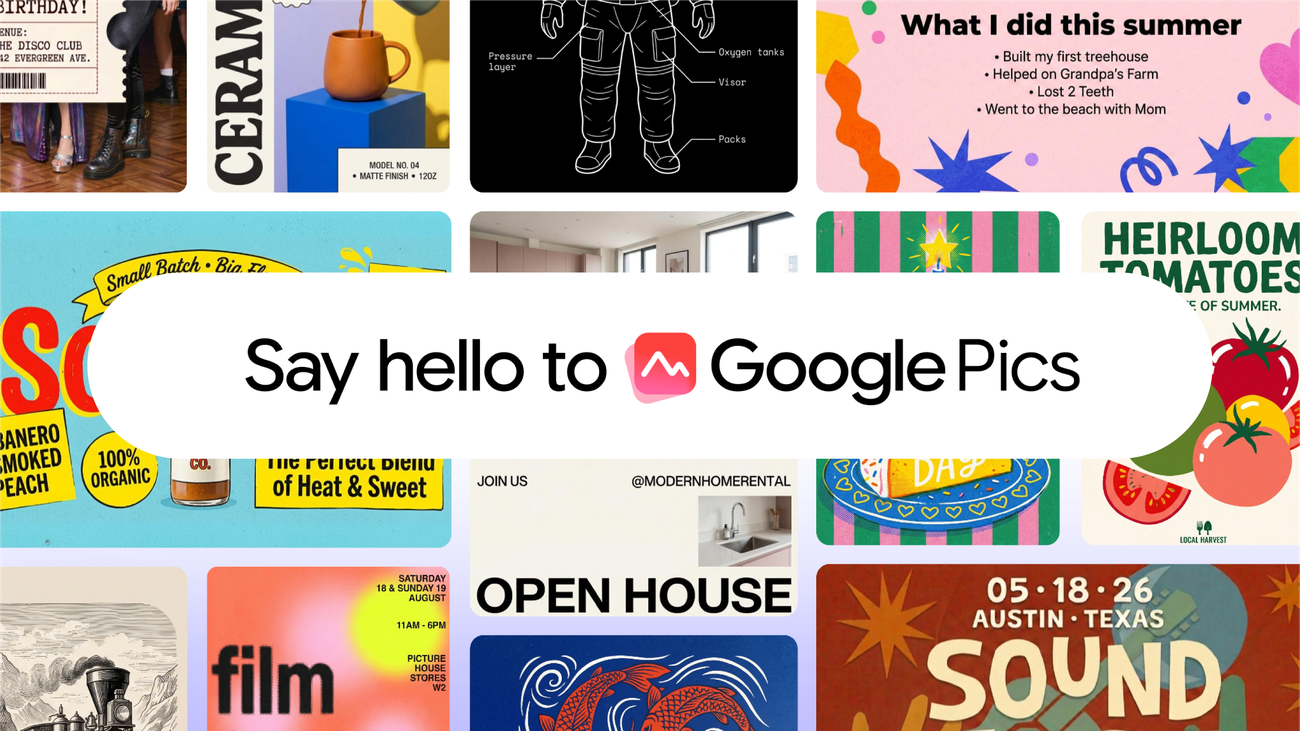
Google is rolling out Google Pics, an AI image-generation and editing product built on its Nano Banana model, to Google AI Pro and Ultra subscribers and most Workspace business customers. It is available standalone and is being integrated where work already happens: Docs and Slides start now, with Drive promised in the coming weeks. The product emphasizes precise iterative edits as well as generation, for tasks such as posters, social graphics, illustrations, and product mockups. Google also positions direct Drive file access and collaborative editing as ways to remove app switching from visual-content workflows.
Read the source →Introducing @huggingface/kernels: 200+ WebGPU Kernels for Local AI

Hugging Face has released @huggingface/kernels, a minimal loader for optimized WebGPU kernels on the Hub, alongside an initial catalog of 207 kernels. Each kernel is versioned as a package containing its interface, shader templates, correctness cases, benchmarks, and instructions, so it can be inspected and loaded with a stable contract rather than an unversioned shader URL. The accompanying Fleet browser suite benchmarks and tests kernels on a user’s local hardware; with consent, it contributes private evidence about failures and performance across devices that a central lab cannot cover. The project addresses a core browser-inference tradeoff: WebGPU is portable, but the best workgroup size, memory access pattern, vectorization, fusion, and data type vary substantially by input shape, GPU, browser, and available features.
Read the source →Build your ideas
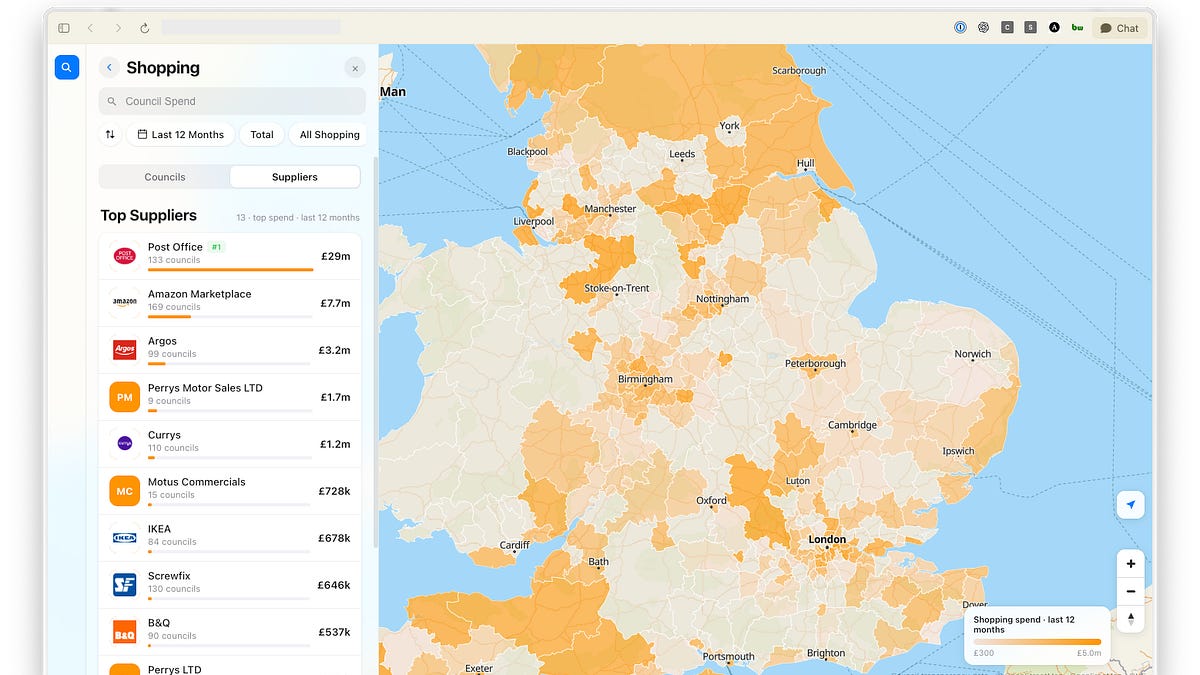
Ben’s Bites argues for shipping many small, data-first experiments rather than waiting for a business case or polished idea. As an example, it scraped 105 million rows of UK council spending data to build an in-progress map-like exploration tool, and also built a real-time status tracker for tools it uses. The projects are intended to be open source, remixable, and accompanied by the prompts used to build them, with the stated goal of improving through repeated practice. The post also notes several ecosystem shifts: Anthropic’s 50% Claude Code usage promotion is ending while permanent limits rise 25%, OpenClaw 2.0 adds easier setup and shared cloud sessions, and Fal’s H3 Max enables an early infinite-video experiment.
Read the source →