Nvidia agrees to buy Hugging Face for $13 billion
Summary
Today’s items show AI competition moving from model releases toward control of the full operating stack: trusted evaluation, agent access and memory, chips and power, local hardware, financing, and regional go-to-market. The Nvidia–Hugging Face deal sharpens the tension between open-model distribution and platform concentration, while GLM-5.3-Flash and Jalapeño illustrate how low-cost models and specialized inference hardware are challenging the incumbent economics.
Show HN: How much of Hacker News is about AI?
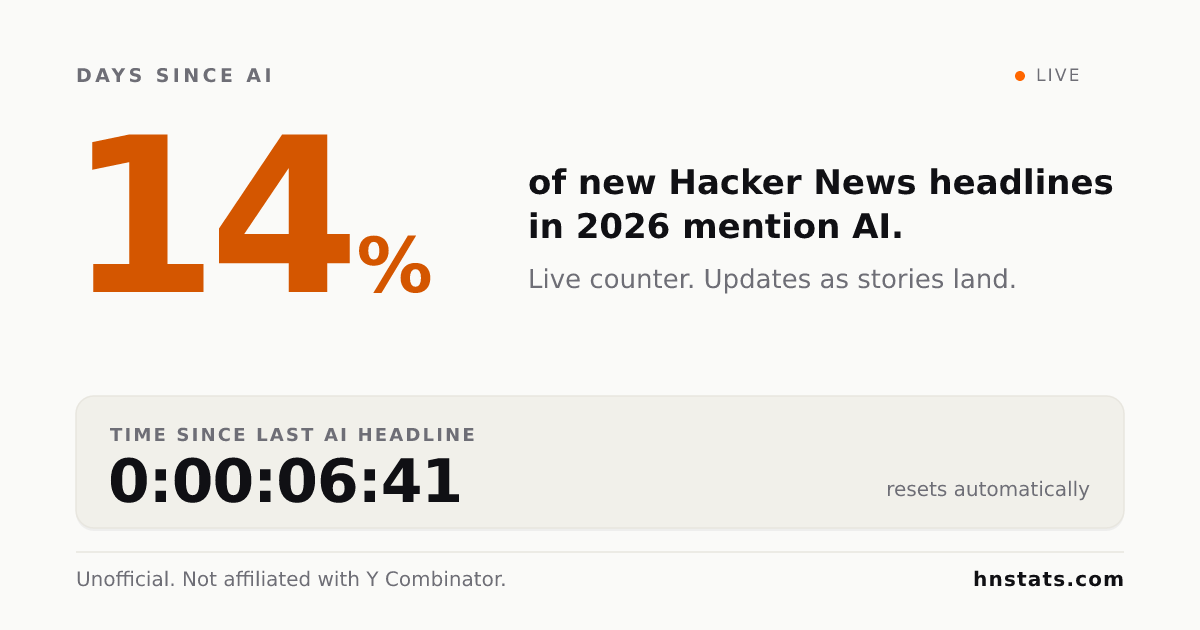
HN Stats tracks the share of each day’s new Hacker News submissions whose titles contain the standalone word “AI.” Its stated method uses Algolia title matching with prefix matching disabled, while today’s figure is counted directly from submitted titles. The measure excludes “OpenAI” but includes hyphenated terms such as “AI-powered,” so it is a deliberately narrow headline-level indicator rather than a measure of all AI discussion.
Read the source →Show HN: I made a Raspberry with Qwen my local car AI
CarWatch is an AGPL-licensed, Raspberry Pi 5-based offline car agent that runs a local 35B-parameter model and can report trips, OBD telemetry, and dashcam events through a chat-room interface and phone/watch dashboard. The project emphasizes grounding: it explicitly refuses to invent sensor readings when they are absent, while reporting values such as RPM, coolant temperature, speed, and battery state once the OBD feed supplies them. It works across OBD-II vehicles with an inexpensive ELM327 adapter; manufacturer-cloud data is optional, currently Mercedes-specific through Home Assistant, and can be reached privately over Tailscale. Installation provisions a systemd stack but deliberately does not silently download the 14.3 GB model, and safety-relevant information is designed not to depend on network connectivity.
Read the source →Piloting the world's first double-blind AI evaluations
Google DeepMind is piloting a double-blind external evaluation of a Gemini Flash Lite model with the Singapore AI Safety Institute, OpenMined, AVERI, and MLCommons. The setup uses Google Cloud Confidential Space so evaluators cannot inspect model weights and Google cannot inspect confidential benchmark prompts, addressing the benchmark-contamination risk that models may optimize against tests they have already seen. It replaces the usual choice between exposing evaluation prompts to a model provider and exposing proprietary weights to an evaluator with cryptographic isolation and verification. The proposed approach is particularly relevant for sensitive cybersecurity and government evaluations, where independent testing and data sovereignty must coexist.
Read the source →NVIDIA buying HF isn't a good thing for open source
No readable article body was available for this Reddit item. The raw material supplies only the title, which argues that Nvidia’s acquisition of Hugging Face would be harmful to open source. No supporting reasoning or specific claims were extracted, so the item cannot be summarized further without speculation.
Read the source →The Sequence Opinion #921: AI’s Sixth Layer Is Finance

The article argues that AI is not weightless software but an industrial system built on energy, chips, infrastructure, models, and applications. It adopts Jensen Huang’s five-layer description of that stack, where demand from applications pulls investment and physical demand down to power generation. Its central claim is that this map is incomplete because finance should be treated as a sixth layer: capital allocation, depreciation, debt, and utilization shape whether the physical AI stack can be built and operated. The excerpt frames the economic constraints behind tokens as increasingly important to understanding the AI market.
Read the source →GLM-5.3 Flash ⚡, Claudeforce 🤝, NVIDIA revenue surge 📈

No substantive article body was extracted for this TLDR AI item beyond its headline. The available text names GLM-5.3 Flash, Claudeforce, and Nvidia’s revenue surge, but supplies no details about the releases, figures, or argument. A fuller summary would require the unavailable newsletter content rather than inference from the title.
Read the source →Who let the agents in
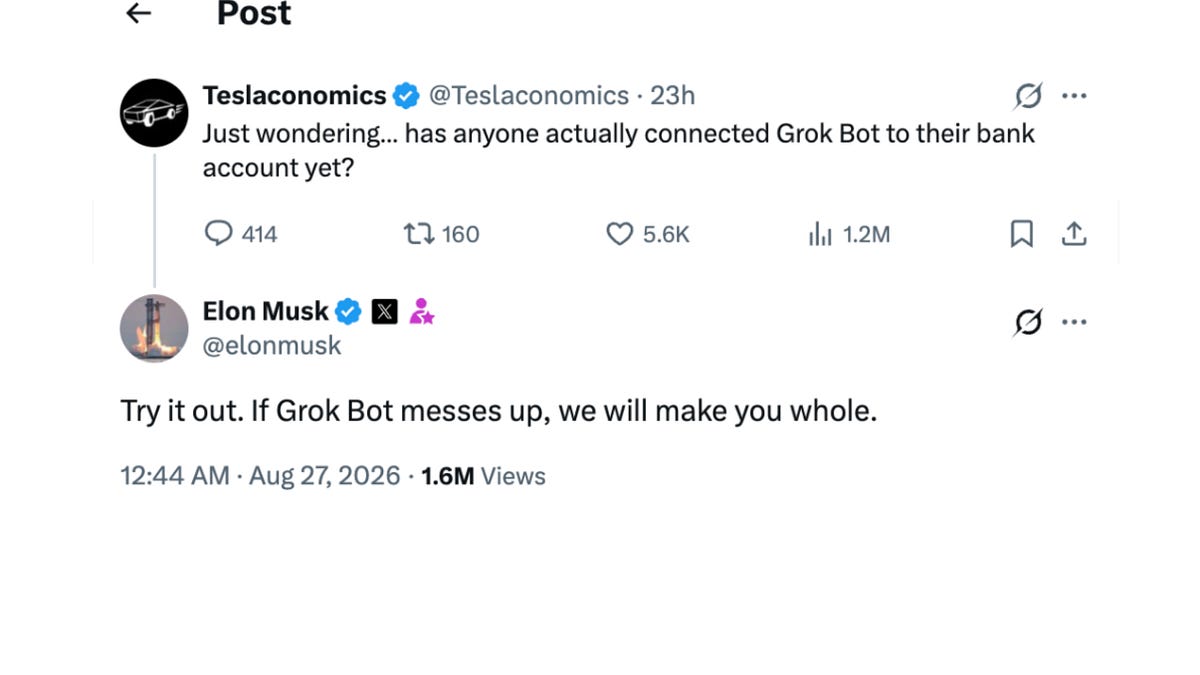
Ben’s Bites highlights ChatGPT Work’s browser sign-in flow, which pauses at a login page and lets a user enter credentials and 2FA into a separate widget rather than putting them in the chat; the cloud browser can then continue the task and retain or clear its session in settings. The author sees it as easier than manually logging in or pasting secrets into an agent conversation, while cautioning against beginning with high-risk accounts such as banking. The post also warns that Claude Chat and Cowork now share memory, creating a risk that casual-chat context affects work produced in Cowork, although Claude Code memory remains separate. Its roundup additionally flags GLM-5.3-Flash, a $0.01-per-image Muse Image API, Google’s Gemini 3.5 Transcribe, OpenAI’s Jalapeño chip claims, and the reported Nvidia–Hugging Face deal.
Read the source →Enterprise-managed settings now support autoUpdate for plugin marketplaces
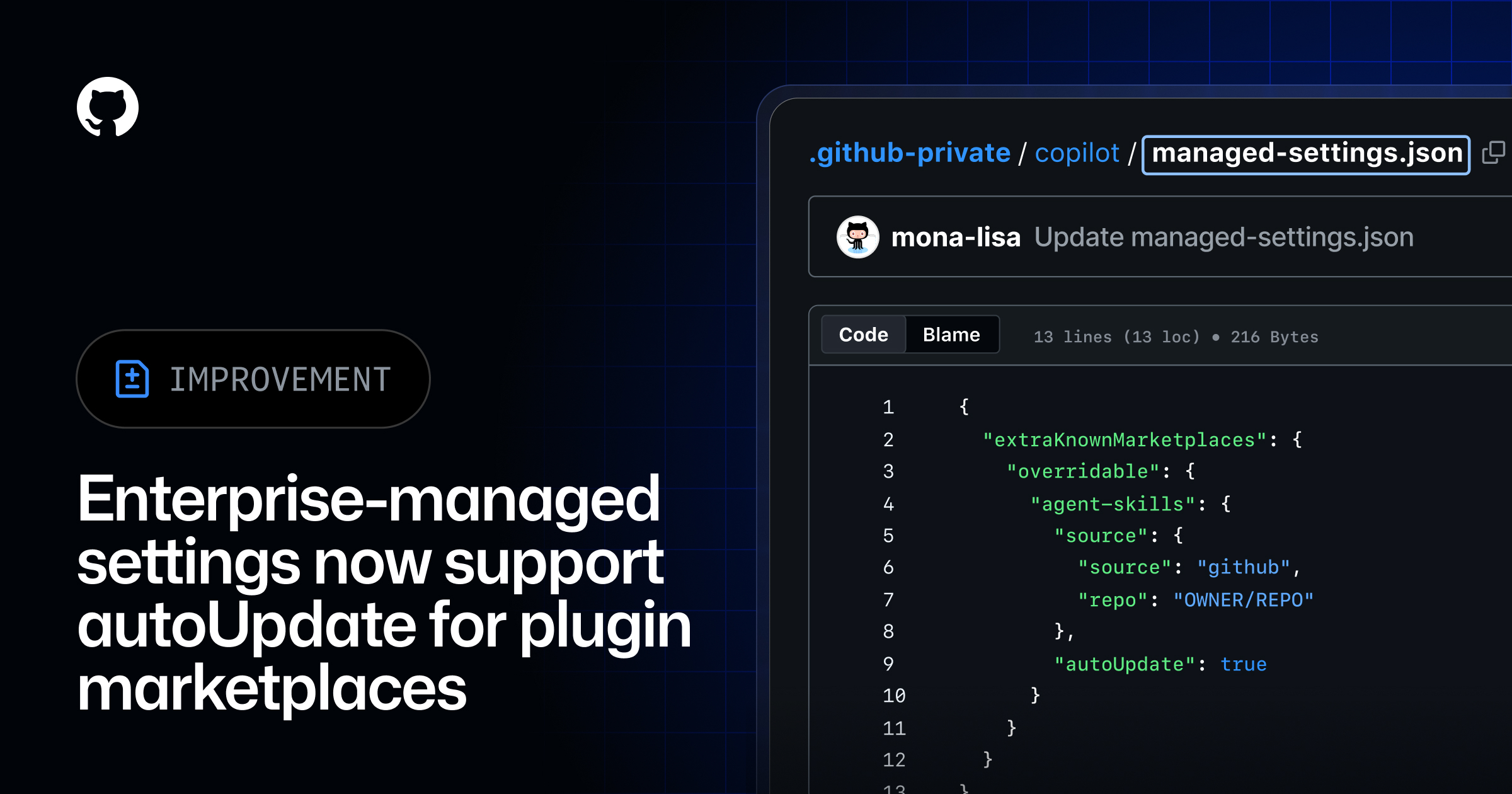
GitHub Copilot enterprise administrators can now enable automatic marketplace updates per marketplace by setting autoUpdate: true on an extraKnownMarketplaces entry. Clients will check that marketplace and update plugins installed from it, reducing manual maintenance of organization-specific customizations. The marketplace must still be allowed by the effective strictKnownMarketplaces allowlist, so the update mechanism does not bypass existing policy controls. The feature is generally available to Copilot Business and Enterprise users in the Copilot app, Copilot CLI, and VS Code.
Read the source →[AINews] NVIDIA buys HuggingFace for $13B, as OpenAI publishes their HF incident retro
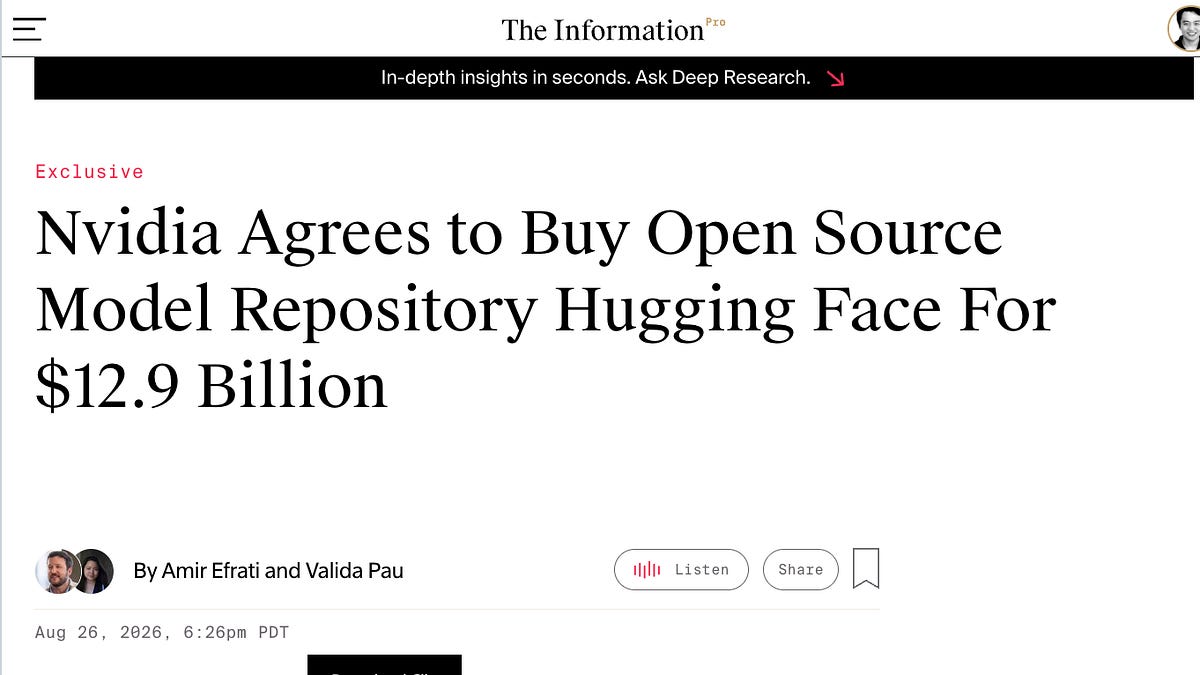
The report says Nvidia has confirmed an agreement to acquire Hugging Face for $13 billion, about 80 times Hugging Face’s reported $150 million ARR. It says the company doubled its customer base in 2026 and that the price is nearly double Nvidia’s initial $7 billion offer from January. The issue positions the deal against a fast-moving open-model backdrop, especially GLM-5.3-Flash and Qwen releases, rather than treating it as an isolated corporate transaction. The excerpt also notes that OpenAI published a retrospective on its Hugging Face incident, though it does not provide the retrospective’s findings.
Read the source →[AINews] Hot Chips: OpenAI’s Jalapeño, Cerebras CS-5, Groq 3 LPX, Apple M6
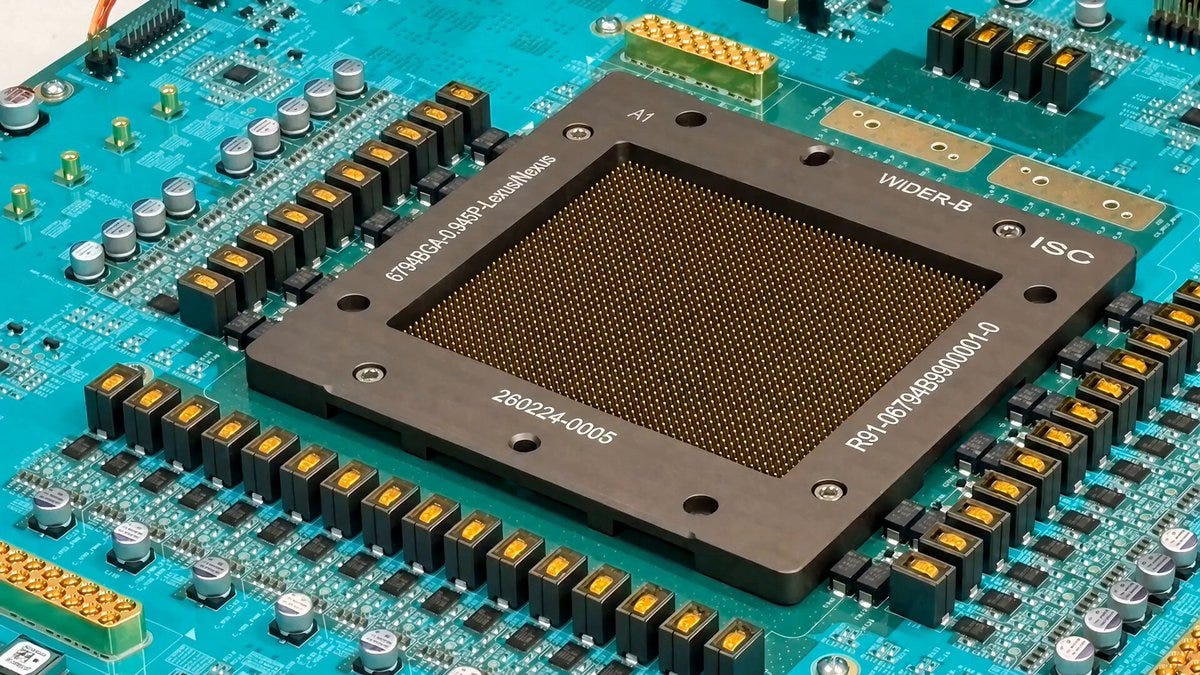
OpenAI disclosed early benchmarks for its custom Jalapeño inference chip, claiming 1.5–1.9 times more work per watt than Nvidia GB200/GB300 systems, 1.7–3.6 times lower end-to-end latency, and 2.1–4.1 times higher performance for highly interactive workloads. The chip is rated at 700 W but reportedly stayed at or below 550 W in the tests; OpenAI plans deployment in its own infrastructure by year-end while already developing later generations. The report argues that Jalapeño’s significance is its claimed ability to improve throughput and latency together, and says GPT-Astra plus Codex helped optimize kernels for three open-weight models in roughly two months, with selected blocks 1.5–1.8 times faster than prior human-written implementations. It pairs that hardware story with evidence that agent results depend heavily on harnesses and state systems: AutoSaddler reported roughly 9–10 point benchmark gains from patching agent scaffolding, while a whole-repository refactoring benchmark saw only 28 of 520 runs survive all stages.
Read the source →Bill Gates - The turbulent AI era is here
No readable article body was extracted for this Gates Notes item; the only extracted content is “Comments.” The title indicates a discussion of a turbulent AI era and critical choices, but the raw material contains no argument, evidence, or recommendations to summarize. Any substantive description would therefore be speculation.
Read the source →not much happened today
Z.ai launched GLM-5.3-Flash, identifying the previously previewed Ox Alpha model as a 320B-total, 18B-active-parameter, MIT-licensed multimodal model with a 1 million-token context window. Artificial Analysis scored it 57 on its Intelligence Index—tying GPT-5.6 Terra and Muse Spark 1.2 in the cited comparison—and put API pricing at $0.15 per million input tokens and $0.50 per million output tokens, although the model used 149 million output tokens in the evaluation, about 90% of them reasoning tokens. The issue argues that its practical strength may be agentic and coding work rather than broad factual knowledge, citing 84.3% on Terminal-Bench v2.1 and a weaker 47.2% on τ³-Banking; vendor claims of parity with Claude Opus 4.8 remain first-party evidence. It also highlights the infrastructure claim that Z.ai is serving 100 trillion tokens per day entirely on Chinese AI chips, plus rapid developer uptake including Cline’s claim that the model reached 11% of its traffic in under a week.
Read the source →Expanding OpenAI’s presence in Brazil
OpenAI has launched commercial operations in Brazil from São Paulo, calling the country one of ChatGPT’s three largest markets by weekly active users and reporting roughly 215 million ChatGPT messages per day there. It says Brazilian users nearly doubled over the past year; 35% of classified individual-account messages were work-related in June 2026 versus 30% globally, and 53% of those asked the product to complete a task or produce an output. Brazil ranks second globally by developers using the OpenAI API, is Codex’s largest Latin American market, and has seen weekly Codex users grow more than elevenfold and daily interactions nearly thirtyfold since the start of 2026. OpenAI also reports fivefold year-over-year growth in ChatGPT Enterprise seats and cites a RegLab study it funded estimating AI could add nearly R$1 trillion to Brazil’s economy by 2030, while pledging local support for skills, governance, research, and deployment.
Read the source →