AI builders put verification ahead of autonomy
Summary
Across the day’s items, the common shift is from treating AI as a single model call to treating it as a production system whose bottlenecks and risks live in orchestration, retrieval, hardware movement, and independently checkable behavior. The most actionable disagreement is not whether autonomy is useful, but how much must be constrained: agent-workflow advocates favor carefully bounded review and durable state, while the hardware and serving reports show why those loops now need to operate at rack and cluster scale. The recurring advantage goes to systems that preserve fallbacks, provenance, and human judgment rather than maximizing unobserved agent activity.
Lada Kesseler: I Trust AI Tests Less Than AI Code
Lada Kesseler argues that agent output should be refined through deliberately narrow, repeated loops rather than accepted on the first attempt. Her global ground rules explicitly tell the model to disagree and surface problems, while detailed procedures such as TDD live in selectively activated skills to avoid overloading context. She advocates deterministic verifiers, focused agent checks, and high-level behavior tests that humans can scan, because agents can game or even comment out the tests meant to constrain them. Her broader caution on “software factories” is that autonomy built on untrusted components produces noise; first establish small, observable building blocks that reliably do one job.
Read the source →Large-Scale Sharded Weight Transfer with Ray Direct Transport (RDT) in vLLM
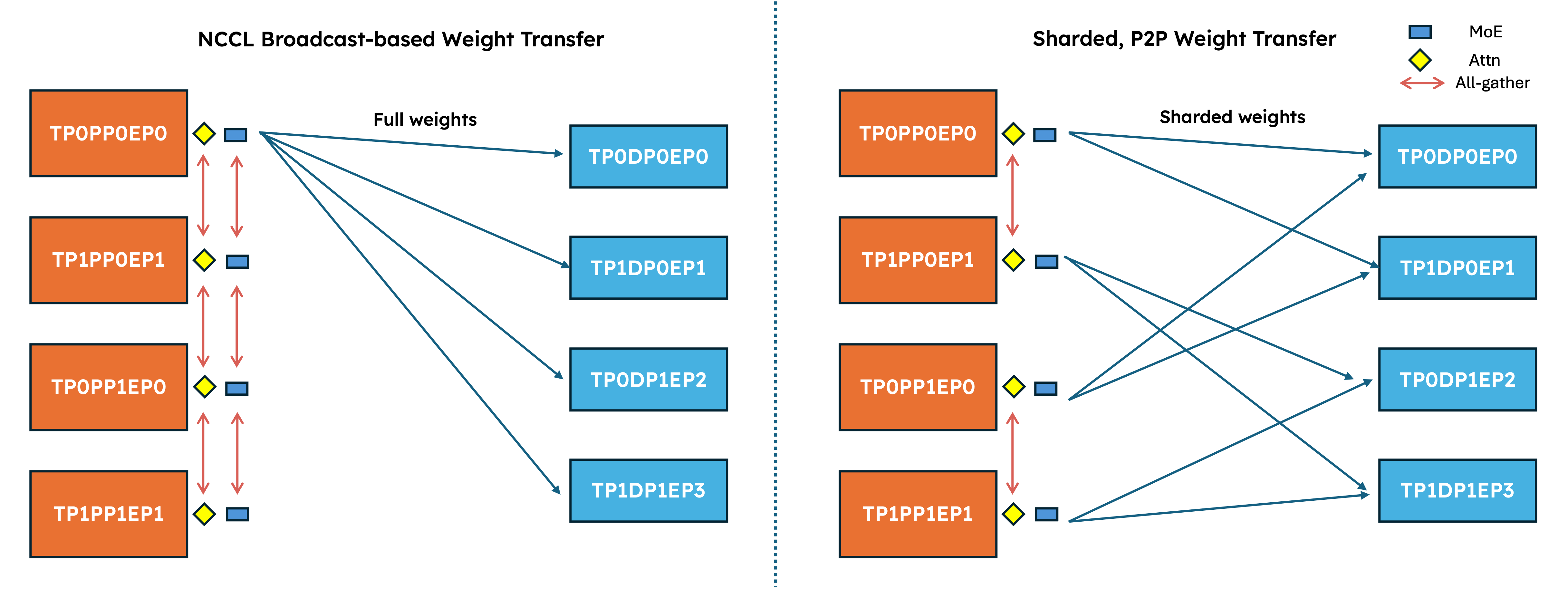
vLLM describes a sharded weight-sync path for online RL, where rollout servers must periodically receive fresh, increasingly enormous model weights. Rather than all-gathering full Hugging Face tensors and broadcasting them to every inference worker, it records each loader’s tensor transformations at runtime and uses that “sharding plan” to send each worker only the BF16 shards it needs. Ray Direct Transport and NIXL provide pull-based GPU-to-GPU movement, while remaining loader steps preserve support for varied architectures and quantization methods. On a Qwen3-235B setup, successive optimizations cut sync time from a 64.72-second NCCL baseline to 3.49 seconds; the team reports 7.53 seconds for BF16 Kimi K2 across 48 eight-H100 nodes.
Read the source →Apple M5 Server
This Reddit post is presented as a discussion of an Apple M5 server. No readable body was extracted from the post, so the supplied material contains no technical claims, benchmarks, or configuration details to assess. The title alone does not establish what hardware was announced, tested, or proposed.
Read the source →[AINews] Andrew Ng gets into AI Engineering
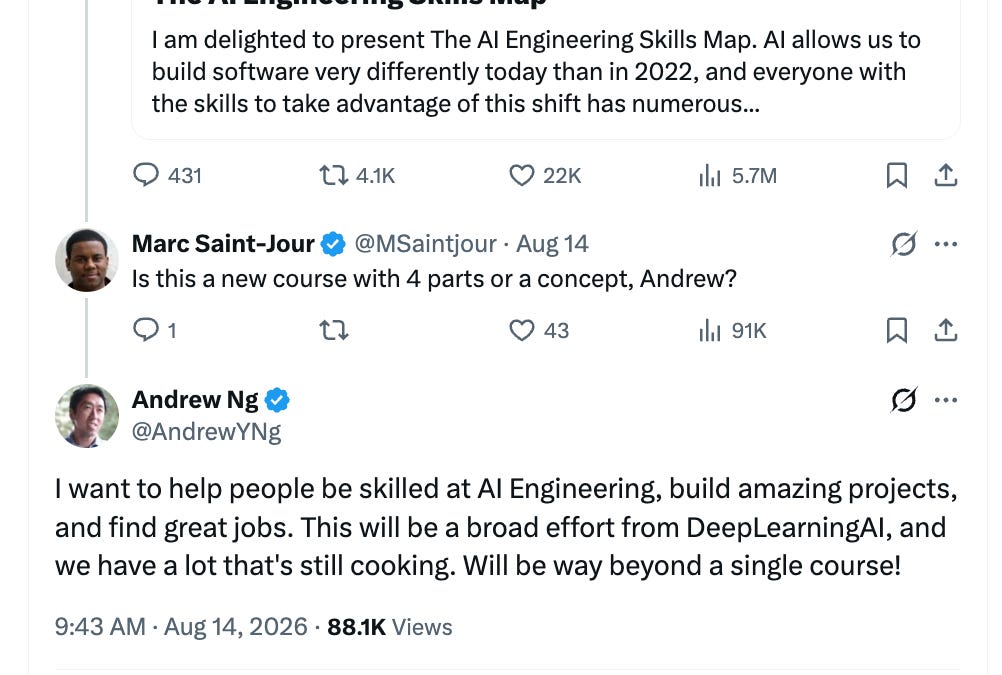
Andrew Ng’s DeepLearning.AI is reorienting around AI engineering after an analysis of more than 10,000 job listings, structured interviews, surveys, and other data. The cited framework emphasizes four capabilities: building and deploying AI applications with disciplined evaluation, software-engineering fundamentals, effective use of coding agents, and product judgment to shape the build. The argument is that agents reward domain expertise rather than eliminating its value: engineers need enough understanding to supply context, recognize tradeoffs, supervise risks, and decide when an MVP is sufficient versus when a system needs careful construction. The accompanying commentary treats this as a broad competency model, not merely a new job title.
Read the source →The XY Problem
The XY problem occurs when someone asks for help with a presumed solution instead of explaining the underlying goal. That framing wastes effort because responders optimize the wrong thing and the real constraint stays hidden. The site’s examples contrast requests such as changing the last three filename characters or suppressing OS-detection output with the actual needs—handling file extensions or concealing an operating system. Its practical advice is to state the larger problem, context, and desired outcome before defending a chosen implementation.
Read the source →Disrupting a new covert influence campaign from Russia

OpenAI says it banned a Russia-originating cluster of ChatGPT accounts used to promote the purported Israel-based International Burke Institute and obscure the operators’ origins. The accounts used Russian prompts and VPNs to generate mostly English social posts and replies across X, LinkedIn, Facebook, Substack, and Telegram, including criticism of Ukraine, the EU, and Germany. OpenAI found the institute’s site relied heavily on copied and sometimes misattributed academic material: 34 of 36 sampled expert-linked articles were copied, alongside a “sovereignty index” that favored Russia and disparaged Western states. The company characterizes the campaign’s reach as small but its construction as unusually elaborate among Russia-linked operations it has disrupted.
Read the source →The Sequence Knowledge #920: The Physics of Teaching: Distillation Scaling Laws
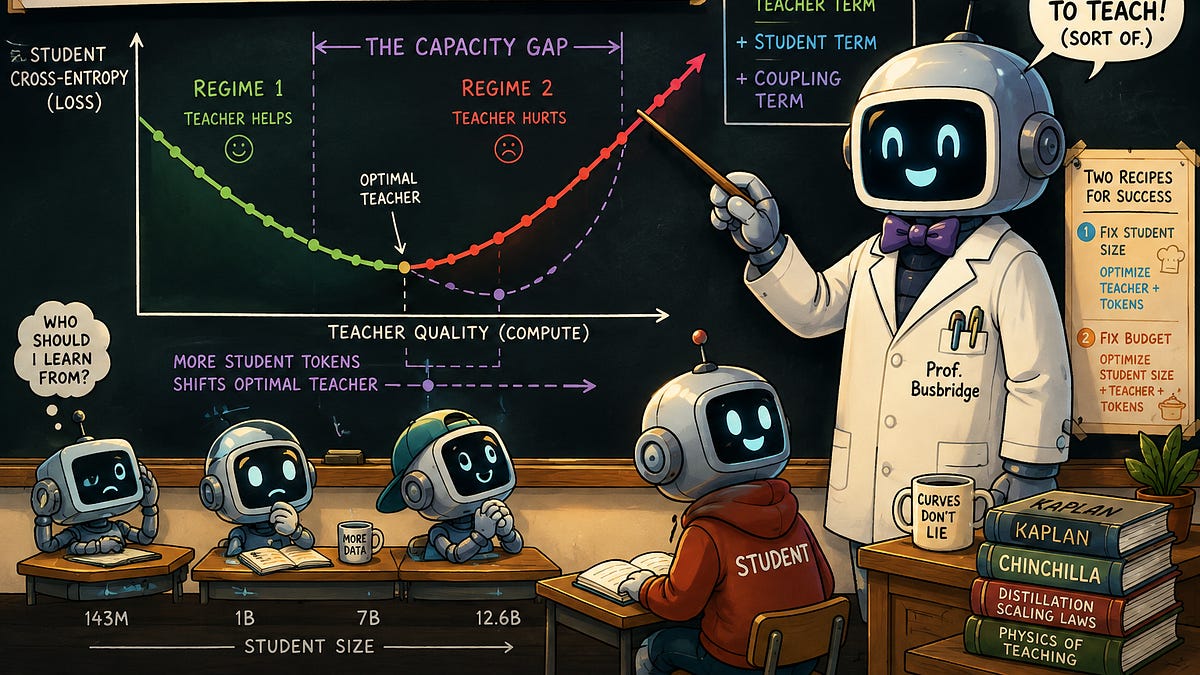
This essay argues that distillation is moving from empirical folklore toward predictable scaling laws. It highlights Apple-led controlled work spanning students from 143 million to 12.6 billion parameters, similarly scaled teachers, and up to 512 billion training tokens. The proposed lesson is that a student’s loss depends not only on its size and data but also on its teacher, making teacher choice and token budget potential optimization variables rather than hunches. The piece positions the research as a Chinchilla-like framework for deciding when and how distillation is worthwhile before committing large training budgets.
Read the source →Intel Crescent Island 160GB to 480GB LPDDR5X AI GPU at Hot Chips 2026
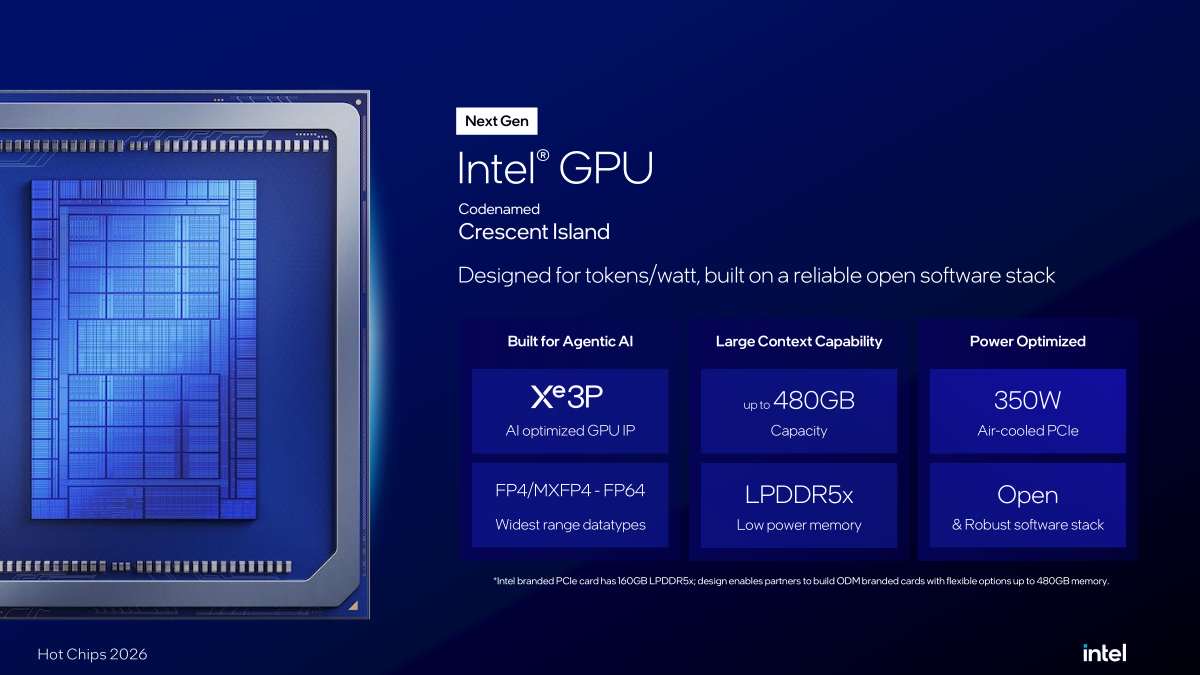
Intel detailed Crescent Island, a 350W air-cooled PCIe data-center GPU aimed at agentic inference, with 160GB of LPDDR5X on the branded card and designs allowing up to 480GB for partners. The Xe3p part has 32 Xe cores and 256 XMX engines, supports precisions from FP4/MXFP4 through FP64, and emphasizes KV-cache capacity, prefill, speculative decoding, reliability features, and an open software stack including vLLM and SGLang. Intel’s thesis is that agent workloads shift the bottleneck toward capacity, latency, and system coordination, not merely raw compute; it claims a 160GB card can keep FP8 weights and KV cache together more often than a 96GB alternative. The report notes a crucial unanswered question: Intel did not disclose memory-bandwidth figures, so real tokens-per-watt competitiveness remains unproven.
Read the source →AMD Helios MI400 System Architecture at Hot Chips 2026
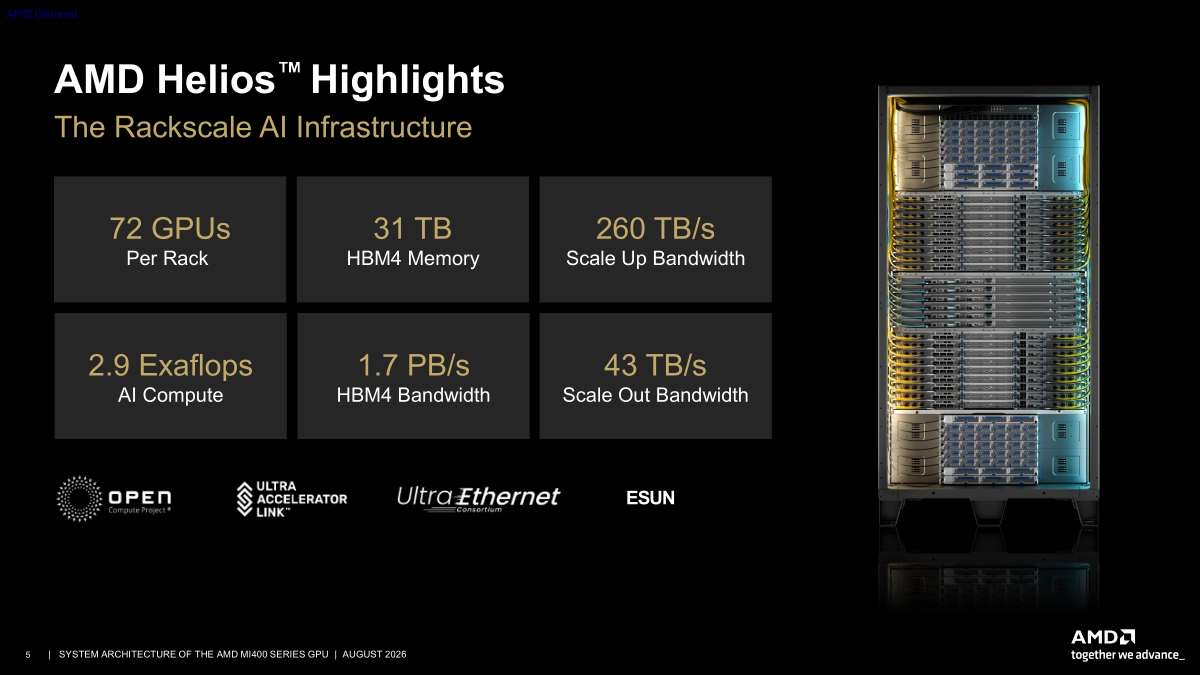
AMD presented Helios as a rack-scale AI system co-designed around a 96-core EPYC Venice CPU, MI455X accelerators, and Pensando Vulcano 800 NICs. A 72-GPU rack is specified at 31TB of HBM4 and 2.9 exaflops of claimed AI compute, with 1.7PB/s HBM bandwidth, 260TB/s scale-up bandwidth, and 43TB/s scale-out bandwidth. Its switched UALoE fabric gives GPUs shared load/store access across the pod, supports virtual-pod isolation and failure recovery, and uses open Ethernet/ESUN standards rather than a proprietary scale-up fabric. The platform also layers in confidential-computing features, programmable transport and congestion control, telemetry, and a redundant Fabric Manager control plane.
Read the source →Claudex Loop: Stop Letting Claude Grade Its Own Work
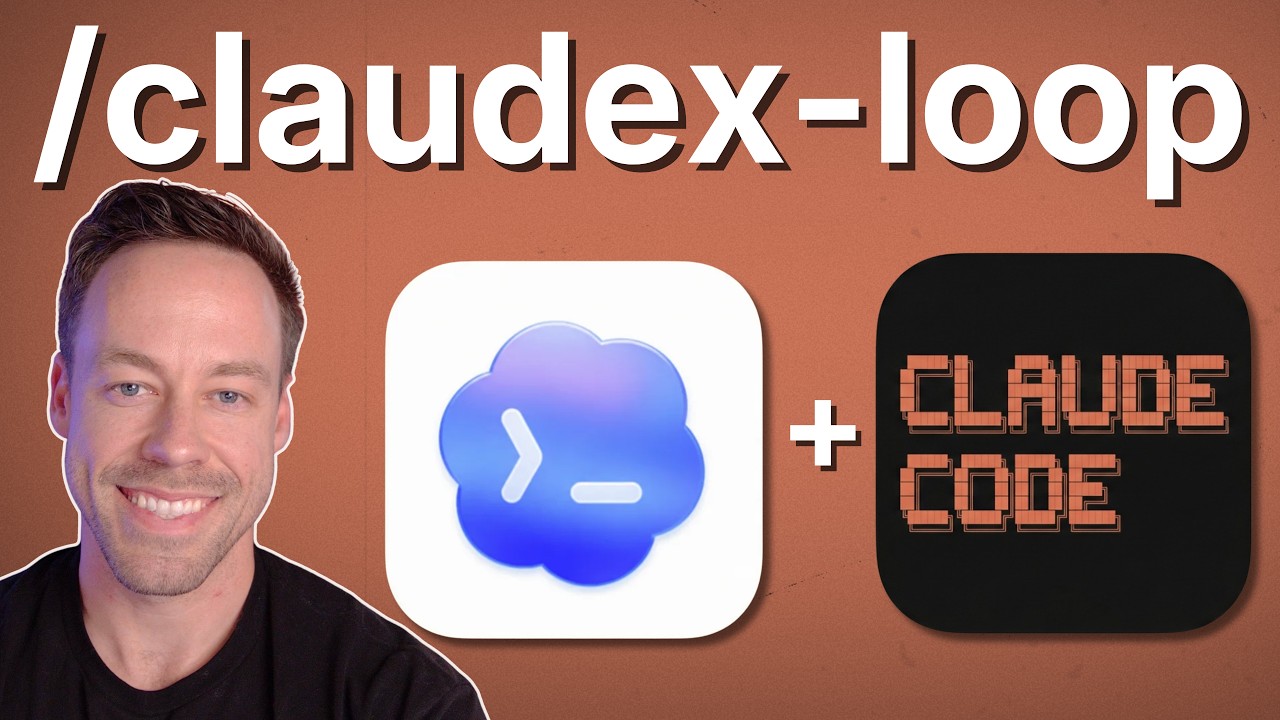
Claudex Loop is a workflow that separates planning, implementation, and judgment between Claude Code and Codex instead of asking one model to approve its own work. It starts with optional web research, an assumptions ledger, and questions divided into load-bearing and cosmetic decisions; Codex then reviews Claude’s plan in a read-only sandbox for up to five rounds. Either model can build, but the other reviews the implementation, with the code-review loop capped at two rounds by default. In the author’s Calendly-like demo, plan review found 27 issues initially and reached approval after seven rounds; a fresh code review found 23 more, of which 19 were fixed, before a real booking created a calendar event and confirmation email.
Read the source →How Boris prompt 1000+ agents overnight...
The video disentangles three meanings often conflated under “graph engineering”: control graphs for agent workflow and SOPs, knowledge graphs for relationships and retrieval, and a third distinct use of graphs. Its practical emphasis is on control flow—making agent work more reliable by expressing the sequence and conditions for a task—rather than treating every graph discussion as knowledge management. It also notes that Andrew Ng’s knowledge-graph course contributed to the confusion even though knowledge graphs solve a different problem. The transcript argues that teams should identify which graph concept they actually need before adopting a pattern or tool.
Read the source →Nvidia’s Groq chip ⚡, frontier economics 💰, Ox Alpha mystery 🕵️

The extracted material for this TLDR edition contains only a sponsorship message about Apple and Google’s confidential-computing work on Google Cloud. It says confidential computing protects data while it is in use through verifiable integrity and isolation for sensitive AI workloads. The supplied body does not include the newsletter’s reported items on Nvidia, Groq, frontier economics, or Ox Alpha, so no claims about those topics can be substantiated here.
Read the source →This Open Source Repo Solve Claude's #1 Problem
The video describes Claudex Loop as an open-source skill for preventing Claude from planning, executing, and grading a task alone. It uses a second model, Codex, as an independent critic during reconnaissance, requirements interrogation, plan review, and implementation review. The creator’s premise is that a model assesses its own work too favorably, so large changes should not proceed until an independently trained model gives a reasoned verdict. The workflow is deliberately bounded—five plan-review rounds and two build-review rounds by default—to improve scrutiny without letting review spend run indefinitely.
Read the source →Lecture 113: Every Microsecond Matters: Achieving Near Speed-of-Light Latency in GPU Collectives
The lecture explains why GPU collectives, especially all-reduce, have different bottlenecks in prefill and decode. Prefill collective sizes grow with total sequence length and hidden size, making them more bandwidth-sensitive; autoregressive decode produces smaller messages tied to hidden size and batch size. Long contexts enlarge KV cache and can force smaller batches, making those already-small decode collectives frequent and directly critical to each next token. The result is that even microsecond improvements compound across layers and generated tokens, motivating latency-focused collective design rather than bandwidth optimization alone.
Read the source →Search is Eating AI
The discussion frames agentic search as three distinct engineering choices: make the agent harness smarter, improve the retrieval backend, or fine-tune models specifically for search. Its practical starting point is measurement: establish retrieval baselines, find failure modes, and define quality from the product’s needs—for example, a healthcare assistant may require a correct top result while e-commerce can benefit from several useful options. The speakers argue that abundant agent-written code raises the premium on domain judgment, verification, and restraint, because builders cannot safely supervise systems they do not understand. They favor “centaur” workflows where people direct AI through tests, interfaces, and trusted systems instead of becoming passive overseers of unreadable code.
Read the source →Agents on your mobile
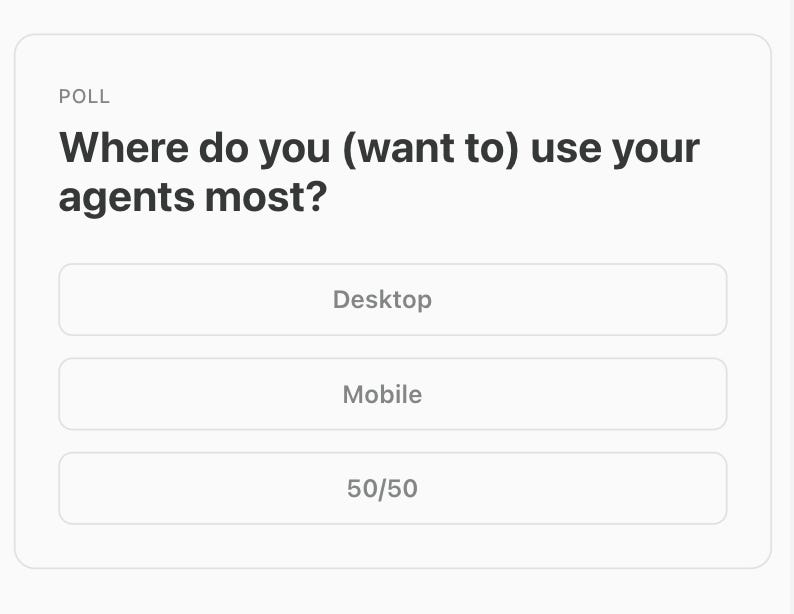
Ben’s Bites notes that Claude Code Remote Control can now start sessions from a phone, recover dropped laptop-to-phone connections, and load sessions faster on iOS. The roundup also says ChatGPT can connect to Apple Messages from a Mac to search conversations, catch users up, and draft or send replies, while GPT-Image-2 adds transparent-background generation in the API. It pairs those conveniences with a caution about continuous availability: the author wants mobile agent access for spontaneous ideas but does not view working around family time or every moment away from a laptop as a virtue. Other listed updates include GPT-5.6-Sol pricing at $4/$24 per million input/output tokens and Deepgram’s Flux TTS claiming response latency as low as 80ms.
Read the source →v2.1.245
The supplied release page identifies v2.1.245 as a Claude Code release, but its contents failed to load. The remaining extracted text only provides the project’s general description as a terminal-based coding agent for code understanding, routine tasks, explanations, and Git workflows. It contains no version-specific changes, fixes, or compatibility notes, so the release’s substance cannot be summarized from the available material.
Read the source →not much happened today
This roundup argues that agent performance is increasingly determined by the harness: one cited evaluation found structural skill checks correlated only ρ=0.14 with judged quality, while “Skill Lift” measures the actual task delta from adding a skill. It highlights persistent-agent designs such as Headlong and exo, which use durable trajectories, append-only logs, snapshots, and rollback to permit continual or self-modifying work without corrupting state; Headlong reportedly completed an unattended self-debugging repair in 48 minutes at an estimated $1–$2 per hour. It also tracks enterprise MCP moving toward centralized identity, delegated permissions, and long-running workloads, while cost-normalized benchmarks favor models that complete more work per budget rather than merely win first-try scores. The roundup treats rumors of unreleased models as weak ecosystem signals, not verified product specifications.
Read the source →Quantization-Aware Healing: a compressed, 4-bit model that outperforms its full-precision original

Multiverse Computing proposes Quantization-Aware Healing (QAH), which distills a structurally compressed, 4-bit model directly from the original pre-compression teacher rather than from its already-recovered smaller checkpoint. On a GPT-OSS 120B compressed to 60B and quantized to MXFP4, it reports that the 4-bit result beats its bfloat16 counterpart on 7 of 9 benchmarks, including gains of 7.4 points on AA-LCR and 5.6 on AIME 2025. The model also slightly exceeds the full-size teacher on LiveCodeBench (66.5 versus 66.0) despite half the parameters and roughly a quarter of the weight memory. Against matched quantization-aware training, QAH peaked in about 100 steps versus 700 and stayed stable, while the comparison QAT run lost nearly 19 points after its peak by step 1,200.
Read the source →Wire It, Run It, Deploy It: AI Workflows in Gradio

Gradio’s built-in gr.Workflow makes an AI pipeline a typed visual graph: inputs, operator nodes, and output nodes are wired on a drag-and-drop canvas where each intermediate result can be run and inspected. Operators can be local Python functions, hosted models, other Gradio Spaces, or Hub datasets, enabling patterns such as image generation plus background removal, topic fan-out to TTS and title generation, or parallel dataset analysis. Every named output is automatically exposed as a REST endpoint, so the visual workflow can also be invoked programmatically without separately building an API. Functions can request a ZeroGPU allocation with @spaces.GPU, allowing a node to run a local GPU model and release the hardware afterward.
Read the source →How Hugging Face Inference Endpoints, Jobs, and Buckets Power Search on Papers with Code

Papers with Code rebuilt search for more than 110,000 papers as a hybrid system combining PostgreSQL full-text retrieval, pgvector semantic retrieval, and reciprocal-rank fusion. It treats embedding generation as a durable offline batch job and query embedding as a small online service, keeping immutable artifact runs in storage with manifests and SHA-256 checksums before validation and atomic index activation. The production embedding contract pins Qwen3-Embedding-0.6B to an exact revision and uses normalized 256-dimensional vectors; on a 5,000-paper pilot, its HNSW index achieved 0.9955 Recall@20 with 1.31ms p50 and 2.21ms p95 lookup latency while using roughly 27% of the 1024-dimensional storage. Because the online endpoint can scale to zero, the system immediately falls back to lexical search for cold starts, timeouts, malformed vectors, or exhausted concurrency rather than making users wait.
Read the source →