AI tools shift from copilots to organizational infrastructure
Summary
The recurring shift is from AI as an individual drafting aid to AI as infrastructure for planning, maintenance, organizational memory, and operational control. Faster local inference and increasingly capable browser, computer, memory, and skill interfaces make that expansion more practical, but the items repeatedly preserve a human or institutional verification layer. The policy debate is moving in parallel: concentrated control over those systems is presented as a governance problem, not merely a model-safety problem.
Up to 3.2x Faster Inference with LFM2.5-DSpark

Liquid AI released roughly 300M-parameter DSpark draft checkpoints for three LFM2.5 models, using speculative decoding to propose tokens that the target model verifies in one pass. Because rejected proposals are replaced by the target’s own choice, greedy-decoded output is identical to the baseline rather than a quality-for-speed compromise. The company reports up to 3.2× faster inference, average 57% lower latency for the 2.6B model in multi-tool scenarios, and about 140 tokens/s on an M4 Max in favorable cases. The checkpoints are available in Safetensors and GGUF, with day-one paths for SGLang and llama.cpp, though the 8B MoE model sees only an 18% average on-device gain because of current Metal backend behavior.
Read the source →The Pulse: We need to talk about migrations with AI
The newsletter argues that AI is especially well suited to large, repetitive framework migrations that teams otherwise defer: Asana reportedly rewrote an Enzyme test suite in two weeks, with Airbnb and Uber cited as similar cases. It also questions Gartner’s ranking of AI code-modernization vendors, suggesting the placement of established cloud firms over Anthropic, Cursor, and OpenAI reflects vendors’ willingness to pay for analyst access. The industry roundup notes a lengthy GitHub outage, competition from GitHub alternatives, Slack Code, Claude watermarking, and Uber’s open-source SubmitQueue. Its broader point is that AI is making previously unattractive maintenance work tractable, while changing who gets recognized as a tooling leader.
Read the source →Introducing AI Futures
OpenAI launched AI Futures, a blog for its Strategic Futures team, centered on how a free society can preserve individual rights and agency amid transformative AI. The team argues that autonomous systems, automated bureaucracy, and data-center-generated wealth could weaken the historical dependence of state power on the cooperation, labor, and tax base of large populations. Its stated objective is neither maximal decentralization nor central control, but institutions that prevent a small group from dominating while also limiting the ability of any individual to cause mass harm. It plans to examine these tradeoffs through policy, economics, law, history, machine learning, and forecasting, including how AI may reshape firms and government institutions.
Read the source →Stampli cuts launch hours by 68% using ChatGPT Work
Stampli says it used Codex and ChatGPT Work to reduce a Deep Finance go-to-market workflow from an estimated 243 active role-hours to 77, a savings of 166 hours and roughly 3.16× faster production. The team connected product context, meeting notes, decisions, and messaging guidelines, then used the system to make review-ready launch assets including a blog series, emails, webinar materials, creative, PR, web content, and sales enablement. It retained human review and final approval for customer-facing material, while Codex handled about 90% of the polished hero-animation work before contractor finishing. Stampli also says its GPT-powered knowledge system has multiplied a small product-marketing team’s output to hundreds of weekly content pieces and made cross-system questions answerable during meetings.
Read the source →The /wayfinder Skill: Navigating the “Fog of War” of Planning
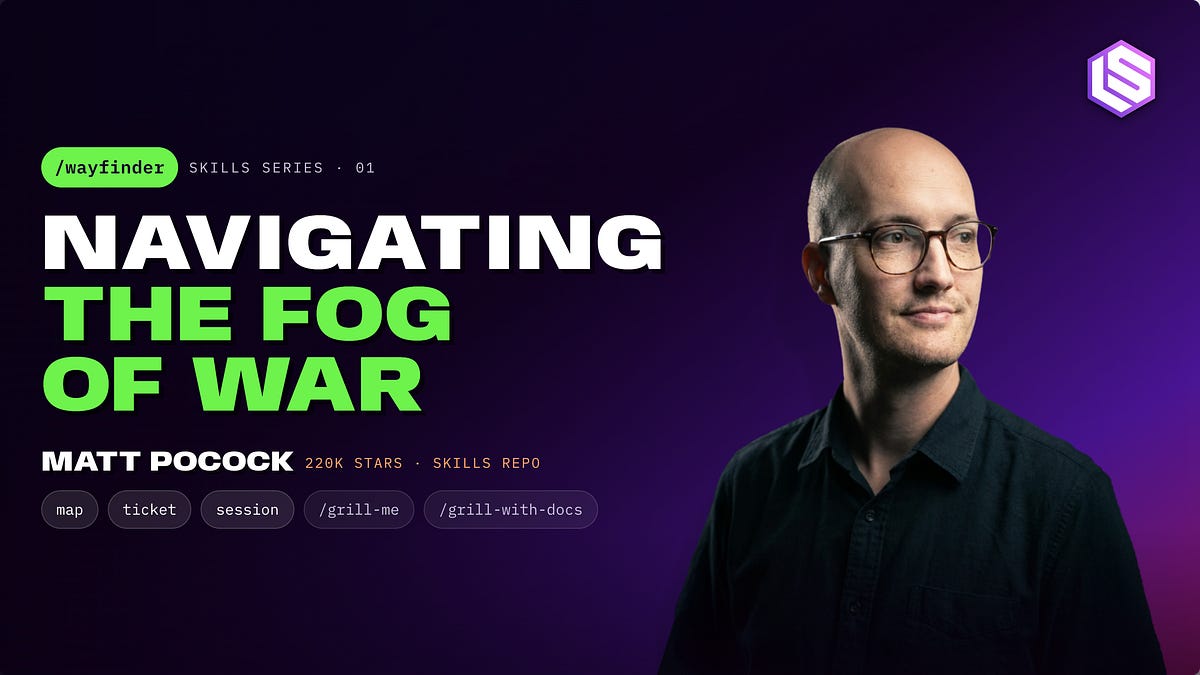
Matt Pocock’s /wayfinder skill is designed for projects whose endpoint cannot be specified at the outset, especially long-running AFK-agent work that would otherwise require a person to manage context and handoffs manually. It acts as a planning orchestrator, splitting exploration into sessions and maintaining a shared map of decisions alongside specific tickets for child work. The design deliberately distinguishes “map,” “ticket,” and “session,” on the premise that consistent leading terms make an agent’s information flow and responsibilities clearer. Pocock recommends a simpler “grill me” workflow for small, fully visible tasks, and Wayfinder for work where research and prototypes must progressively reveal the path forward.
Read the source →ChatGPT search now uses the site:operator at scale
Promptwatch’s automated observations suggest that the share of ChatGPT Search fanout queries containing a site: operator jumped from roughly 0.3–0.5% to 16–17% on August 8, shortly after the GPT-5.6 rollout. The figures cover only prompts tracked by Promptwatch, so they are directional evidence rather than a full measurement of ChatGPT behavior. Simon Willison infers that the underlying search interface may support a domains-style control even though OpenAI has not exposed a transparent system prompt. Promptwatch separately observed an apparent sharp reduction in Reddit sourcing, but Willison could not confirm a prompt-level instruction behind it.
Read the source →A shot-scraper-style JSON API on Bun 1.4's new Bun.WebView
Bun 1.4 adds Bun.WebView, giving Bun core browser automation through macOS WebKit or a local Chromium process controlled via the Chrome DevTools Protocol. Simon Willison used Claude Code for web to prototype a TypeScript JSON API that loads a page and executes JavaScript against it, modeled on his shot-scraper CLI. His cgroup testing found a full Chrome serving complex pages needs about a 192–256MB container. The release also claims 2,900-plus fixes, a 5× reduction in idle CPU use, up to 35% lower memory use, 50% faster Linux starts, and a rewrite from Zig to Rust.
Read the source →GitHub's #1 Trending Author's New Claude Skill Is Insane
The video presents “unlazy,” a skill intended to counter agents that declare work complete without taking ownership of verification. Its core mechanism is a ledger-like checklist in which every completion item requires evidence, rather than a bare completion claim. The presenter says the skill works across coding agents including Claude Code and Codex, and frames the issue as visible even in stronger models but especially acute in smaller ones. The video also says its own testing found the workflow slow and that the creators made a change to improve it, though the available transcript excerpt does not provide the technical details of that change.
Read the source →Kioxia CD9P 7.68TB E3.S NVMe SSD Review Fast Gen5 Storage
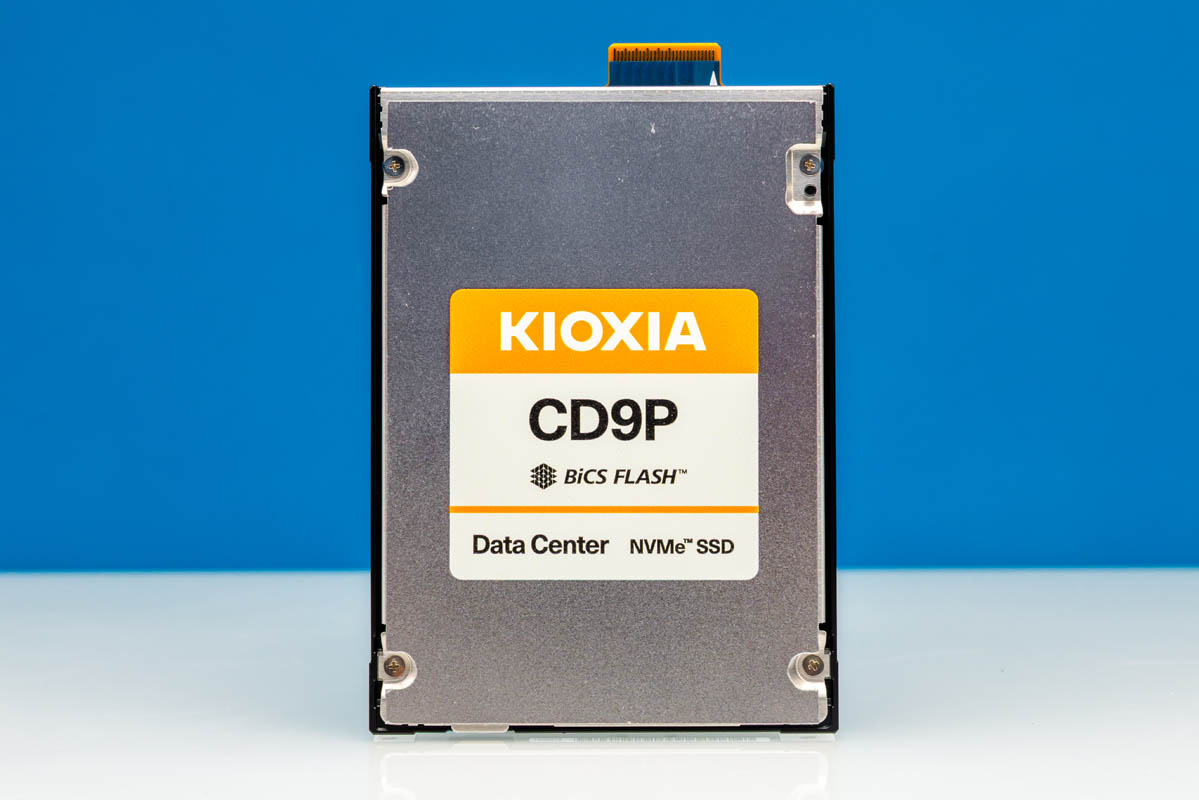
Kioxia’s CD9P-R is a 7.68TB, read-intensive PCIe Gen5 data-center SSD rated at 1 DWPD for five years; a 6.4TB mixed-use CD9P-V variant is rated for 3 DWPD. The review emphasizes its E3.S EDSFF form factor, whose smaller Gen5 x4 connector improves density, cooling, and signal integrity compared with U.2-style designs. It argues EDSFF is likely to become necessary with Gen6, where retaining SAS compatibility in older U.2 connectors becomes less compelling than higher interface speeds. The family ranges from 1.6TB to 30.72TB in E3.S and up to 61.44TB in U.2, with the tested class advertised at 14.8GB/s reads, 7GB/s writes, 2.6M read IOPS, and 450K write IOPS.
Read the source →Every Exponential Ends — Silicon Valley Forgot — Adam Becker
In this Machine Learning Street Talk interview, astrophysicist and journalist Adam Becker introduces his book More Everything Forever, which critiques technology billionaires’ visions of the future and why he believes they fail. The discussion is framed around Becker’s earlier Atlantic essay, “The Useful Idiots of AI Doomsaying,” and is aimed at a technical audience familiar with effective-altruist and rationalist ideas. Becker positions the conversation as an examination of why powerful technology figures can be mistaken about social and technological futures, rather than a purely technical forecast. The available transcript excerpt is introductory and does not yet provide the interview’s later arguments in detail.
Read the source →Issue #58

This issue examines Anthropic’s planned text watermarking for EU AI Act compliance: it says the technique can subtly bias selection among similarly probable tokens so that human-readable output remains unchanged while a detector can identify it. It notes that structured code offers less variation for watermarking, and that Anthropic has not disclosed how effective code watermarking is. The issue also argues that vibe coding can be transformative for technically minded non-programmers, citing a conservationist who used exe.dev to assemble data on fires, deforestation, settlements, and ranger movements into practical tools and a game. It closes by connecting AI-assisted code generation to Terence Tao’s argument that solving problems is not enough: verification, communication, acceptance, and integration into a field’s shared understanding remain essential.
Read the source →v2.1.238
Claude Code v2.1.238 adds a readline keybinding flavor so Ctrl+W deletes back to the preceding whitespace, while keeping the existing classic behavior as default. Plugin marketplaces can now use a headersHelper command to mint short-lived HTTP headers for catalog and same-origin archive fetches, with installation and update confirmation prompts. Self-hosted runners gain delayed-shutdown and per-connection proxy-authorization options. The release also fixes unbounded memory growth from old subagent results in long interactive sessions, output-style drift, a broad set of Remote Control reliability issues, MCP initialization ordering, terminal input and display defects, and several proxy and cross-session messaging failures.
Read the source →Claude Platform release notes — August 19, 2026
Anthropic made its Claude API computer-use tool generally available as computertoolset20260801, adding batch actions, default zoom, and per-member configuration without a beta header. It also launched a browser-use client toolset that operates inside an application-hosted browser viewport and adds accessibility-tree and element references, forms, tab control, download reporting, and opt-in uploads. Files API, Agent Skills/Skills API, and Enterprise user-management endpoints also moved to general availability, with beta request formats still accepted for compatibility. Managed Agents now support domain allow/block lists for web tools and memory stores that self-hosted sandbox workers mount and sync, while the Console session viewer gains a timeline, grouped transcript, and inspection data for costs, events, tools, resources, and threads.
Read the source →