AI coding agents gain autonomy, while MCP goes stateless
Summary
The day’s releases point toward agents becoming persistent operating systems for software work: Cursor adds event-driven goals and isolated subagents, Claude Code adds cross-session coordination, and DeepSeek’s harness pushes customization down into the harness itself. At the same time, the MCP material makes clear that this autonomy is moving into remote and enterprise settings where stateless protocols, durable tasks, observability, sandboxing, and source-level security have to mature together. The core constraint is shifting from generating code to governing it—preserving privacy, intent, system coherence, and accountable human judgment.
Offering Zero Data Retention for frontier models
OpenAI says eligible API customers can use Zero Data Retention, under which prompts and responses are not retained after processing, are unavailable to OpenAI staff, and are not used for training without an explicit opt-in. Its previewed Private Safety Processing is meant to find safety-relevant patterns across related interactions without exposing the underlying content to personnel. In ZDR setups, data can remain on customer-controlled infrastructure; an alternative stores it encrypted on OpenAI infrastructure with customer-controlled keys, while OpenAI receives only narrow risk signals. The company plans an initial rollout and technical white paper in September, while noting that suspected CSAM images remain subject to legally required retention and review.
Read the source →Replit expands access to software creation with GPT-5.6 Luna
Replit is launching Free Mode powered by GPT-5.6 Luna, positioning it as a no-usage-cost environment for project-aware answers, planning, feedback, and exploration. When a job needs stronger reasoning, Replit can route it to GPT-5.6 Sol and then return to Luna without losing project context. OpenAI and Replit frame the product as a consequence of improved model price-performance rather than merely a new interface. The intended outcome is to lower the remaining cost barrier to letting nontechnical users move from an idea to working software.
Read the source →From Chrome DevTools to AI Engineering, with Addy Osmani
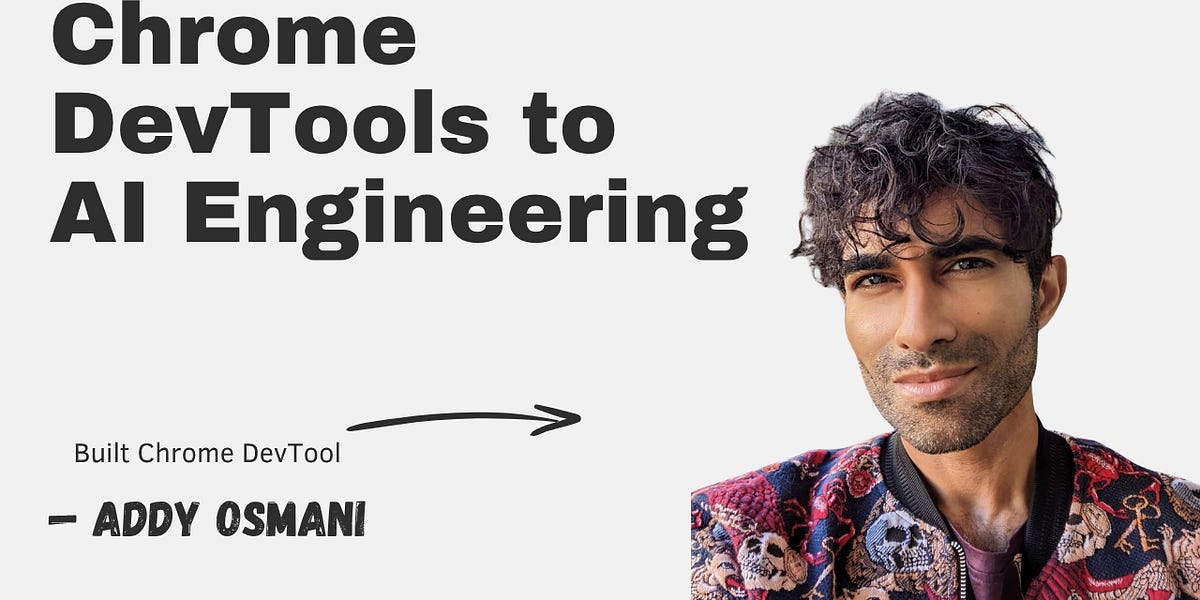
In this interview, former Google engineering director Addy Osmani argues that AI-assisted development creates a risk of “cognitive surrender”: engineers can lose their understanding of the system while agents produce more output than a person can fully inspect. His proposed remedy is mutual amplification—have the agent record important decisions and learnings, while the engineer reviews and internalizes the consequential ones. He expects engineering accountability to remain essential even when the model wrote the code, and sees AI expanding rather than shrinking the population of software builders. Osmani also advises engineers to develop product, go-to-market, and other cross-functional judgment as job boundaries blur.
Read the source →smolmachines / smolvm as a sandbox for untrusted Python & JavaScript
Simon Willison asked Claude Fable 5 in Claude Code for web to investigate whether smolmachines could execute untrusted Python and JavaScript with CPU and RAM limits, no network, and access only to designated files. The web environment could not run smolmachines directly. Instead, the agent switched to a GitHub Actions runner, installed smolvm, and ran its tests against the working branch. Willison highlights this as an example of an agent adapting productively to an execution-environment constraint.
Read the source →Quoting Jeremy Morrell
Jeremy Morrell’s thesis is that LLMs make extensions cheap to author while modern sandboxing makes them cheaper and safer to deploy. He proposes a design in which an application retains a solid, accountable core while users use LLMs to create extensions around it. The tradeoff is explicit: flexibility is expanded without handing responsibility for the core application to generated code. The quote frames sandboxing as the security boundary that makes this extensibility plausible.
Read the source →Conceptual integrity and counting lines of code
Simon Willison argues that lines of code can be a meaningful measure of coding-agent productivity only when the output remains maintainable, tested, and production-ready. He estimates that agents can increase a capable engineer’s output from tens or hundreds to around a thousand debugged lines per day, but says human cognitive capacity—not code generation—becomes the bottleneck. His larger concern is conceptual integrity: cheap feature creation can turn a product into a “Winchester Mystery House” of locally sensible additions that no longer form a coherent system. The required discipline has shifted from rejecting ideas because they are costly to rejecting them because they damage the design.
Read the source →Cerebras Intros Faster WSE-3 Turbo Processor and First Rack-Scale CS-4 System
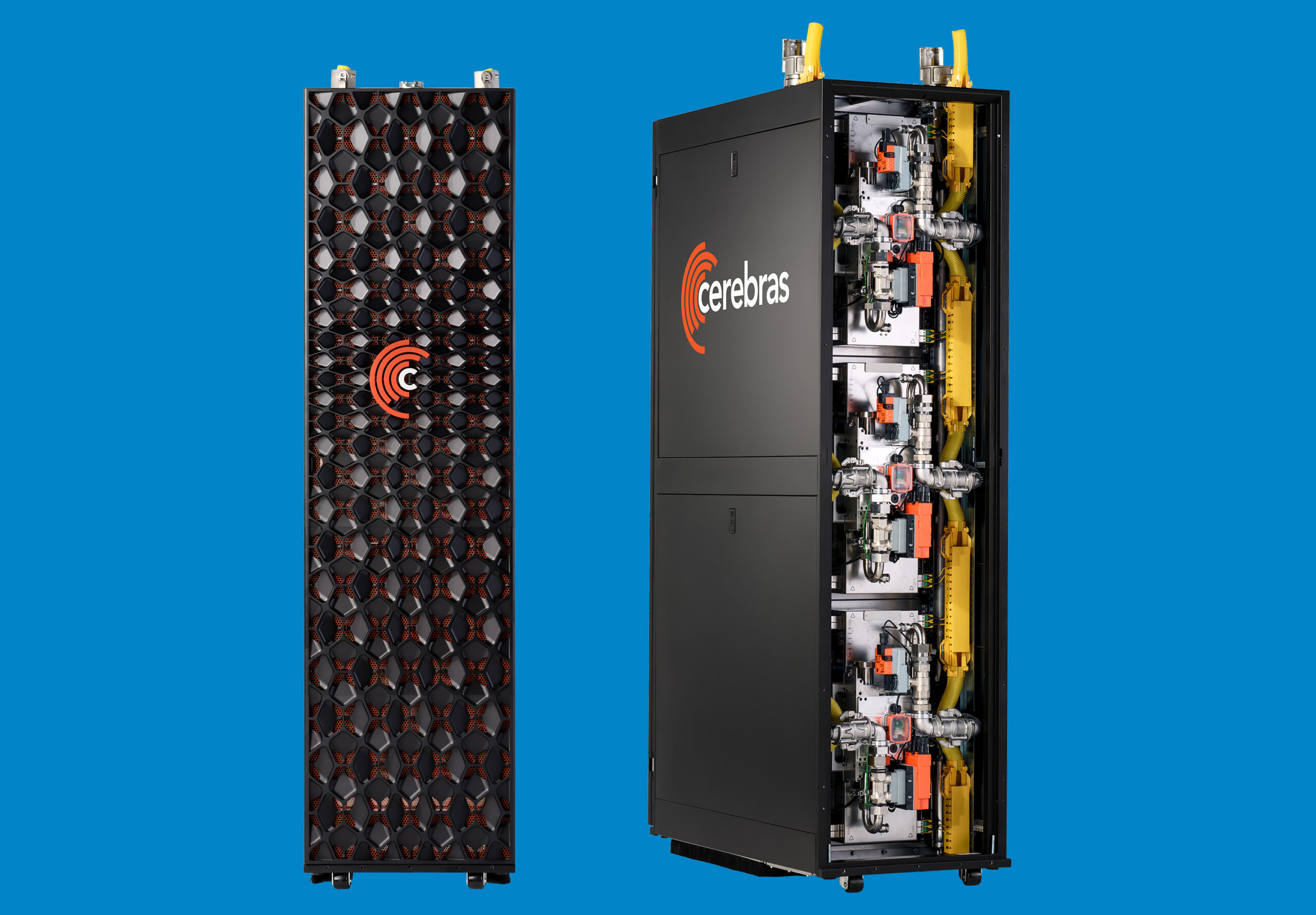
Cerebras introduced the WSE-3 Turbo, a faster version of its 5 nm wafer-scale WSE-3 with 900,000 AI cores, 44 GB of SRAM, and 4 trillion transistors. It claims 250 sparse-FP16 PFLOPS—twice the prior WSE-3—along with doubled on-wafer SRAM bandwidth to 42.2 PB/s, mesh bandwidth to 53.5 PB/s, and external networking to 300 GB/s. The new CS-4 rack combines three Turbo wafers, claiming six times the performance of a single CS-3 system, while the modular Nexus platform is intended to support future hardware swaps. Power consumption has not been disclosed; the analysis infers that the new rack’s ability to deliver twice the power may put a Turbo wafer near 54 kW.
Read the source →DeepSeek Just Built the Next Generation of Coding Agents
Transcript unavailable.
Read the source →Lecture 112: Production Megakernels for Real-World Inference
The talk describes megakernels as an alternative to the conventional GPU model of launching many small, highly parallel kernels whose communication largely happens through global memory. The speaker argues that a compiler needs a deeper view of GPU execution to decide when a more fused, persistent program can improve production inference. Megakernels are presented as a performance technique rather than a universal replacement for kernel graphs, with deployment choices depending on the workload and accelerator. The focus is on translating PyTorch workloads into implementations suited to GPUs and other AI accelerators while retaining fine-grained control.
Read the source →Nobody Laid Out The Five Kinds Of Software You Can Make. So I Did.
Nate B. Jones proposes five broad “software shapes” as a map for non-developers deciding what to build with AI. His premise is that people should make one appropriate tool choice at a time rather than learn an entire software stack before starting. He recommends Lovable as the default starting point for nontechnical users, while treating Replit, Codex, Claude Code, and models such as GLM 5.3 as choices that depend on the project shape. The video emphasizes converting concrete personal problems into running software across phones, computers, or small household devices.
Read the source →Stateless, Yet Durable: MCP Tasks v2
This talk explains that MCP v2’s stateless design substantially simplifies the task protocol, but does not eliminate the need for durable execution. From a Temporal perspective, the important cases are jobs that outlive a single request and need client- and server-side task handling. The speaker discusses implementing both sides in a bespoke client rather than relying on a standard one. The central distinction is between making the protocol transport/session stateless and making long-running work reliably resumable.
Read the source →The MCP Tasks Extension
The presentation explains why MCP needs a tasks extension: ordinary MCP calls are synchronous and work well for quick operations such as database queries, API calls, and file reads. Longer work—such as batch processing—cannot reliably finish within that one-request/one-response model. It compares an earlier tasks design from the 11/20 specification with the newer 7/20 version. The practical purpose is to let clients track and retrieve asynchronous work without forcing all tools into a synchronous timeout-shaped interaction.
Read the source →MCPs for Observability Stacks
The speaker argues that MCP-enabled observability should combine metrics, logs, traces, and events into a coherent system context rather than offer isolated signals. The operational goals are earlier anomaly detection, automated repetitive work, faster root-cause analysis, and lower mean time to resolution. They stress that correlated telemetry is necessary for effective troubleshooting and that the underlying data must be reliable and available. MCP is framed as a way to connect agent workflows to these observability capabilities, not as a substitute for trustworthy telemetry.
Read the source →Agentic DX: Bringing IDP into your IDE
Transcript unavailable.
Read the source →MCP Release Overview: Stateless and the Big Changes in the New Spec
An MCP steering-committee member calls the new specification the protocol’s largest change since launch. The guiding shift is from desktop-local hosts and data sources—originally centered on stdio—to deployments where MCP services operate remotely and at broader scale. The new stateless approach is presented as the protocol-level response to that transition. The talk also situates the change in the work of the Rust SDK and the open-source Goose agent harness.
Read the source →Before the Agent Calls: Source-level Findings from 100 MCP Servers
A source-level security review of dozens of MCP servers argues that MCP is unusually sensitive because a powerful server takes instructions through a non-deterministic LLM. The presenter says prompt injection can steer the model, creating more entry points for attackers than in a conventional direct client-server design. Their metaphor is that an MCP server is “the puppet who thought it was the puppeteer”: it may have authority but does not reliably control the intent behind a call. The talk advocates static inspection of server code as an early security layer before agents invoke tools.
Read the source →Responsible Autonomy: Building Governance Frameworks for AI That Act in the Real World via MCP
The presentation places MCP adoption in the context of agents acting in real organizational systems, where governance must accompany tool access. It emphasizes that enterprises are moving agentic AI toward mainstream use and need frameworks for responsible autonomy rather than marketing-only claims. The speaker connects the topic to community building and technical education around MCP. The available transcript establishes the governance focus but does not provide detailed implementation prescriptions.
Read the source →MCP 728: What Changes, What Breaks, and What You Need to Do About It
Transcript unavailable.
Read the source →What We Learned from Dozens of Enterprise MCP Deployments
Transcript unavailable.
Read the source →A Virtual MCP Community Event for AI Builders Intro
Transcript unavailable.
Read the source →Why DeepSeek Harness Just Became The Fastest Growing Github Repo EVER
The video says DeepSeek open-sourced DeepSeek Harness as a coding-agent harness comparable in role to Claude Code for Claude models. It reports 167,000 GitHub stars in under a week and attributes much of the excitement to its “everything is a plugin” architecture. Unlike ordinary external plugins, skills, MCPs, or CLIs, the presenter says the harness itself can be edited, including by plugins it helps create, making it potentially self-improving and customizable for a specific workflow. The analysis also notes that it can run locally with different models, while questioning whether that flexibility justifies switching from established harnesses.
Read the source →…and I’m not afraid of losing my social credits.
No readable body was available for this item.
Read the source →Cloud Agents and Cursor Harness Improvements
Cursor’s cloud agents can now subscribe to event sources such as pull requests, Slack threads, and scheduled tasks, then wake up when something changes. Agents automatically follow PRs they created through CI failures and bot feedback, and can keep an explicit /goal active through a long-running session. Skills can be pinned as Custom Modes to keep an agent following a particular operating playbook, while /loop supports recurring check-ins. Cursor also adds isolated cloud VMs for subagents and lets users steer a running agent with messages that take effect at its next tool call rather than interrupting a current action.
Read the source →GitHub Copilot app for Beginners: Managing your work
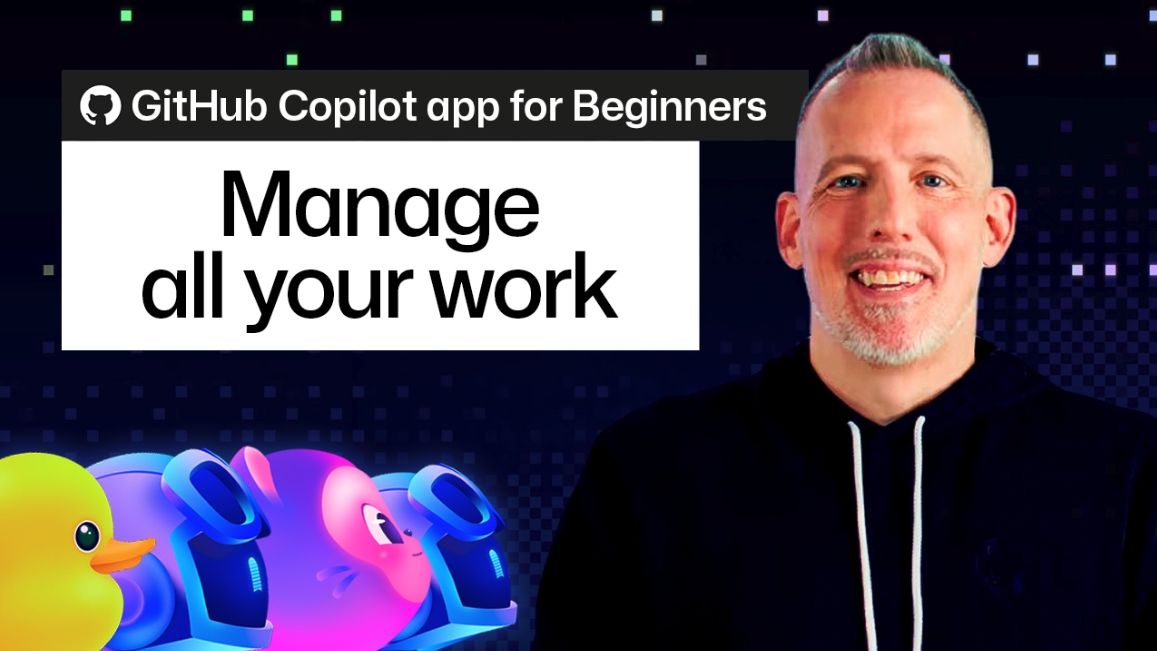
GitHub’s Copilot app has a My work pane that aggregates pull requests and issues from repositories the user has touched in the app, rather than every repository they can access. Built-in views separate all work, active work, review requests, and completed items; users can create saved filters such as issues assigned to themselves. The pane supports list and customizable table layouts, including column selection, reordering, and resizing. Users can start an agent session from one issue or PR, or select several items to create separate or combined sessions with the work item as context.
Read the source →5 new ways to level up your learning with Search
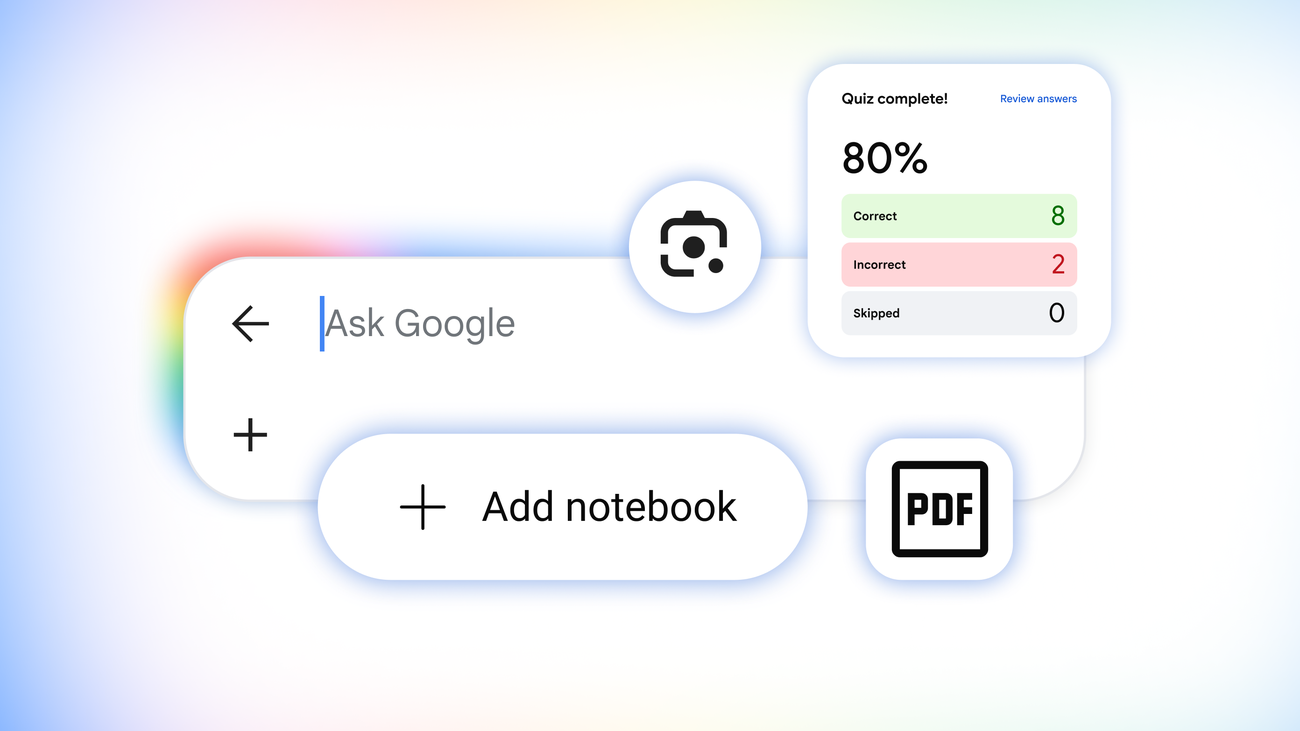
Google is adding generative interactive visuals and simulations to AI Mode and AI Overviews, beginning with English availability globally. Search can also create free, interactive practice quizzes with explanations for subjects and standardized tests including the ACT, AP, GRE, LSAT, MCAT, and SAT, using content partnerships with test-prep providers. A coming Lens experience will let students photograph work, receive explanations and error guidance, and continue the discussion in AI Mode. Google is also bringing Gemini Notebook into AI Mode in more than 180 countries and enabling document, slide, spreadsheet, and text-file generation from uploaded materials or AI Mode threads.
Read the source →v2.1.237 (+ v2.1.236)
The release page identifies v2.1.237 as a Claude Code release, but its content failed to load. No release notes or change details were available in the extracted material.
Read the source →AscendNPU-IR: MLIR for Ascend
AscendNPU-IR is an MLIR-based intermediate representation for compiling Ascend-oriented operators. It exposes higher-level abstractions that hide low-level compute, data-movement, and synchronization instructions while allowing compiler optimizations to map hardware-independent expressions to Ascend instructions. It also provides fine-grained controls over on-chip memory addresses, pipeline synchronization points, and ping-pong pipeline optimization. The project is open to ecosystem-framework integrations and provides paired Chinese and English Sphinx documentation.
Read the source →Bongard Problems

Matt Hodges uses Bongard problems—two groups of images distinguished by a latent rule—to examine the fuzzy boundary between pattern recognition and reasoning. He explains Hofstadter’s 1979 imagined solver as a system that identifies objects and relations, generates descriptions, filters irrelevant truths, forms tentative hypotheses, and revises its concepts as comparisons reveal a better abstraction. That account resembles modern representation learning, relational reasoning, embeddings, and analogy, but it also shows why calling AI “mere pattern matching” is not very informative. In a test, GPT-5.6 Sol found a valid but unintended rule for one puzzle, while Claude Fable 5 produced visibly false explanations, illustrating both ambiguity in the task and failures of basic visual preprocessing.
Read the source →LIVE: Uncle Bob on Software Fundamentals in the Age of AI
Transcript unavailable.
Read the source →Production Megakernels for Real-World Inference
The speaker introduces production megakernels as a GPU programming approach for inference that departs from executing a graph of small, isolated CUDA kernels. In the conventional model, many parallel kernel instances communicate mostly through global memory or shared memory within a core, and the launch grid abstracts much of the scheduling. Megakernels seek a more coarse-grained programming model and deeper control over execution, which can reduce overhead or improve data reuse for suitable workloads. The talk positions them as one performance tool among several, to be selected and compiled for real production traffic rather than treated as a universal optimization.
Read the source →