Nvidia’s $500 billion AI financing plan lacks commitments
Summary
The prominent story is not a new pool of AI money but an effort to make computing capacity legible to infrastructure finance, with the unanswered contractual details carrying more weight than the headline figure. At the product level, the same theme appears as a premium on operational discipline: capable systems, whether local models or workplace assistants, only become useful when their reasoning budgets, context, and reusable inputs are managed deliberately. Trust likewise remains contingent on demonstrated results rather than ambitious claims or polished messaging.
Executive Briefing: $500 Billion Announced, Zero Committed. What You Can Actually Budget Against.
Nvidia says it is working with Apollo, BlackRock, Blackstone, Brookfield, Goldman Sachs, and KKR on independent platforms intended to mobilize more than $500 billion for AI infrastructure over time. The author stresses that this is not money Nvidia has raised: the arrangements are memoranda of understanding, with final agreements, investor commitments, deal pricing, leverage, guarantees, and first-loss exposure still unknown. What is meaningful is that major capital providers are exploring how to underwrite GPU-heavy data centers as long-lived infrastructure, akin to power plants, aircraft fleets, fiber, or warehouses. The practical test is therefore not the headline total but which assets get financed, on what terms, and who ultimately bears the risk.
Read the source →Markdown SVG upgrades
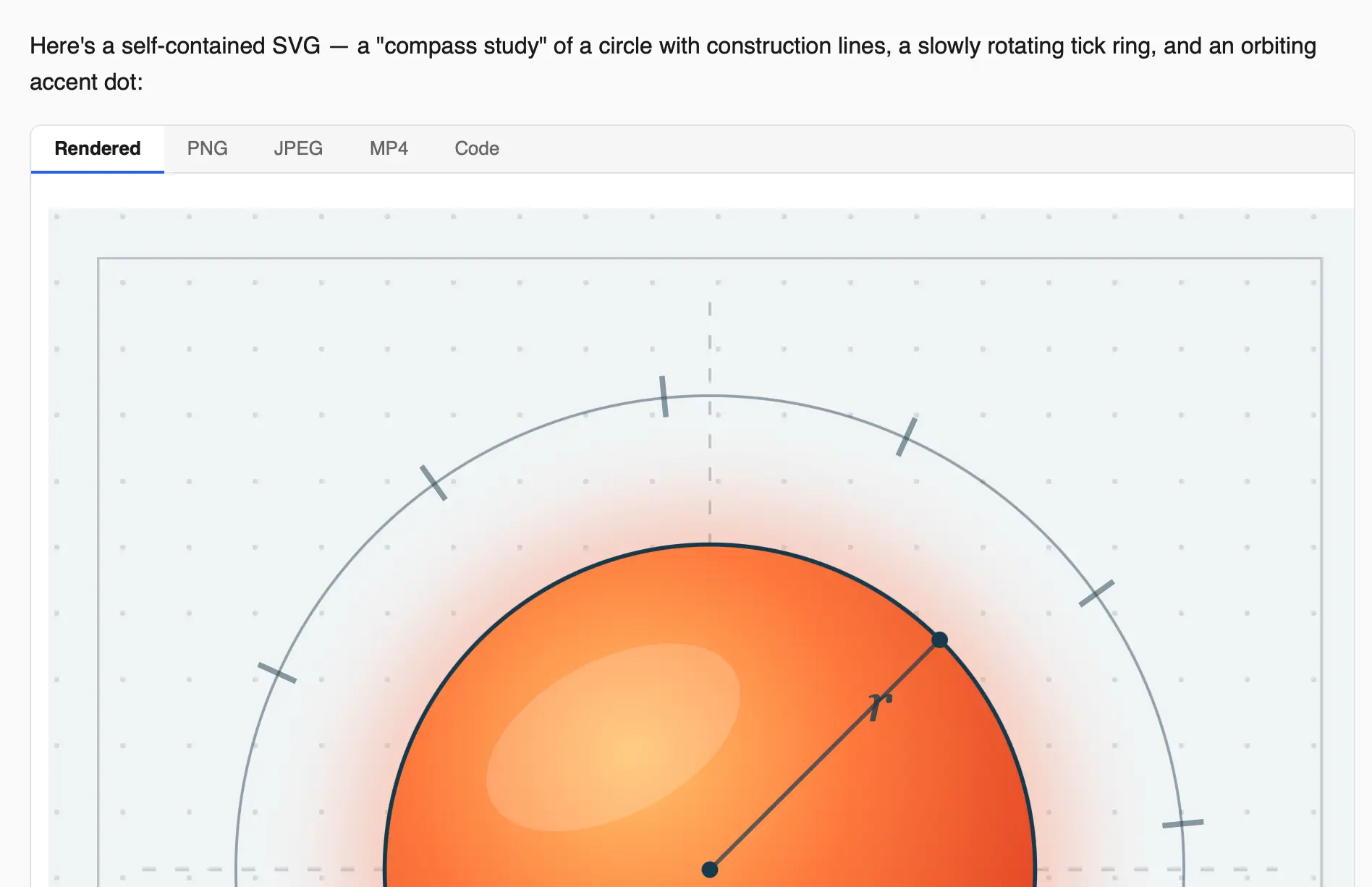
Simon Willison’s markdown-svg-renderer turns pasted Markdown, or Markdown loaded from a CORS-friendly URL or GitHub Gist, into a shareable rendered page. SVG blocks are displayed as SVG and accompanied by tabs that produce PNG and JPEG versions in the browser for platforms that do not accept SVG. A new MP4 tab detects animation, estimates a loop duration, renders frames, and uses more than 30MB of ffmpeg.wasm to encode them locally in the browser. The result is a bookmarkable conversion path for animated SVGs without requiring a server-side rendering workflow.
Read the source →Qwen 3.8 27B is excellent, but it defaults to wildly overthinking things

Alibaba’s Apache 2-licensed, vision-capable Qwen 3.8 27B looks unusually capable for a model that can run as a 17GB Q4 quantization on high-end consumer hardware, though independent benchmark confirmation is still pending. Its default xhigh reasoning setting is costly: on one local SVG prompt it used 22,276 reasoning tokens, generated 3,223 output tokens, and took 21 minutes; disabling reasoning completed a comparable attempt in 137 seconds. The author found that raising LM Studio’s default 8,192-token context limit to the model’s 262,144-token maximum prevented mundane tasks from consuming all context in thought. Heavy reasoning produced strong visual bounding-box work and a functioning offline utility, while no-reasoning output nearly worked but placed boxes incorrectly; early Pi agent experiments also suggest viable local coding and tool use.
Read the source →Quoting Dario Amodei
Dario Amodei argues that public hostility toward AI is principally a crisis of trust in companies, governments, and the technology industry, not a consequence of AI leaders publicly discussing risks. He rejects a glossy pro-AI marketing campaign as a remedy, saying claims such as curing cancer are now more likely to sound deceptive than inspiring. His standard for rebuilding trust is delivery: AI companies should be judged on whether they actually produce the broad benefits they promise.
Read the source →ADT R27A-BK3 EDSFF E1.S and E3.S to PCIe Slot Review
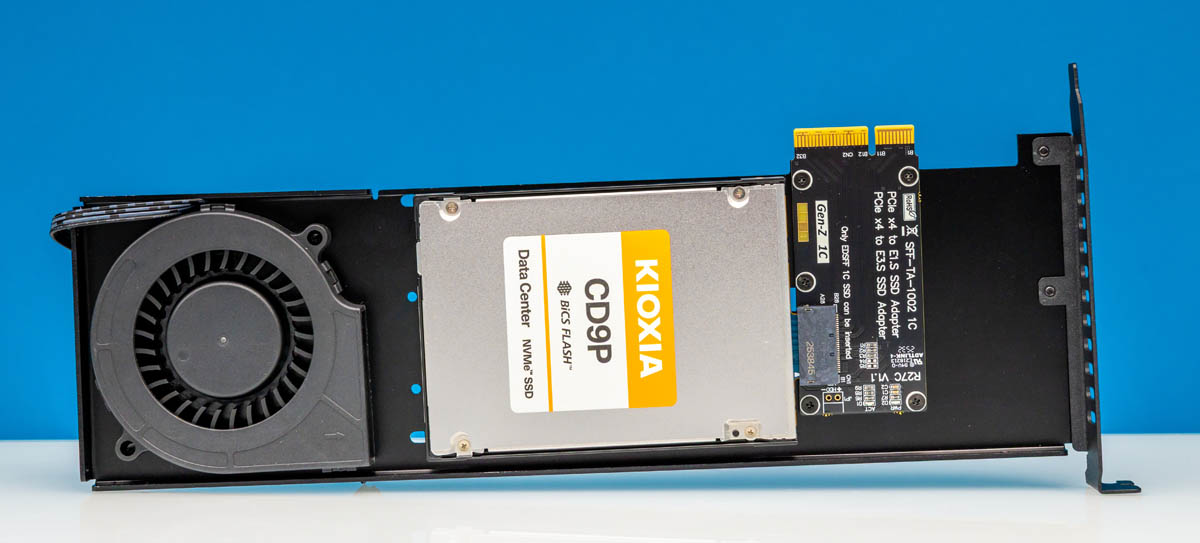
ServeTheHome tested low-cost ADT adapters that let E1.S or E3.S EDSFF SSDs occupy a PCIe slot, with fan-equipped models costing about $60. The tested card combines a 4-pin PWM blower, a PCIe x4-to-EDSFF 1C converter, and a shared connector supporting either drive form factor; its substantial size accommodates an E3.S drive and cooling hardware. Buyers need to match the adapter to their drive and host requirements, particularly because both PCIe Gen5 and Gen4 versions exist and U.2 variants are also sold.
Read the source →AI Isn't A Bubble. That's How NVIDIA's $500 Billion Push Ends Up In Your Retirement.
The video argues that Nvidia’s announced financing partnerships should not be read as a completed $500 billion raise: they remain subject to final agreements, platform formation, investor commitments, and project-level qualification. Its central claim is that the consequential development is the willingness of six major capital pools to treat AI compute as financeable infrastructure, not the headline amount itself. It also flags the risk of circular AI demand, citing a loop in which Microsoft invests in OpenAI, OpenAI buys Microsoft compute, Nvidia invests in CoreWeave, CoreWeave borrows to buy Nvidia chips, and Nvidia may buy unused CoreWeave capacity under conditions. The video frames the outcome as dependent on whether financing structures convert that circle into durable external cash flows rather than simply amplifying it.
Read the source →The Only Claude Cowork Setup Busy Entrepreneurs Actually Need
The video recommends treating repeatedly supplied chat context as durable files: if information has been typed into Claude more than twice, put it in a file and reference it from Claude.md. It proposes a master working folder for an “Agentic OS,” with separate folders where businesses or clients need distinct context. The presenter says the first high-leverage step is administrative but simple, and presents it as the foundation for getting real work done instead of continually chasing new Claude features. The available transcript cuts off as it begins to explain the three core files in the proposed setup.
Read the source →