Chinese labs take command of open-model frontier
Summary
The recurring contest is shifting from producing a single model or agent to owning the surrounding distribution layer: open-weight ecosystems, coding platforms, workflow integrations, and GPU portability. The same pattern creates a practical tension: more autonomy and choice reduce setup and context-switching costs, but durable deployment still depends on verification, policy controls, approvals, and workload-aware optimization.
State of Open Models: Summer 2026 Observations

Hugging Face reports that its Hub grew to 2.96 million model repositories, 1 million datasets, and 1.44 million Spaces, though attention remains highly concentrated: 1.5% of repositories account for 99.2% of downloads. Chinese labs set the monthly open-model size ceiling throughout 2026, releasing models from 754B to 2.78T parameters while American labs' own releases stayed below 130B in five of seven months. The report distinguishes frontier-only portfolios from full families: Moonshot, MiniMax, Xiaomi, and Z.ai largely start above 70B, while Qwen and Tencent cover small through frontier sizes; Qwen's broad family reached roughly 2.045 billion downloads, about 55 times Moonshot's 37 million. It also finds unusually permissive licensing among Chinese large releases—59% Apache 2.0 and 22% MIT above 20B—with none carrying non-commercial restrictions, suggesting ecosystem, cloud/API, and hardware positioning rather than weight-licensing revenue are the payoff.
Read the source →Gauntlet Loop Has A Huge Flaw... This Claude Skill Just Fixed It
The video frames a gauntlet loop as an agent that receives a goal and acceptance standard, then iteratively checks and improves its own work without the user reviewing each turn. It argues that this can produce substantial one-shot projects such as games and websites, but says two unstated limitations make the pattern unsuitable for real production projects in its basic form. Its proposed remedy is a shipped Claude skill rather than a wholly new looping technique, presented as a way to address those limitations.
Read the source →160-bay NVMe SSD 4U Server Shown at FMS 2026 Supermicro ASG-4116S-NU160R
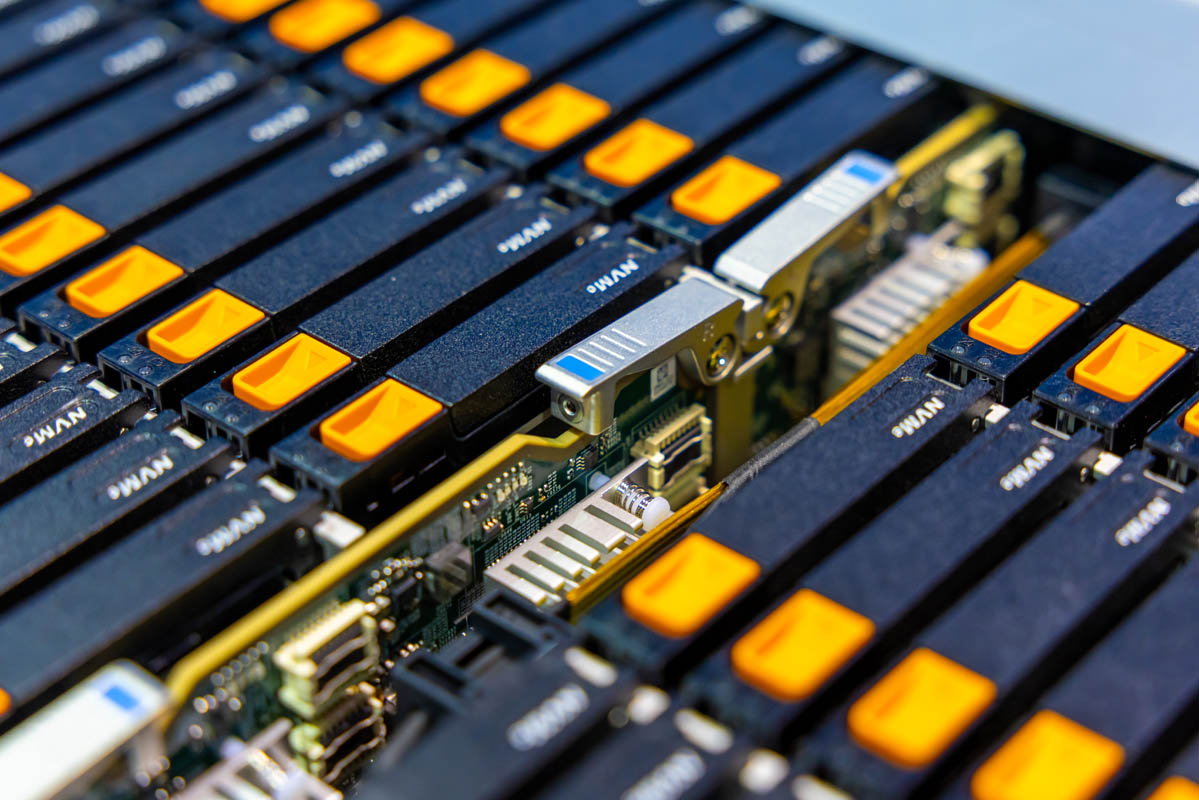
Supermicro showed a 4U, single-socket AMD EPYC system with 160 U.2 NVMe bays, plus four front E1.S bays, capable of roughly 19–20PB when populated with 122–128TB SSDs. Because 160 four-lane drives would otherwise require 640 PCIe lanes before networking, the design uses PCIe switches and serviceable slide-out SSD and CPU/networking trays. Three PCIe Gen5 x16 slots can take 400GbE NICs or DPUs, while the one EPYC 9005 CPU replaces the CPUs and DIMMs of about seven 24-bay 2U servers. The tradeoff is reduced per-drive peak sequential bandwidth, but the article estimates 130–137W per PB at the outlet using redundant 2.6kW supplies—less than the power needed just to run roughly 500 hard drives for comparable capacity.
Read the source →How to Build the Most Powerful System for AI Coding (Full Breakdown)
The video advocates an “AI dark factory”: a repository workflow where a human supplies a PRD or broad specification and an agent produces code that is reviewed, validated, and shipped. Its presenter says he tested the approach by building an agentic chat application without inspecting the code it shipped, and argues improving coding agents make this increasingly viable for a larger class of work. The claim is not that it is reliable for every task yet, but that organizations are beginning to assemble such end-to-end harnesses; the accompanying skill is intended to guide building one.
Read the source →Lecture 111: Spectral Compute: Compile CUDA everywhere
Spectral Compute's CTO presents SCALE as a compiler intended to take unmodified CUDA source and generate native AMD as well as NVIDIA machine code. The lecture challenges the assumption that CUDA portability is impossible, comparing the desired outcome to recompiling C or Rust across CPU vendors rather than rewriting applications for each target. It focuses on why CUDA is the de facto GPU programming target, the hard implementation cases and vendor-specific optimizations, then promises benchmarks and a longer technical Q&A.
Read the source →Grok Bot Is The First AI Agent You Just Install. Is It Worth $200?
The video characterizes Grok Bot as a managed, no-code multi-agent workspace: named agents retain roles and work in parallel on a dedicated cloud computer with a browser, filesystem, terminal, tools, and shared workspace. Its main practical claim is reduced integration friction: instead of configuring services before use, a bot requests authorization conversationally when it needs a connected application such as email. The presenter argues that this makes agents more approachable for non-technical users while remaining useful to technical ones, and examines whether the $200 subscription and associated safety considerations justify it.
Read the source →Adaptive Verification in vLLM: DSpark confidence-scheduled verification
vLLM has added DSpark adaptive verification, which uses a confidence head to estimate whether each speculative draft token will survive target-model verification and chooses how many tokens to verify on each step. Fixed speculative lengths work well at low concurrency, when spare GPU compute makes drafting cheap, but can waste throughput at high concurrency as low-probability drafts compete with real tokens; for one measured DeepSeek-V4-Pro workload, the seventh token of a seven-token draft survived under 10% of the time versus over 70% for the first. The scheduler globally selects the highest-probability draft slots under a budget that maximizes expected output tokens per profiled step time, allowing a later token from a confident request to outrank an early token from a weak one. Merged in PR #47808 as enableadaptiveverification, the approach stayed on the throughput/interactivity Pareto frontier from concurrency 1 through 256 in the reported 8×B300 benchmark, reducing the need to tune numspeculativetokens per deployment.
Read the source →IT'S OUT
No readable article body was available in the supplied material.
Read the source →How Claude’s text watermark works
Anthropic says future Claude models will embed a text watermark to help estimate whether Claude participated in writing a passage, an implementation it links to EU AI Act compliance. The SynthID-Text-style technique changes the source of randomness when the model selects among equally suitable next-word candidates, yielding a keyed statistical pattern that is invisible to readers but detectable by someone with the key. Anthropic says internal and cited Gemini testing found no significant quality, creativity, readability, speed, or price impact because the method adds no tokens and does not force implausible wording. Detection is probabilistic and improves with longer passages; it cannot prove a text is human-written or identify other models, and it is sparse in factual prose, light edits, exact outputs, and code where there is little valid lexical freedom.
Read the source →Grok 4.6 is now available in GitHub Copilot
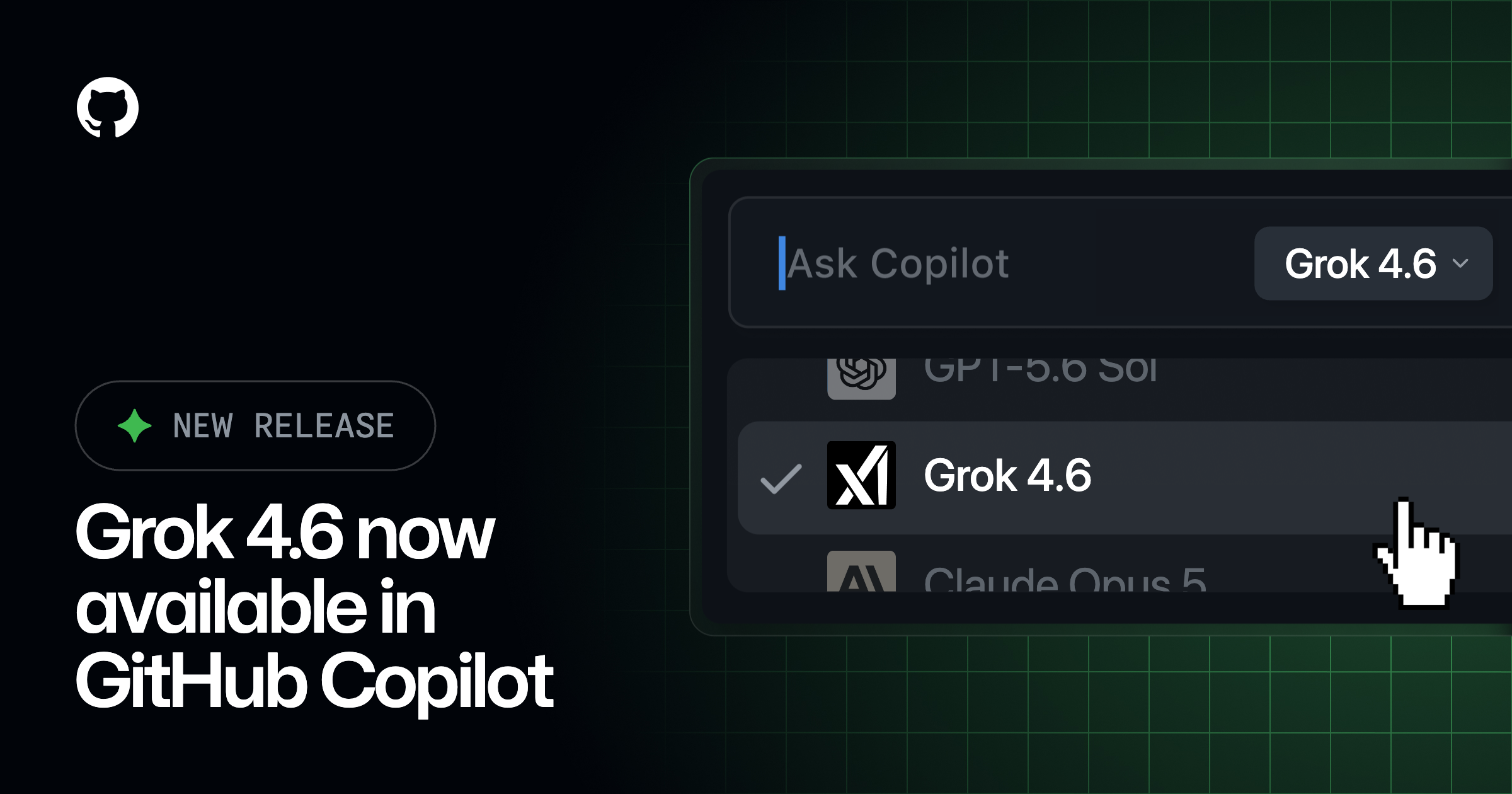
GitHub is gradually rolling out xAI's Grok 4.6 in Copilot for Pro, Pro+, Max, Business, and Enterprise users. GitHub describes it as aimed at agentic coding and complex multi-step work, citing strong internal results on longer terminal-based tasks in VS Code and Copilot CLI. It will be selectable through Copilot's model picker and is billed at the provider's list price under usage-based billing. Business and Enterprise administrators must explicitly enable its policy, which is off by default.
Read the source →GitHub Copilot weekly releases — August 10
GitHub is rolling out Kimi K3 across paid Copilot plans and MAI-Code-1.1-Flash with native image understanding plus improvements to coding, instruction following, tool use, and performance. Agent Plugins 1.0 is now generally available across VS Code, Copilot CLI, the Copilot SDK, and the Copilot app, allowing a plugin to be built once for compatible agent tools. Copilot CLI gains subagent task management via /tasks, prompt and command queueing during a running turn, headless plan-then-autopilot operation, and /rewind to undo Copilot changes without Git or discarding user edits. JetBrains receives persistent Copilot memory and local Ollama BYOK support, while VS Code adds per-turn switching between Claude BYOK and built-in models, pinned prompts, and live HTML refresh.
Read the source →How to bring your software delivery workflow into GitHub with agent apps

GitHub argues that agent apps can keep product, security, rollout, and operational context inside a pull request rather than forcing developers to shuttle it among separate tools. Its example uses an Amplitude agent to find that team users—but not solo users—benefit from completing an invite step, leading to a narrower product change before code is written. In the same PR, an Endor Labs agent assesses changed dependencies, a LaunchDarkly agent creates and wires a staged feature flag while leaving rollout approval to humans, and a PagerDuty agent evaluates active and historical incident risk before merge. The apps are available through GitHub Marketplace and can be assigned to issues, mentioned in PR comments, or selected from a repository's Agents tab.
Read the source →v2.1.233
Claude Code 2.1.233 adds GitLab merge-request URL support for --worktree and the agents view, optional user-identity forwarding through the apps gateway, and opt-in Linux Bash memory cgroups via CLAUDECODETOOLMEMORYLIMIT. It also adds a configurable WebFetch cache TTL and improves self-hosted-runner startup by avoiding a working-tree rewrite and two blocking server round trips. Fixes cover lost cloud sessions around permission prompts, reconnect loops in MCP v2 subscriptions, Linux sandbox CPU spinning, skill alias failures, Windows path-validation bypasses that could leak NTLM credentials, and several Windows approval regressions. Task-tracking tools are no longer available by default on newer Claude models, though CLAUDECODEENABLETODOTOOLS=1 restores them.
Read the source →The Pulse: Meta’s self-inflicted resignation-wave
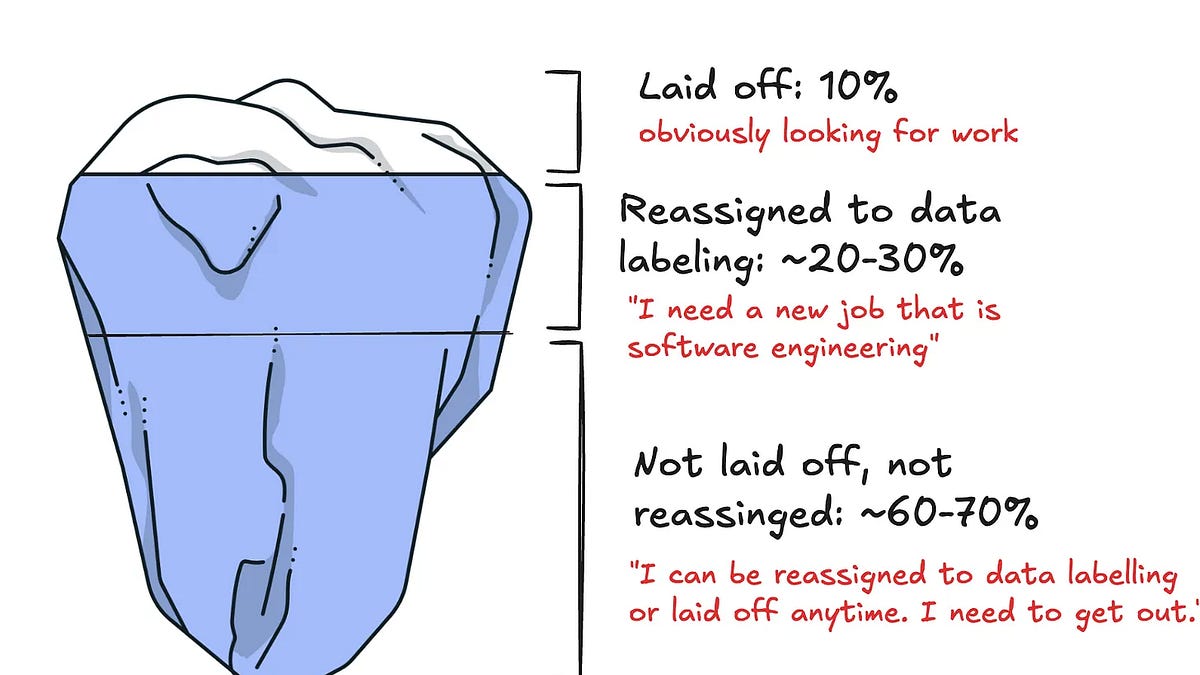
The newsletter says Meta's own layoffs and forced reassignments triggered a broader resignation wave by prompting unaffected engineers to seek new jobs. It reports that Meta is now offering large equity retainers to keep employees, but argues the effort has not stopped the departures. The edition also calls Grok Bot a possible managed-agent “OpenClaw moment,” describing Cursor's released generic harness as a Codex-like experience for knowledge work and predicting rivals will imitate the pattern.
Read the source →Don't classify. Hallucinate!
Simon Willison highlights Doug Turnbull's method for assigning items to a very large, pre-existing taxonomy without supplying the entire taxonomy to an LLM. First, ask the model to invent plausible labels for the content, optionally showing examples of the vocabulary's shape; then embed those invented labels and retrieve the nearest existing tags from the corpus. The approach turns the model's generative ability into a semantic query-expansion step, avoiding a direct classification prompt over Willison's 1,856 tags.
Read the source →Spectral Compute: Compile CUDA everywhere
The supplied transcript description says Spectral Compute's CTO explains that SCALE recompiles unmodified CUDA source into native AMD and NVIDIA machine code. It emphasizes the compiler work and vendor-specific optimizations needed to make CUDA portable, rather than requiring source changes for each GPU platform. The accompanying link points to SCALE's project site.
Read the source →