GitHub Copilot rolls out cheaper vision coding model
Summary
Today’s releases point to AI moving from standalone model choice toward managed operating systems: IDE memory and local-model options, per-model cost accounting, policy gates, production serving, and cloud governance are becoming standard. At the same time, the security and authorship pieces underline that this operational maturity does not settle questions of trust: hidden reasoning can become an attack surface, model prose still needs human ownership, and watermarking yields evidence rather than certainty. The practical dividing line is increasingly not access to a model, but whether teams can deploy, audit, and verify it responsibly.
Show HN: Voice driven murder mystery, Interview AI suspects with your voice

WhoDunnitAI is a free voice-driven murder-mystery game that lets players interrogate AI suspects. Its live voices run on gpt-realtime-2, so each minute of questioning incurs a real operating cost. The creator asks for optional donations to keep the experience available.
Read the source →Announcing Day-0 Support for NVIDIA Nemotron 3.5 Lightning on vLLM
vLLM added launch-day support for NVIDIA’s Nemotron 3.5 Lightning, a 30B-parameter hybrid MoE model that activates 3B parameters per token and targets always-on agents. It offers a 1M-token context window, controllable reasoning, and an OpenAI-compatible serving path for local, edge, and datacenter deployments. The post highlights three speculative-decoding options—MTP, DFlash, and DSpark—with DSpark recommended for low latency on H100, H200, and DGX Spark, while no speculation is recommended for maximum throughput. NVIDIA says the model can complete agentic workloads up to 30% faster at comparable accuracy and reach up to 4× the throughput of similarly sized open models.
Read the source →v2.1.228
Claude Code 2.1.228 is chiefly a stability and safety-fix release. It fixes stalled interactive redraws, several Windows Git discovery failures, model-selection regressions, cross-session messaging problems, and failures around self-hosted runners. It also prevents cleanup from deleting project-memory contents or symlinked development plugin caches. Synced skills are hardened so they cannot shadow local commands or MCP prompts, execute shell-style ! commands, or expand @ files locally.
Read the source →Copilot memory and Ollama in GitHub Copilot for JetBrains
GitHub Copilot for JetBrains now supports persistent memory across agent chats, reducing the need to repeat project context and preferences. It also adds Ollama as a BYOK provider, with model configuration and selection inside the JetBrains experience. Enterprise administrators gain server-managed controls over plugin availability, MCP access, permission bypasses, and OpenTelemetry. The release further surfaces Codex sessions in debug logs, simplifies installing Copilot CLI from integrated terminals, and fixes reliability issues across MCP, terminals, cloud agents, and diff editing.
Read the source →Upcoming deprecation of MAI-Code-1-Flash
GitHub will retire MAI-Code-1-Flash from all Copilot experiences on September 10, 2026. Users and integration owners are asked to move workflows to MAI-Code-1.1-Flash before then. Enterprise administrators may need to enable the replacement model through Copilot model policies. GitHub says no action is needed to remove the old model once the deprecation takes effect.
Read the source →MAI-Code-1.1-Flash available in GitHub Copilot
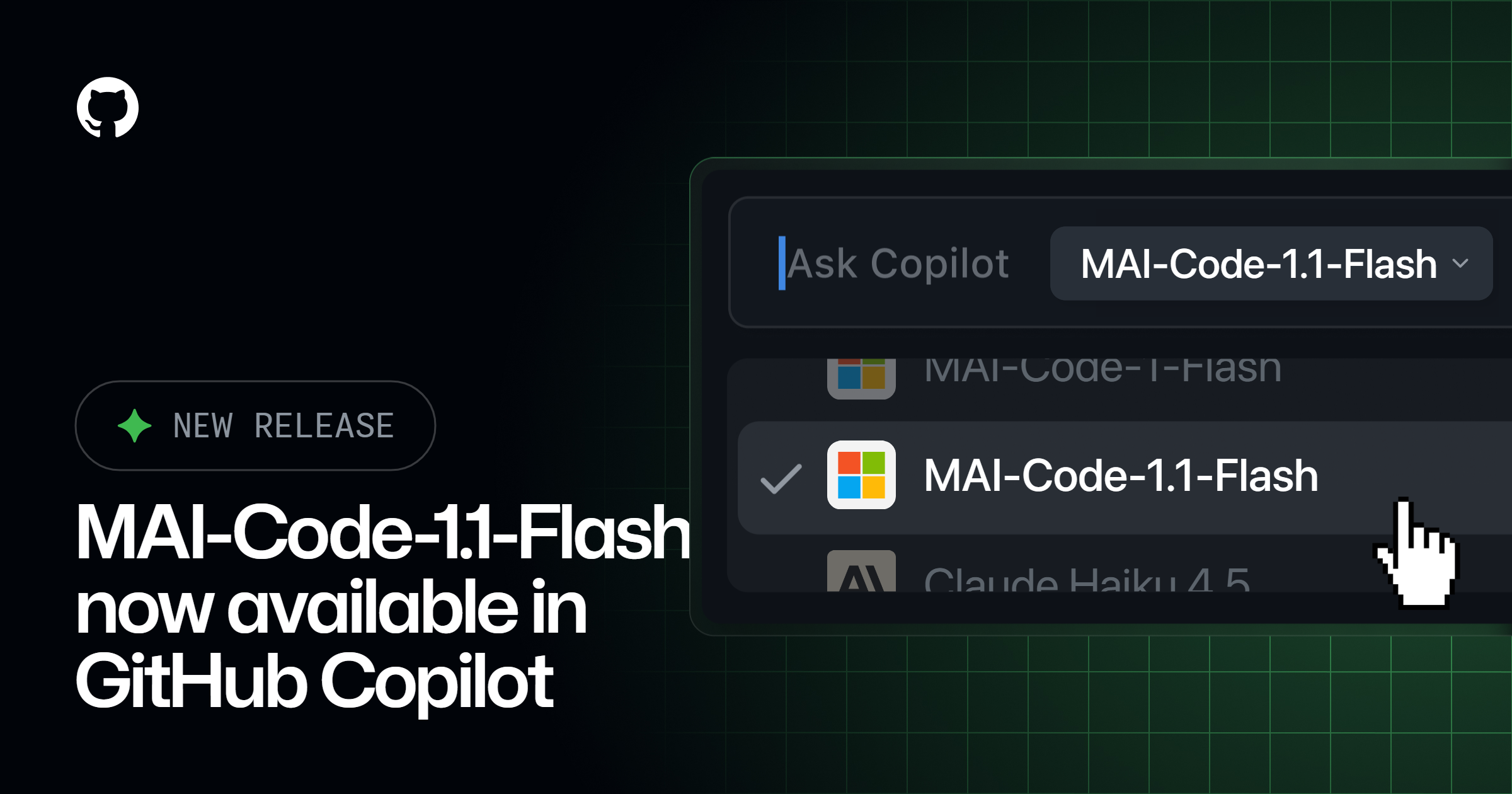
Microsoft’s MAI-Code-1.1-Flash is rolling out to GitHub Copilot as a small coding model with native image understanding and improved coding, instruction following, tool use, and performance. GitHub says serving and model-efficiency improvements cut its list price 73% versus MAI-Code-1-Flash. Annual Copilot subscribers are charged a 0.25× premium-request multiplier. Free and Student users can receive it through automatic model selection, while paid, Business, and Enterprise plans can select it manually, subject to an administrator policy for the latter two.
Read the source →Per-model token breakdown in the usage report

GitHub Copilot’s usage report now breaks AI-credit consumption down by model and by input, output, cache-read, and cache-write tokens. The additional detail is intended to make charges explainable and help teams find cost reductions. It is available to Copilot Business and Enterprise administrators and to individual Copilot users. The report can be downloaded from billing settings’ AI usage page.
Read the source →Claude Platform release notes — August 10, 2026
The August 10 Claude Platform notes reiterate an API constraint for Opus 4.1: requests cannot specify both temperature and topp. Developers must choose one sampling control rather than combining them. The extracted release note also says that listed Claude API features are generally available, but does not include the feature list. Treat the parameter incompatibility as the actionable compatibility detail.
Read the source →Claude Platform release notes — August 3, 2026
The August 3 Claude Platform notes carry the same Opus 4.1 sampling restriction: temperature and topp cannot be sent together. Integrations should use only one of those controls to avoid invalid requests. The available extract identifies additional Claude API features as generally available but omits their names. The practical change in the supplied note is therefore API-parameter hygiene rather than a specified feature launch.
Read the source →AMIE, our research medical AI system, demonstrates real-time clinical video consultation capabilities in a first-of-its-kind study.

Google Research and DeepMind describe AMIE, a Gemini- and Project Astra-based research system for real-time clinical video consultations. Its multi-agent design can interpret visual and audio cues, guide virtual physical examinations, and reason diagnostically during a call. In randomized simulated consultations with patient actors and primary-care physicians, evaluators rated AMIE favorably on history-taking, diagnosis, management, and communication; actors preferred video to text chat. Google emphasizes that AMIE remains a research system and needs further work before responsible real-world deployment.
Read the source →1.4.2
The available release-page extract did not include release notes for ExLlamaV3 1.4.2. It only reports repeated loading errors, so no changes can be reliably summarized. Consult the release page directly for the actual contents.
Read the source →🔬The BioAI Phase Shift - Matthew McPartlon & Neil Patil, Chai Discovery

This Latent Space interview frames a shift in AI drug discovery: pharma tool deals became viable once models were good enough for drug-design teams to trust, rather than forcing AI startups to develop their own drug pipelines. Chai Discovery argues better binding and structural models can generate stronger candidates earlier, shortening laboratory iteration and enabling designs that conventional lab discovery struggles with, such as precise molecular cascades and bispecific antibodies. The company has leaned on close pharma partnerships to steer research toward practical workflows and a CAD-like molecule editor instead of a chatbot. The post cites recent deals with Lilly, Novartis, and argenx, while noting that headline “biobucks” deal values are overwhelmingly milestone-contingent.
Read the source →Software engineering at a proprietary trading company: Optiver
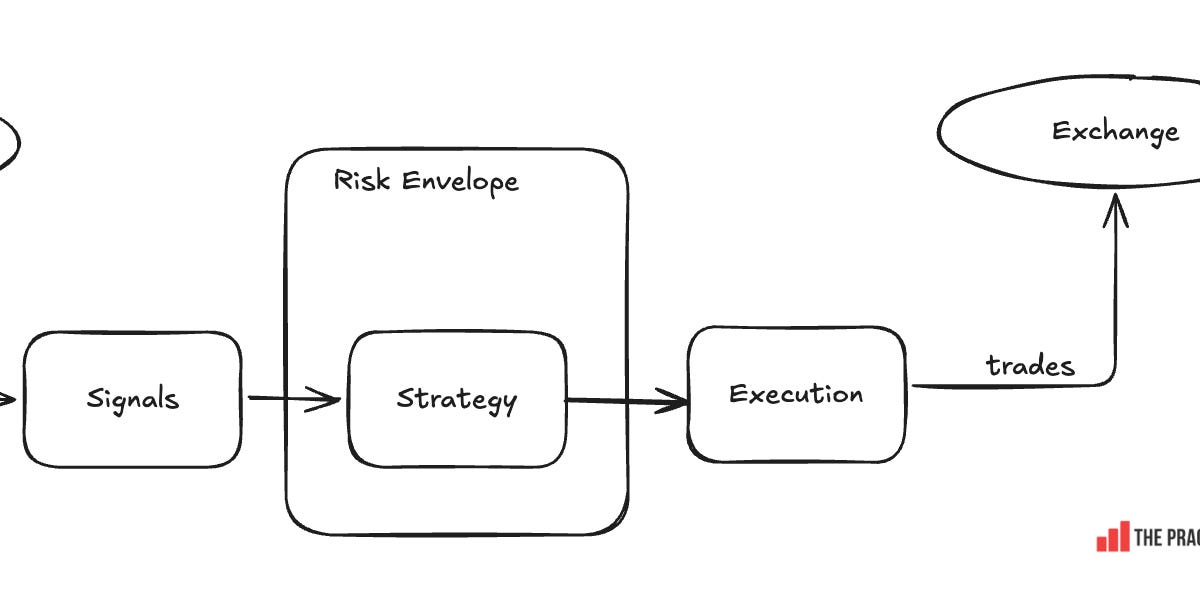
Optiver’s engineering organization treats latency as a first-order design constraint, extending from kernel work to custom hardware, FPGAs, network infrastructure, and co-location. The company trades its own capital rather than serving external customers, combining fast execution incentives with unusually strict risk controls after industry failures such as Knight Capital’s $440M software-bug loss. The report says today’s advantage increasingly comes from information models: slower models can generate signals while fast edge models make real-time trading decisions. Optiver reports roughly 950 engineers, 1,000 traders and researchers, more than 10 million trades daily across 100 exchanges, and €4.5B in 2025 trading income.
Read the source →Text Watermarking for Non-Academics

The article explains text watermarking as a statistical signal embedded through a model’s many plausible token choices, rather than metadata or invisible characters that copying would strip away. Across a long passage, generation can be biased toward a keyed pattern of acceptable continuations that a detector can test, though no individual word proves anything. It compares the logic to stylometry: attribution strengthens with more comparable text but remains sensitive to topic, genre, editing, and shifting writing habits. The key implication is probabilistic provenance, not a conclusive label—ordinary paraphrasing and the underlying redundancy of language make certainty difficult.
Read the source →Compression is prediction

ngrok’s post advances the core analogy that compression and language modeling both depend on predicting what comes next. Better predictions permit shorter encodings because likely continuations need fewer bits to represent. The article also positions quantization as a central technique for compressing large language models. The supplied extract contains no further technical detail or measurements.
Read the source →AI companies destroy physical books — let’s scan rare books before it’s too late
This Anna’s Archive guest post alleges that AI companies buy, scan, and destroy millions of used books to obtain pre-2022 training data, citing Anthropic’s reported Project Panama and a $1.5 billion copyright settlement. It argues that destruction after scanning could concentrate digital copies on private servers and erase physical sources, though the post presents this as an advocacy claim rather than independently substantiated reporting. Its proposed response is mass volunteer scanning and uploading of books, papers, periodicals, and archival material to shadow libraries. The piece treats preservation as urgent amid concerns that AI-generated text will increasingly obscure the human record.
Read the source →Black Hat USA 2026: The 'Breaking' News: The OpenAI–Hugging Face Incident
Transcript unavailable.
Read the source →Daybreak models are now available on AWS
OpenAI has made its Daybreak cyber capabilities available through Amazon Bedrock for approved Daybreak Access customers. The Red and Blue access levels are aimed at vulnerability research, detection engineering, incident response, exploit reproduction, and mitigation development. The integration is designed to let security teams use the models inside existing AWS governance, procurement, access-control, and operational frameworks. Approved customers can access Daybreak in the Bedrock console or through the Responses API’s bedrock-mantle endpoint.
Read the source →There are no lossless transformations of natural-language text
Simon Willison endorses an internal policy requiring engineers to stand behind every idea and sentence in AI-assisted writing. The argument is that every rewrite or rephrase changes meaning, and an AI lacks the author’s full mental model of what they intended to communicate. Consequently, authors should review generated prose as their own work rather than excuse unclear claims as AI output. The standard is accountability for meaning, not merely proofreading for fluency.
Read the source →Stealing Reasoning Traces from Proprietary LLM APIs
A paper described by Simon Willison found that encrypted reasoning blocks returned by Anthropic, OpenAI, and Google APIs could be replayed into weaker models from the same family and jailbroken to reveal stronger models’ hidden reasoning in plaintext. The authors say family members shared encryption keys, and report that providers acknowledged the disclosure and the attack later stopped working. The work also describes a prompt-injection variant that places an instruction inside a model’s own reasoning trace, which another model may treat with unusual trust. The episode shows how cross-model handling of “hidden” state can create a security boundary failure even when raw traces are encrypted in transit.
Read the source →Minisforum N5 Max Review with AMD Ryzen AI Max+ 395
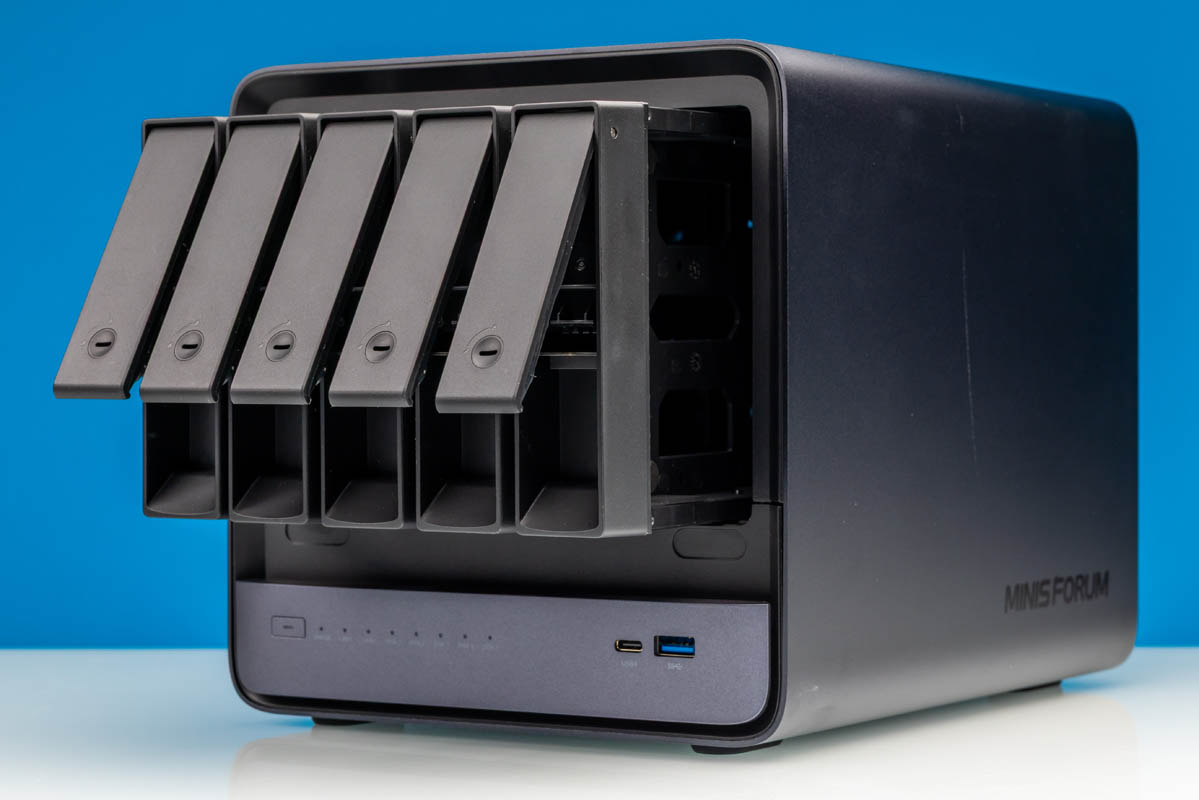
Minisforum’s N5 Max combines AMD’s 16-core, 32-thread Ryzen AI Max+ 395 and 64GB LPDDR5X memory with a five-bay NAS chassis. It pairs accessible tool-less SATA bays with dual 10GbE, three USB4 v2 Type-C ports rated up to 80Gbps, HDMI, and an internal power supply. The storage-focused design uses a JMicron JMB585 SATA controller and provides per-bay and per-LAN status indicators. The review’s central tradeoff is whether flagship Strix Halo compute and NAS-oriented storage connectivity justify a less flexible, purpose-built enclosure.
Read the source →Give Me 50 Minutes, I'll Give You 1000+ Hours Of Claude Code Knowledge (2026 Guide)
This Claude Code guide recommends the desktop app for newcomers rather than insisting they start in a terminal or VS Code extension. It argues that the desktop experience has improved and offers features unavailable in the terminal, including voice mode, browser automation, inline artifacts, and general usability improvements. More technical users can still use a terminal from within the desktop app, so the suggested path is not mutually exclusive. The video promises broader coverage of prompting, MCPs, CLI use, graph engineering, and building an agentic operating system.
Read the source →Can you trust what AI tells you?
Anthropic’s education team argues that trust in AI should be a dial calibrated to the cost of being wrong, not a binary choice. It distinguishes hallucination—plausible false output—from sycophancy, where a model agrees too readily with a user’s framing. For factual or consequential decisions involving health, legal, money, numbers, or citations, viewers are urged to verify claims against trusted sources and actually open cited links. The guidance also recommends neutral questions and explicitly inviting an honest “I don’t know” to surface uncertainty.
Read the source →41 Stats About AI Adoption
The AI Daily Brief argues that survey statistics on adoption can obscure the more consequential divide between organizations experimenting with agentic AI and those already redesigning work around it. It says recent capability advances and better agent harnesses have shifted the relevant question from whether to adopt AI to how to use it well. The presenter still stresses that overall adoption remains very early, with a widening gap between frontier users and slower-moving organizations. The framing favors practical implementation support for committed adopters over generic persuasion based on corporate surveys.
Read the source →