AI rollout resistance turns on job-security promises
Summary
Across the items, AI is moving from a novelty layer to operational infrastructure—and the hard parts are ownership, cost, compatibility, and trust. The retirement of a subsidized platform and the emphasis on bounded pilots both favor explicit limits over frictionless adoption, while the system-prompt and storage examples show how much practical AI work now happens in the surrounding controls and data plumbing.
Quoting Claude Opus 5 system prompt
Simon Willison highlights a clause in Claude Opus 5’s system prompt that preloads the model with a correction about the June suspension of Claude Fable 5 and Mythos 5 under U.S. export controls. The instruction says the models should acknowledge the suspension and restoration accurately, treat the controls as a current political topic without personal opinion, and direct users to Anthropic’s statement for further detail. It also tells Claude to seek newer information when search is available, since subsequent developments may have overtaken the notice. The excerpt illustrates system prompts being used to patch a model’s knowledge cutoff around a high-profile, time-sensitive event.
Read the source →GitHub Models is now retired
GitHub Models has completed its retirement, breaking a GitHub Actions workflow that had relied on the service’s unified model API and the repository’s existing GitHub credential. Willison describes its distinctive value as making “Continuous AI” automations easy to run inside Actions without separately managing an LLM provider key. GitHub gave no reason for the shutdown, though he suspects free or subsidized token costs became untenable as coding-agent usage expanded. He replaced it in his own README-folder-summary workflow with an OpenAI API key protected by a monthly spending limit and GPT-5.6 Luna.
Read the source →SQLite compressed text-history prototypes
Willison tested a deliberately simple revision-history scheme: put every previous text version in a JSON array, then compress the entire array with zlib or Zstandard in a SQLite BLOB. In a simulation of 1,000 edits, 20.4 MB of uncompressed revision text shrank to 80.3 KB as a Zstandard-compressed JSON array, benefiting from the repeated material between revisions. The weakness is rewrite cost, because every new edit would otherwise require decompressing and recompressing all history. The suggested mitigation is chunking history into separate rows capped at either 128 revisions or 3 MB of uncompressed JSON.
Read the source →datasette-auth-tokens 0.4a13
The release updates datasette-auth-tokens for compatibility with sqlite-utils 4. The available post contains no additional release notes, migration guidance, or feature details. Users depending on the package should treat this as a compatibility maintenance release and verify their sqlite-utils version when upgrading.
Read the source →WisdPi WP-UT9 USB 10GbE Adapter Review
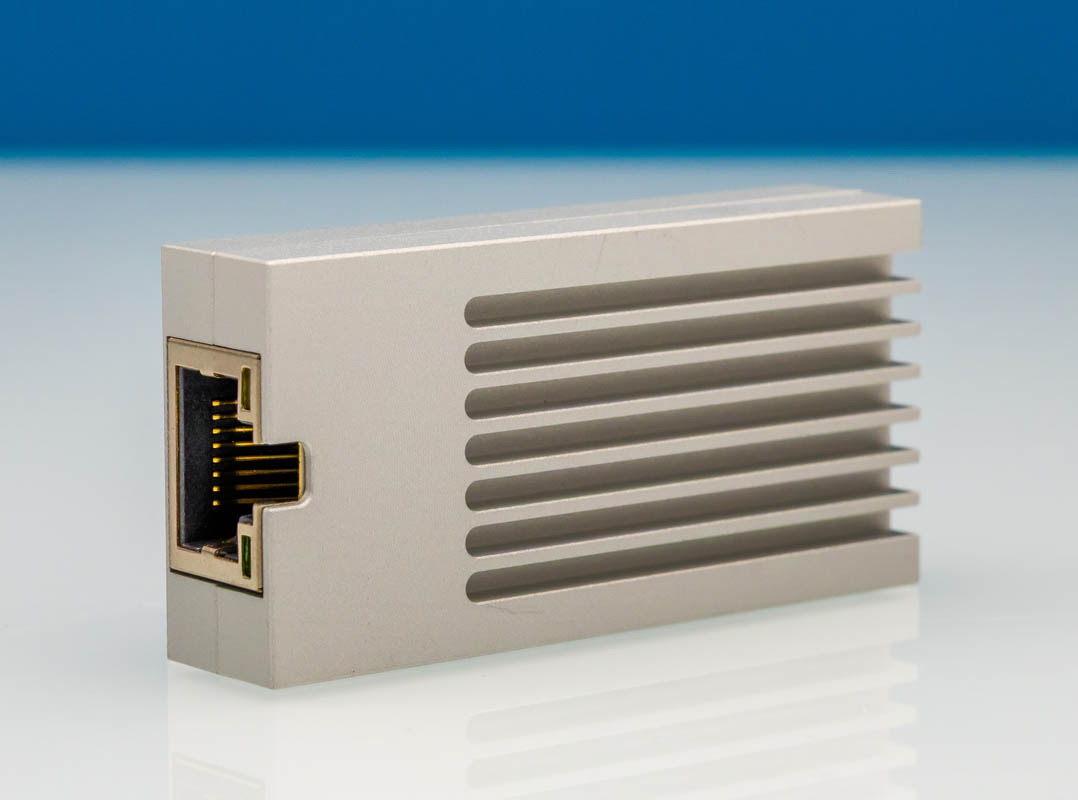
The WisdPi WP-UT9 is a compact USB-C-to-10Gbase-T adapter built around Realtek’s RTL8159 controller, matching the chipset and expected behavior of the previously reviewed Xikestor SKN-U310GT. Its RJ45 port supports 100 Mbps through 10 GbE, including 2.5 and 5 GbE multi-gig links, while the USB-C connection supplies both data and power; the aluminum shell is intended to dissipate heat from the controller and PHY. The main physical differentiator is its included USB-C-to-USB-C cable, though users needing more length will likely need a replacement. Linux support is improving—the RTL8159 integration is queued for Linux 7.2’s r8152 driver—but earlier kernels still need Realtek’s out-of-tree driver or a distribution backport.
Read the source →Your Engineers Are Resisting Your AI Rollout. 3 Things Turn That Around.
Nate B Jones argues that active resistance is normal on organizations larger than roughly 50 people, citing a global survey in which one-third of employees said they had sabotaged AI. He frames the leadership problem as more than training or tool adoption: workers need credible answers about what AI means for their jobs, judgment, career development, and the transition from pilot projects to scaled systems. The video promises three practical areas—leader communication and commitments, tightly scoped starting parameters, and the people-and-system details of scaling—rather than treating rollout as a simple usage-metrics exercise. Its central warning is that leaders should address fear directly instead of assuming better demonstrations will create buy-in.
Read the source →Executive Briefing: Your Team Will Believe the Layoff Headline Over Your Roadmap. Here's the Fix.
This briefing says employees interpret an AI rollout through job-security risk, not through the usual adoption playbook of licenses, training, use-case collection, champions, and usage targets. It recommends that leaders make a public, specific commitment about current jobs, hiring, and careers; run one narrow pilot tied to bottom-line results; and evaluate completed work rather than tool usage. Leaders should also describe the actual future roles, boundaries, systems, and human decisions being built, instead of offering vague assurances of “higher-value work.” The author notes that AI fluency can legitimately become a job expectation, but employees deserve enough clarity to make a real career decision rather than being pushed by slogans.
Read the source →