AI Digest — August 2, 2026, 8 PM
Summary
Two very different anxieties about compression run through today’s items. Nate’s newsletter and video both argue that the frontier labs shipping faster doesn’t close the door on builders, it just raises the floor — the defensible thing is distribution and domain depth, not a feature. Meanwhile r/LocalLLaMA is celebrating the same compression from the other end: if a locally runnable DeepSeek-V4-Flash really matches March’s frontier, the capability everyone was renting a few months ago is now free and on your own hardware — which is exactly the dynamic that guts point solutions and rewards the builders Nate calls level four.
The Chinese LLM release carousel never stops. Place your bets for MiniMax next week.
No readable body was extracted for this Reddit thread, so only the framing is available: r/LocalLLaMA is tracking the relentless cadence of Chinese open-weight model launches, with the community treating each week's drop as near-inevitable and now speculating that MiniMax is next in line. The title's "carousel" framing captures the local-model community's current mood — release fatigue mixed with the expectation that another capable open-weights model is always about a week away. Nothing beyond the headline claim can be verified from the captured material.
Read the source →DeepSeek-V4-Flash-0731: Models you can run locally now have the intelligence score of the top frontier model from March 2026
No article body was extracted, so the substance rests on the headline claim: DeepSeek's V4-Flash release dated 0731 reportedly scores, on a composite intelligence benchmark, at the level of the best frontier model available in March 2026 — while being small enough to run on local hardware. That compresses the frontier-to-local lag to roughly four to five months, which is the number worth watching for anyone deciding whether to build on hosted APIs or self-hosted weights. The specific benchmark, quantization, and hardware requirements behind the claim are not recoverable from the captured material.
Read the source →Executive Briefing: Which of the 5 Levels of AI Builder Are You, and What It Costs You
Nate argues that frontier-lab launches don't destroy the opportunity to build — they raise the minimum level required to build, and confusing the two is what makes founders quit prematurely. He grades builders on five levels defined by evidence: what you can actually show, from a prototype you personally love (level one) up to a market thesis you'd stage a multi-year bet on (level five). The diagnostic is how a launch lands: to a level-one builder, a lab shipping your headline feature reads as a verdict; to a level-four builder it's just a data point, because their moat is distribution and domain depth rather than the feature itself. He notes the labs are also absorbing the work around models — Claude packaged for small businesses and finance teams, Codex pushed into company-wide roles — so point solutions are the most exposed. Entry can happen at level three or four if you already know a market cold; twenty years inside one domain buys something a training run does not.
Read the source →condense-json 1.0
Simon Willison shipped 1.0 of condense-json, a year-and-a-half-old Python library, as part of a deliberate push to be braver about declaring things stable — the release is sensible non-disruptive fixes plus a version bump, not a rewrite. The library takes a JSON document plus a replacements mapping (e.g. {"1": "with foxes in it"}) and rewrites every matching string or substring into a compact {"$r": [...]} form referencing the key, with uncondensejson() reversing the transform losslessly. The point is deduplication: when JSON repeats data that already lives in a related structure, you store the reference instead of the text. Willison uses it to shrink the SQLite logs generated by his LLM tool, with PR #1586 tracking the latest integration.
Read the source →ASUS Showcases NUC 16 Family Powered By Panther Lake
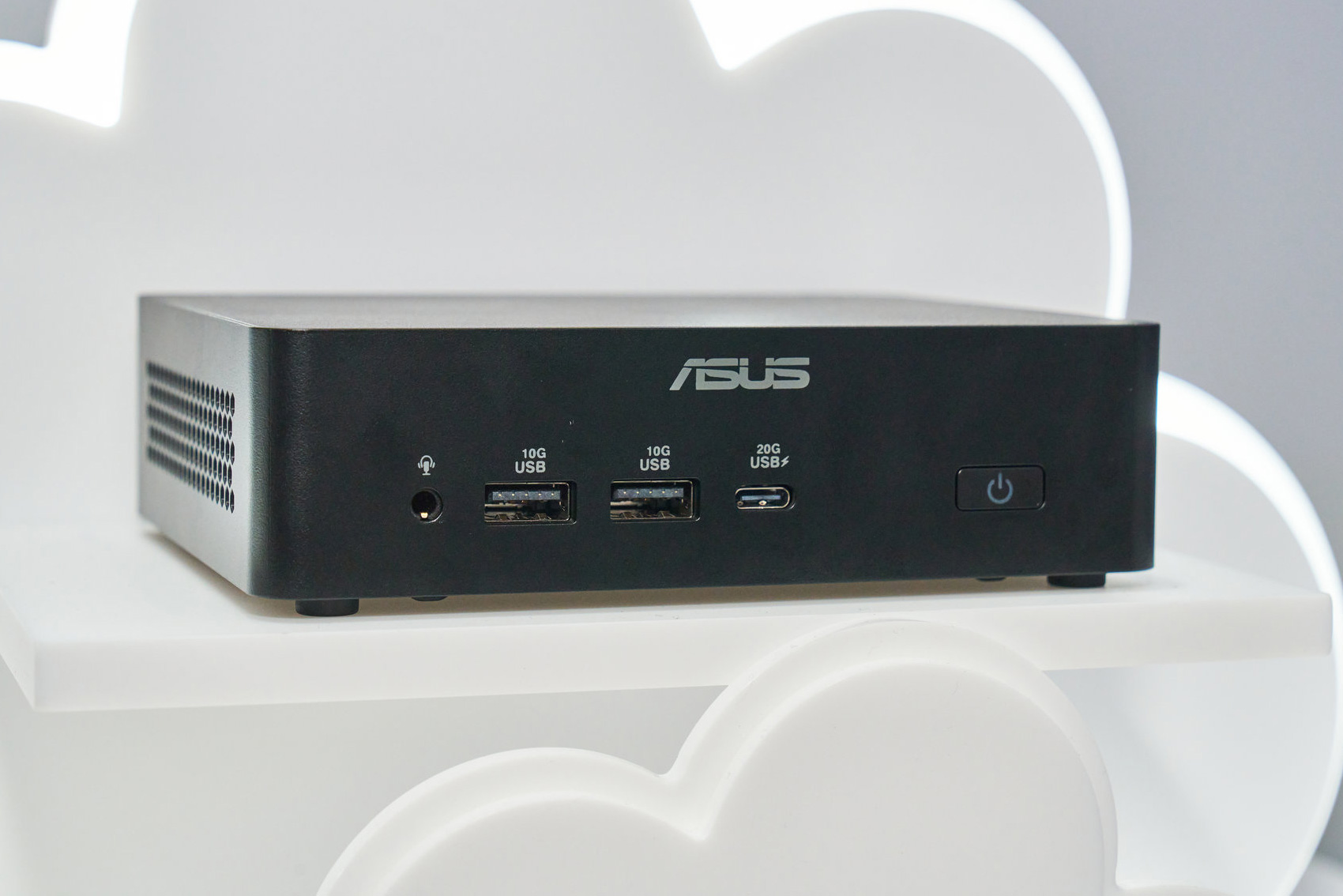
At Computex 2026 ASUS showed the NUC 16 and NUC 16 Pro, pairing Intel's Core Series 3 (Wildcat Lake) and Core Ultra Series 3 (Panther Lake) in the 4x4-inch form factor ASUS acquired from Intel in 2023. The base NUC 16 ships in one configuration around the Core 7 350: six cores (2 Cougar Cove P-cores, 4 Darkmont LPE-cores), a modest 2-Xe-core Xe3 iGPU, and a 28W cTDP. Wildcat Lake's single 64-bit memory channel limits it to one SO-DIMM at 16GB or 32GB of DDR5-5600, but I/O is unusually generous for a budget box — 40Gbps Thunderbolt 4, dual HDMI 2.1, dual 2.5GbE via Intel I226-V, front 10Gbps USB-A/C, and Wi-Fi 7 / Bluetooth 6.0. Storage is a single Gen4 x4 M.2 2280 slot behind a toolless bottom panel, and the unit sells three ways: complete, barebones, or bare board — though with current memory prices, the barebones route is a coin flip on value.
Read the source →If OpenAI And Anthropic Are Discouraging You, You're Probably A Level 1 Builder.
This is the video companion to the five-levels framework: Nate opens by naming the pattern he keeps seeing — builders demoralized by the weekly cadence of OpenAI and Anthropic launches — and answers that after twenty years of building, it has never been a better time to build. A level-one builder, in his description, is someone whose entire world is their idea and their enthusiasm for what AI can do with it; ask them about go-to-market, the wider problem space, or their thesis and there's nothing there. Those are the builders who get flattened by a launch, and who tell him afterward that they never considered distribution or that a new model or agent would reshape their space. He stresses that some of this is ordinary startup wisdom that predates AI, while other parts are genuinely new and aimed at more advanced builders. People can enter the ladder at level five or level one, and some never climb.
Read the source →