AI Digest — July 21, 2026, 9 AM
Quick Notes
- The 4-bitter lesson: Balancing Stability and Performance in NVFP4 RL — GPU MODE talk on doing reinforcement learning in NVIDIA’s 4-bit floating point (NVFP4) format and the tradeoffs between numerical stability and performance. Transcript unavailable — video is a scheduled live event that hasn’t aired yet. https://www.youtube.com/watch?v=bxdRyBiBePs
- TIRx — GPU MODE session (topic implied to be tool-integrated reasoning / GPU work). Transcript unavailable — video is a scheduled live event that hasn’t aired yet. https://www.youtube.com/watch?v=Y8htU1wiyYU
- Better design than Fable — Ben Sellon marks his 36th birthday by refocusing Ben’s Bites on non-technical people who want to use cutting-edge AI, plus a news roundup: Kimi K3 topped Fable/GPT-5.6-Sol on frontend coding, Fable 5 joined Claude Max/Team plans, and tools like Sierra’s Horizon, Gemini Notebook, and Ramp Router launched. https://www.bensbites.com/p/better-design-than-fable
- Grabette: an open system to record robot-manipulation data — Hugging Face released Grabette, a low-cost handheld gripper (Raspberry Pi + Pi camera + OAK-D depth camera) that lets anyone record manipulation demonstrations by hand and auto-convert them into robot-ready LeRobot datasets, no robot or teleop rig needed. https://huggingface.co/blog/grabette

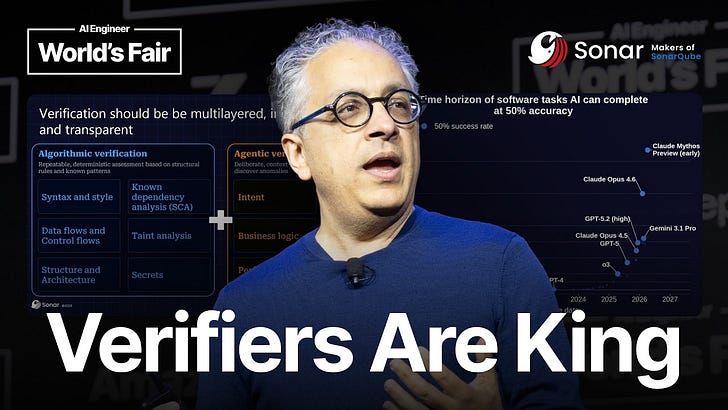
- [AINews] not much happened today — A quiet news day where Alibaba’s announcement of an open-weight 2.4T Qwen 3.8 Max was overshadowed by Kimi K3 2.8T; the AIE Security track dropped and verification for safety/correctness was a theme. https://www.latent.space/p/ainews-not-much-happened-today-173
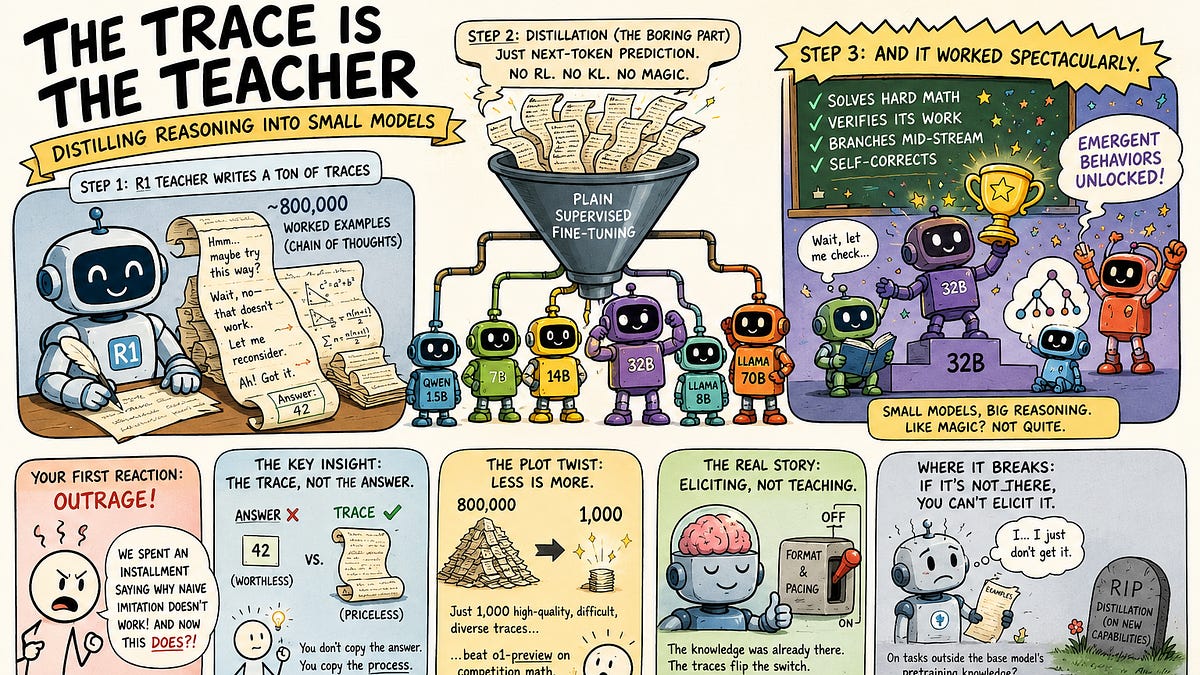
- The Sequence Knowledge #898: The Trace Is the Teacher — Explores how DeepSeek distilled R1’s ~800K reasoning traces into small off-the-shelf models via plain supervised fine-tuning, producing emergent reasoning behaviors and challenging the theory that naive sequence-level imitation shouldn’t work. https://thesequence.substack.com/p/the-sequence-knowledge-898-the-trace
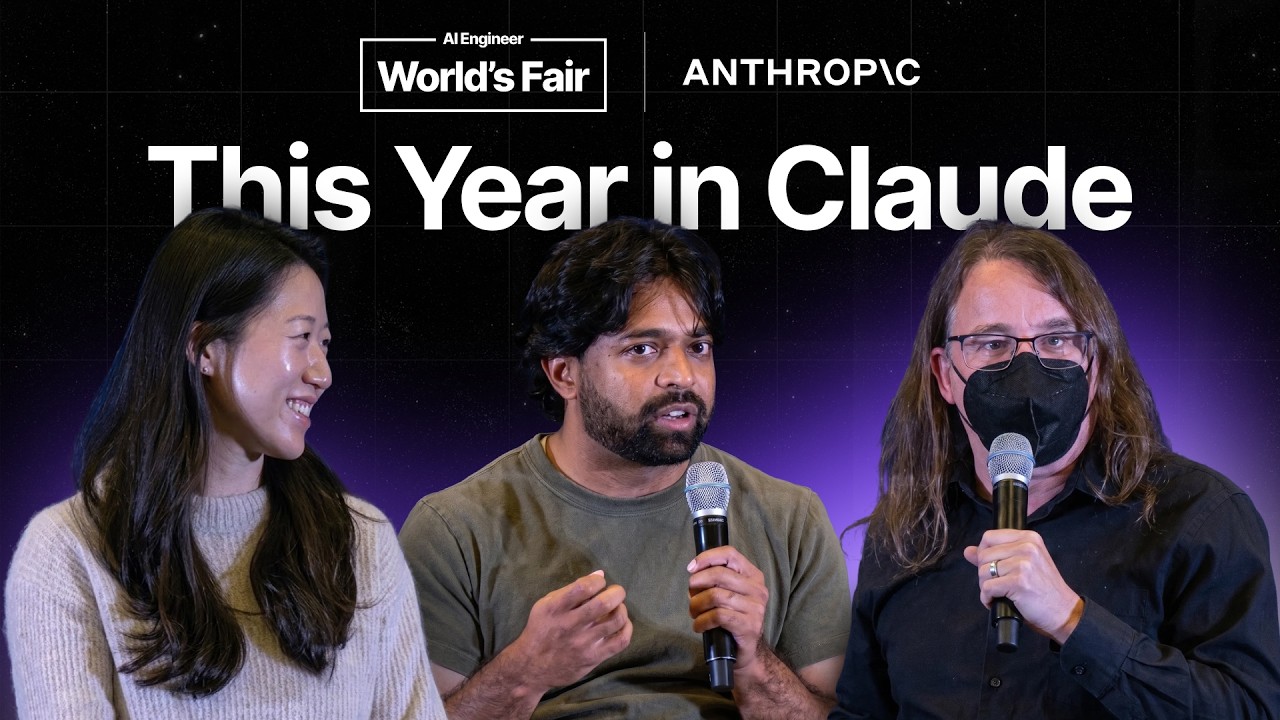
- A Fireside Chat with Cat and Thariq from the Claude Code team — Simon Willison’s edited transcript of an AI Engineer World’s Fair chat with Anthropic’s Cat Wu and Thariq Shihipar on how coding agents shifted engineering from careful permission-prompt review toward delegation, product/business taste over execution, and even making rewrites viable. https://simonwillison.net/2026/Jul/21/cat-and-thariq/#atom-everything
- not much happened today — smol.ai roundup covering open-weight competition and Chinese-model policy debate, Kimi K3 / Qwen 3.8 momentum, agent harnesses vs. model-centric generalization, and the Hugging Face security incident where guardrails blocked defenders. https://news.smol.ai/issues/26-07-20-not-much/
Structured Summaries
New Models / Research
The open-weight race is the dominant storyline. Kimi K3 (2.8T params) from Beijing’s Moonshot AI surpassed Fable and GPT-5.6-Sol on Arena’s frontend coding leaderboard (#1 with 1326 Elo on DesignArena) and matched Claude Opus 4.8 and GPT-5.6 Sol at #4 on long-horizon agentic evals — with weights due to ship openly by July 27, though Moonshot paused new subscriptions for lack of GPUs. It’s half the per-token price of Sol but twice as token-hungry, so costs balance out (“an incredible model, but not an incredible value”). Meanwhile Alibaba confirmed Qwen 3.8 Max — a 2.4T-parameter model with strong multimodality and native video understanding — will be open-weighted, though it remains inconsistent on long-horizon tasks. Zhipu reportedly brought a 1GW data center partially online using only Chinese-made chips, signaling China is building a domestic compute stack, not just good models. Sources: https://www.bensbites.com/p/better-design-than-fable https://www.latent.space/p/ainews-not-much-happened-today-173 https://news.smol.ai/issues/26-07-20-not-much/
Product Launches
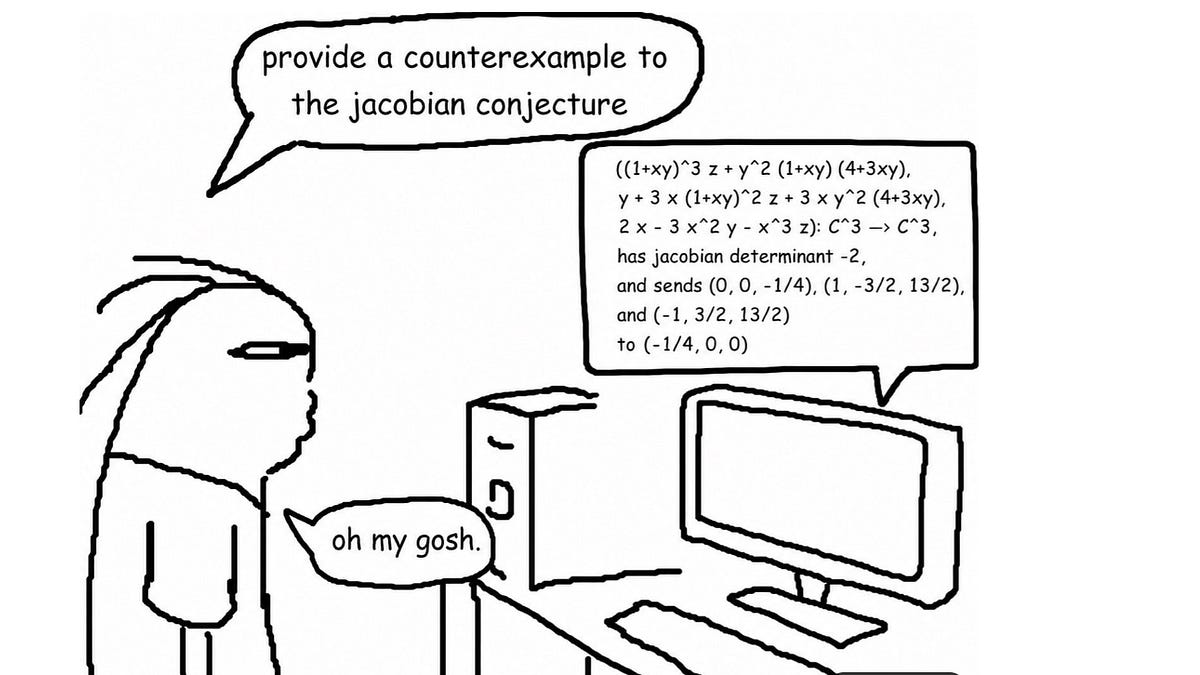
Anthropic’s Fable 5 is now a permanent part of Claude Max and Team subscriptions (50% of weekly limits), with Pro users getting a one-time $100 credit — and it reportedly found a counterexample to the 87-year-old Jacobian conjecture. Other launches: Sierra’s Horizon (agents charged for business outcomes over days/months rather than tokens), NotebookLM rebranded to Gemini Notebook with a new Collections feature, Notion AI gained browser use in early access, and Ramp Router (a model-routing endpoint saving ~30% on costs). Hugging Face launched Grabette, an open, buildable-from-parts handheld gripper that turns hand-recorded manipulation demos into standard LeRobot datasets — inspired by Stanford’s UMI — aiming to seed a large collaborative robot-learning dataset without needing a robot or lab. Sources: https://www.bensbites.com/p/better-design-than-fable https://huggingface.co/blog/grabette
Research Insights
TheSequence dissects DeepSeek’s landmark reasoning-distillation result: R1 generated ~800K worked chains-of-thought (false starts, self-corrections and all), which were filtered for correctness and then used for plain supervised fine-tuning on off-the-shelf Qwen and Llama models. Despite theory arguing that naive sequence-level imitation should fail (because the student is never on the teacher’s trajectory at inference), the distilled 32B solved competition math and the 7B began verifying and branching its own reasoning — emergent behaviors nobody trained in directly. The piece treats this tension as the real story. Relatedly, the field is shifting from model-centric toward system-centric generalization via agent harnesses and RLMs. Sources: https://thesequence.substack.com/p/the-sequence-knowledge-898-the-trace https://news.smol.ai/issues/26-07-20-not-much/
Research Insights — Policy & Security
A recurring thread is “open models as defense.” US policy debate is moving from rhetoric toward a possible de facto ban on cutting-edge Chinese models (procurement restrictions, Entity List designations, liability requirements), which technical voices (Pompliano, Delangue, Mitchell, Gurley) argued would hurt competition, sovereignty, and defensive security. The concrete case: during a July 2026 cyber incident, Hugging Face used self-hosted GLM-5.2 for forensic work because commercial API guardrails blocked analysis of exploit payloads and sensitive attacker data needed to stay on-prem — an intrusion reportedly executed end-to-end by an autonomous AI agent. The asymmetry (attackers bound by no usage policy while defenders are guardrailed) became a centerpiece argument for less-restricted open models. Sources: https://news.smol.ai/issues/26-07-20-not-much/ https://www.latent.space/p/ainews-not-much-happened-today-173
Tooling & Engineering Practice
In Simon Willison’s fireside chat, Anthropic’s Cat Wu and Thariq Shihipar describe how coding agents transformed daily engineering: early Claude Code (Sonnet 3.7) required scrutinizing every permission prompt, but successive models — through Opus 4 and now Fable — enabled auto-mode delegation and one-shotting entire features. The bigger shift is in the skill set: the idea-to-shipped timeline collapsed from 6–12 months to roughly a week, raising the premium on product taste and business sense over raw execution (though infra still demands precision), and even making full rewrites a good idea rather than a cardinal sin. On the harder-systems side, two GPU MODE talks are queued but haven’t aired: “The 4-bitter lesson” on NVFP4 4-bit RL stability-vs-performance tradeoffs, and “TIRx” — both listed here as upcoming scheduled live events with no transcript yet available. Cursor also demonstrated rebuilding SQLite from an 835-page manual using agent swarms, with costs ranging from $1,339 (Opus 4.8 + Composer 2.5) to $10,565 (GPT-5.5 alone). Sources: https://simonwillison.net/2026/Jul/21/cat-and-thariq/#atom-everything https://www.youtube.com/watch?v=bxdRyBiBePs https://www.youtube.com/watch?v=Y8htU1wiyYU https://www.bensbites.com/p/better-design-than-fable
🔗 View this digest on the web: https://ainews.rusig.com/digests/2026-07-21-morning/