AI Digest — July 15, 2026, 8 PM
Quick Notes
- Cutting harness bloat: Nate B Jones argues that every corrective rule, skill, and system prompt you pile onto an AI accumulates into an invisible “harness” that degrades model performance; he built a skill to make the whole harness visible and offers six principles for a more stable setup, tuned differently for Fable 5 and the ChatGPT 5.6 family. https://www.youtube.com/watch?v=PDJfciNhyHU
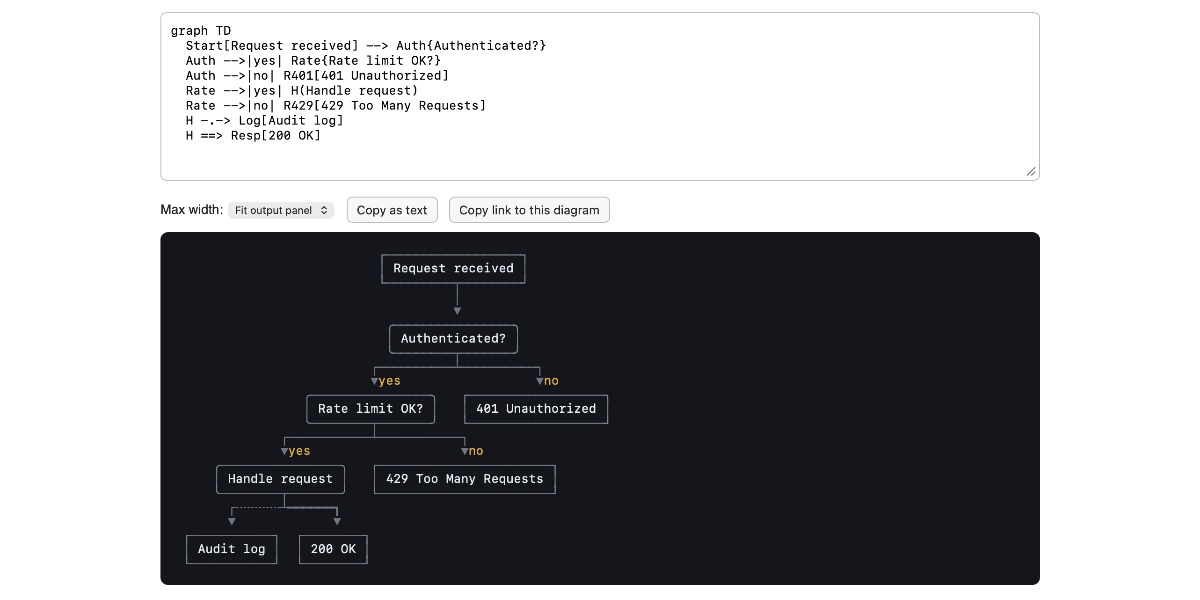
- grok-mermaid: Simon Willison found a self-contained Rust Mermaid terminal renderer inside the newly open-sourced Grok CLI and, using Claude Code for web (Fable 5), compiled it to WebAssembly to render Mermaid diagrams as Unicode box art in the browser. https://simonwillison.net/2026/Jul/16/grok-mermaid/#atom-everything
- grok-build open-sourced: After backlash over its Grok CLI silently uploading entire directories (SSH keys, password DBs, personal files) to xAI cloud buckets, xAI deleted retained data, turned retention off by default, and released the full 844,530-line Rust codebase under Apache 2.0. https://simonwillison.net/2026/Jul/15/grok-build/#atom-everything
- Claude exfiltration loophole: Ayush Paul found that Claude’s web_fetch, though designed to block data exfiltration, would follow attacker-generated nested links inside pages it had already fetched — a honeypot could spell out a URL “letter by letter” to leak a user’s name, city, and employer; Anthropic has since closed the hole. https://simonwillison.net/2026/Jul/15/claude-web-fetch-exfiltration/#atom-everything
- Context engineering with Dex Horthy: On the Pragmatic Engineer podcast, HumanLayer CEO Dex Horthy (who coined “context engineering”) shares 12 lessons — including that shipping unread AI-written code broke production within four months, that today’s coding models likely degrade codebases because they’re optimized for SWE-bench-style fixes, and that keeping context-window usage low avoids the “dumb zone.” https://newsletter.pragmaticengineer.com/p/context-engineering-with-dex-horthy
- Claude for Teachers: A demo shows a teacher handing Claude a folder of rosters, diagnostics, and attendance to produce a proficiency report, spot that chronically absent students have flat scores, and generate differentiated small-group lesson plans and worksheets grounded in real standards — free for verified U.S. K-12 teachers. https://www.youtube.com/watch?v=255IGB63nTY
- Building Shippy: Ai2’s Skylight team details the architecture of Shippy, a high-stakes maritime AI agent, structured as “soul, skills, and config” (running on the OpenClaw harness and Claude Opus 4.6), which reaches Skylight data only through a purpose-built CLI to eliminate the malformed API calls it produced when writing raw queries. https://huggingface.co/blog/allenai/shippy-tech-blog

- Model routing pitfalls: IBM Research explains why model routing is harder than a classification problem — caching made Claude Sonnet 4.6 actually cheaper than GPT-4.1 despite higher sticker prices, task difficulty is often invisible at routing time, and real routers must jointly optimize cost, latency, quality, compliance, and serving conditions. https://huggingface.co/blog/ibm-research/model-routing-is-simple-until-it-isnt

- Inkling by Thinking Machines: A ~1T-parameter (975B total, 41B active) open multimodal Mixture-of-Experts model natively accepting image, text, and audio with a 1M context, trained on 45T tokens; it uses relative attention, hybrid global/sliding-window attention, short convolutions, and shared-expert routing, with day-0 support in transformers, SGLang, and llama.cpp. https://huggingface.co/blog/thinkingmachines-inkling

- AI optimism vs pessimism: The AI Daily Brief critiques a new Anthropic ad that opens with burning buildings, gravestones, and mass surveillance before pivoting to hopeful questions, calling it well-intentioned but tone-deaf — arguing AI companies keep fetishizing “acknowledging the risks” instead of simply selling a positive vision. https://www.youtube.com/watch?v=xjMXGNxJMXI
Structured Summaries
New models / research
Thinking Machines released Inkling, a ~1T-parameter open multimodal Mixture-of-Experts model (975B total / 41B active parameters) that natively ingests image, text, and audio with a 1M-token context, trained on 45 trillion tokens. Architecturally it departs from convention: relative attention instead of RoPE (a fourth per-token, per-head projection tweaked with key–query distance), a 5:1 hybrid of sliding-window to global attention layers, a short 1D convolution (SConv) to offload local representation, and MoE routing over 6 experts plus 2 always-active shared experts. Multimodal towers are deliberately simple — hierarchical MLP patchifiers for vision and discretized mel-spectrogram bins for audio — and it ships in BF16 and a calibrated NVFP4 variant with speculative MTP layers and day-0 support in transformers, SGLang, and llama.cpp. Sources: https://huggingface.co/blog/thinkingmachines-inkling
Product launches
xAI open-sourced its Grok Build coding agent under Apache 2.0 — an 844,530-line Rust codebase (comparable to openai/codex’s 950,933 lines) — as a trust-repair move after its Grok CLI was found silently uploading entire working directories, including SSH keys and password databases, to xAI cloud buckets; xAI deleted all retained data and disabled retention by default. Anthropic separately promoted Claude for Teachers, free for verified U.S. K-12 teachers, which ingests a folder of classroom data to build proficiency reports and standards-grounded differentiated lesson plans, and ran a new brand ad (“hope in hard questions”) that the AI Daily Brief judged tone-deaf for leading with bleak imagery before its optimistic pivot. Sources: https://simonwillison.net/2026/Jul/15/grok-build/#atom-everything https://www.youtube.com/watch?v=255IGB63nTY https://www.youtube.com/watch?v=xjMXGNxJMXI
Research insights
A security disclosure showed how Claude’s exfiltration-resistant web_fetch could still be tricked: because it followed nested links inside already-fetched pages, a honeypot could spell a destination URL out letter by letter and leak a user’s name, city, and employer — a fresh instance of the “lethal trifecta,” now patched by Anthropic. Complementing that, HumanLayer’s Dex Horthy laid out hard-won context-engineering lessons: shipping unread AI-written code broke production within four months and took weeks to untangle; coding models likely degrade codebases because they’re optimized for SWE-bench-style fixes that can’t measure architecture quality; and lower context-window usage generally yields better outcomes. Sources: https://simonwillison.net/2026/Jul/15/claude-web-fetch-exfiltration/#atom-everything https://newsletter.pragmaticengineer.com/p/context-engineering-with-dex-horthy
Tooling
Several pieces converge on building reliable agents and harnesses. Ai2’s Shippy maritime agent is structured as “soul, skills, and config” — a system prompt defining boundaries, markdown skills following the Claude Code/Codex spec, and swappable config (OpenClaw harness, Claude Opus 4.6) — and is forced to reach live Skylight data only through a purpose-built CLI to eliminate the malformed queries it generated when writing raw API calls. IBM Research argues model routing is really a systems-optimization problem, not classification: caching made Sonnet 4.6 cheaper than GPT-4.1 despite higher list prices, task difficulty is often invisible until execution, and routers must balance cost, latency, quality, compliance, and serving conditions at once. Nate B Jones frames the accumulated pile of rules, prompts, and skills around a model as an invisible “harness” that quietly hurts performance, and shares a skill to make it visible plus six principles for stability across Fable 5 and ChatGPT 5.6. Finally, Simon Willison turned a Rust Mermaid renderer found inside the open-sourced Grok CLI into a browser tool via WebAssembly using Claude Code for web. Sources: https://huggingface.co/blog/allenai/shippy-tech-blog https://huggingface.co/blog/ibm-research/model-routing-is-simple-until-it-isnt https://www.youtube.com/watch?v=PDJfciNhyHU https://simonwillison.net/2026/Jul/16/grok-mermaid/#atom-everything
🔗 View this digest on the web: https://ainews.rusig.com/digests/2026-07-15-evening/