AI Digest — July 10, 2026, 8 AM
📝 AI Digest — July 10, 2026 (Morning Edition)
Sources: Hugging Face Blog, Latent Space, Simon Willison Blog, YT AI Explained
Quick Notes
- The third installment of PyTorch’s profiling series focuses on attention mechanisms, analyzing kernels in naive implementations versus fused SDPA, and demonstrating how replacing out-of-place
masked_fillwith its in-place counterpart eliminates entire memory copy kernels from GPU traces. Source: https://huggingface.co/blog/torch-attention-profile

- OpenAI has unveiled a new GPT‑5.6 family comprising Sol (flagship), Terra (GPT‑5.5 equivalent at lower cost), and Luna (fastest high-volume option) across ChatGPT, Codex, and API with pricing tiers ranging from $30 to $1 per million tokens, alongside major app-layer updates including ChatGPT Work, Sites beta, and multi-agent tool calling. Source: https://www.latent.space/p/ainews-openai-launches-gpt-56-solterraluna
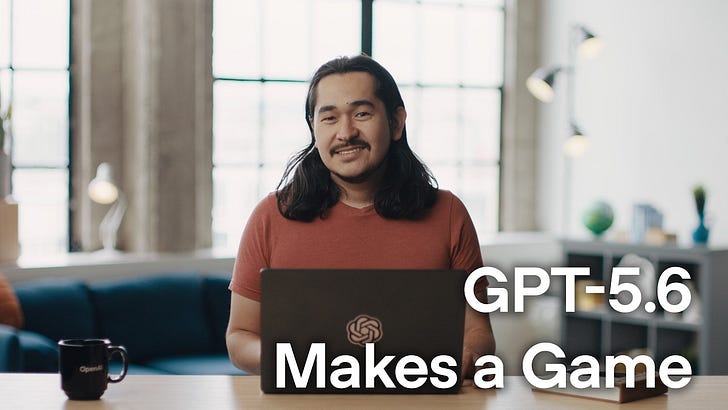
- Simon Willison’s collection captures a key clarification attempt from OpenAI about the cloud-versus-desktop architecture of ChatGPT Work, where cloud-based conversations don’t appear in desktop threads and local files remain device-bound at launch. Source: https://simonwillison.net/2026/Jul/10/openai/#atom-everything
- This YouTube explainer breaks down a flurry of model announcements from the past 24 hours, with Three Frontier Labs offering near-top benchmark performance (53% vs Fable’s 45%) at roughly one-third the cost across GPT‑5.6 Sol, Grok 4.5, Meta Muse Spark 1.1, and Claude Fable series comparisons on Agents Last Exam and other tests. Source: https://www.youtube.com/watch?v=mWlCituW7wo
Structured Summaries
New Models & Research
The model landscape has shifted dramatically in the last 24 hours with major releases reshaping performance-to-cost ratios across multiple tiers. OpenAI’s new GPT‑5.6 lineup redefines expectations: Sol claims a record 53.6 on Agents Last Exam (beating Claude Fable 5 adaptive by 13.1 points) and reportedly outperforms previous generations at lower cost; Terra matches Fable 5 in capability while using roughly one-third the time; Luna surpasses Opus 4.8 on standard benchmarks while delivering superior economics. Meta counters with a new Spark architecture reaching version 1.1, its first mainstream API offering for third-party integration and broad ecosystem adoption. Three Frontier Labs positions itself as a hidden gem alternative, achieving near-top leaderboard scores at a fraction of the price—specifically around one-third the cost of competing offerings on comparable tasks. The pricing strategy emphasizes performance ladders: Sol set as flagship ceiling, Terra for GPT‑5.5-like workloads at reduced compute spend, and Luna optimized for high-volume throughput economics. This represents an aggressive move from all three companies (OpenAI, Meta, Three Frontier) to demonstrate that lower cost doesn’t necessarily mean inferior performance—particularly on agentic benchmarks like Agents Last Exam and deep engineering workflow tests like Terminal-Bench 2.1.
Sources: https://www.latent.space/p/ainews-openai-launches-gpt-56-solterraluna https://www.youtube.com/watch?v=mWlCituW7wo
Tooling & Profiling Insights
A focused tutorial series on PyTorch profiling provides actionable optimization techniques for transformer workloads. The current installment targets attention mechanism implementation and demonstrates measurable speedups: switching from out-of-place masked_fill to in-place masked_fill_ eliminates an entire Memcpy kernel from each forward pass—a seemingly minor change but one that scales meaningfully across the multiple layers of real-world models including LLMs and diffusion architectures. On NVIDIA A100-SXM4-80GB GPU traces show five kernel operations including memory copies that can be traced back to PyTorch’s default out-of-place operation semantics; in-place alternatives wrap fewer CPU ops within masking steps. The tutorial provides four comparison script versions (naive attention, inplace-op variant, SDPA implementation, and fused kernels) runnable on Hugging Face Dev Mode or Jobs pipeline for hands-on experimentation with GPU profiling.
Sources: https://huggingface.co/blog/torch-attention-profile
Product Launches & App Updates
The GPT‑5.6 announcement bundles several significant app-layer capabilities alongside the new models and pricing tier expansion: ChatGPT Work establishes cloud-based working threads distinct from local desktop threads, with each environment maintaining separate conversation histories at launch; Codex and ChatGPT merge into a unified desktop application for the first time under this superapp strategy. A new beta iteration called Sites appears to be emerging alongside programmatic tool calling enhancements (improved artifact quality) and multi-agent capabilities now available via the Responses API in beta mode, with four parallel agents coordinating across workstreams on max effort settings. OpenAI emphasizes strong agentic performance improvements, better coding task outcomes, and clearer economics framed around “dollars-per-task” metrics—with Sol positioned specifically for demanding enterprise workflows requiring multiple autonomous reasoning cycles and parallel exploration of alternatives and revisions.
Sources: https://www.latent.space/p/ainews-openai-launches-gpt-56-solterraluna https://simonwillison.net/2026/Jul/10/openai/#atom-everything