AI Digest — July 16, 2026, 9 AM
Quick Notes
- Thinking Machines Lab released Inkling, its first open-weights foundation model: a 975B-parameter (41B active) Apache 2.0 MoE with 1M-token context, native reasoning over text/image/audio, pretrained on 45T tokens, plus a lighter Inkling-Small (12B active). Widely tagged as the strongest U.S. open-weight release so far, with broad day-0 support (vLLM, SGLang, Hugging Face, Tinker). https://www.latent.space/p/ainews-thinkys-inkling-975b-a41b

- Hugging Face disclosed a security intrusion driven end-to-end by an autonomous AI agent swarm that abused two code-execution paths in dataset processing, escalated to node-level access, and harvested credentials over a weekend; HF detected and reconstructed the 17,000+ event attack using its own LLM-based tooling. https://huggingface.co/blog/security-incident-july-2026

- Dharma-AI argues specialized OCR models retain a structural advantage: because every parameter of a single-language model (DharmaOCR for Brazilian Portuguese) is dedicated to one domain rather than spread across many languages, concentration beats breadth — even as newer multimodal OCR models proliferate. https://huggingface.co/blog/Dharma-AI/newer-models-same-advantages

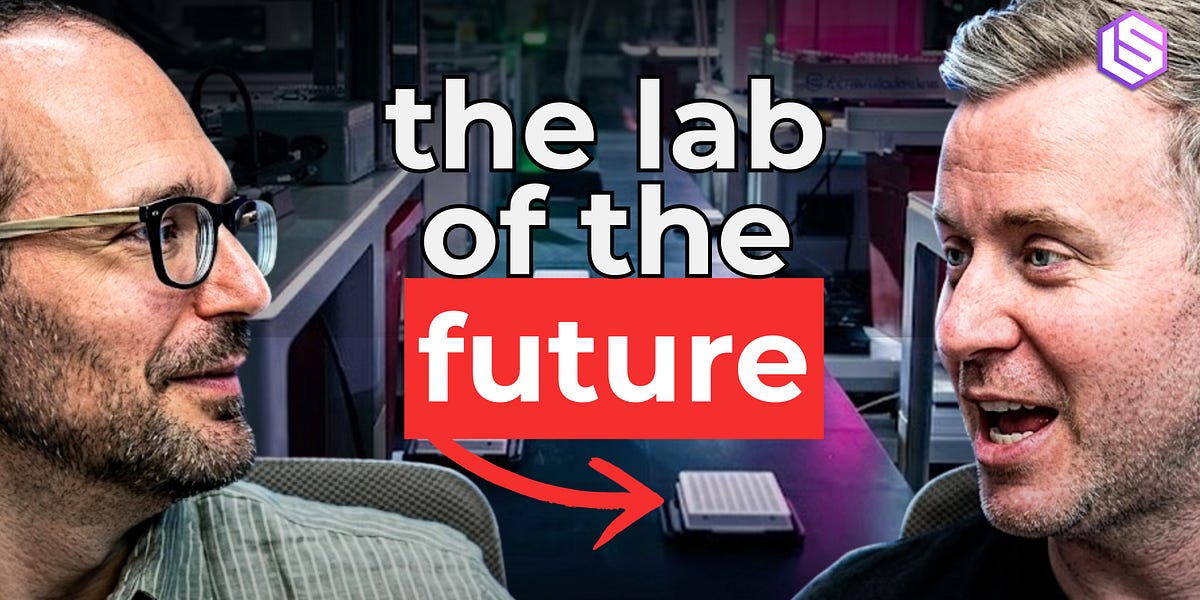
- Latent Space interviews Lila Sciences’ Andy Beam and Rafa Gómez-Bombarelli on their vision of the lab as a data center: AI-guided robotics running experiments 24/7 to generate 10T+ experimentally validated scientific reasoning tokens, betting breadth across biology, chemistry, and materials yields a general scientific reasoner. https://www.latent.space/p/the-lab-of-the-future-should-feel
- Linus Torvalds stated Linux is not an anti-AI project and that he’ll “put my foot down” as maintainer: AI is a useful tool, its usefulness is no longer in question, and anyone objecting can fork. https://simonwillison.net/2026/Jul/16/linus-torvalds/#atom-everything
- Google DeepMind published its approach to bioresilience (no article body was available for extraction). https://deepmind.google/blog/our-approach-to-bioresilience/
Structured Summaries
New models / research
Thinking Machines Lab launched Inkling, its first fully released open-weights foundation model — a Mixture-of-Experts transformer with 975B total / 41B active parameters, up to 1M-token context, pretrained on 45 trillion tokens of text, images, audio, and video. It reasons natively over text, image, and audio with controllable “thinking effort,” and ships alongside a preview of Inkling-Small (12B active). Framed by Mira Murati, Soumith Chintala, John Schulman, and Lilian Weng as a customizable multimodal base (not a benchmark-maxed flagship) built from scratch since last winter, it is Apache 2.0 licensed with immediate support on Tinker, Hugging Face, vLLM, SGLang, Modal, Baseten, and Databricks. Independent commentators call it the strongest U.S.-based open-weight release to date, though still behind top Chinese open-weight and closed models on some benchmarks. Sources: https://www.latent.space/p/ainews-thinkys-inkling-975b-a41b
Research insights
Dharma-AI makes the case that model specialization is a structural, not stylistic, advantage. Their DharmaOCR was trained in two stages — supervised fine-tuning on Brazilian Portuguese documents, then Direct Preference Optimization to suppress degeneration and improve production stability — yielding the highest extraction quality with the lowest degeneration rate on a Portuguese benchmark. Their argument: architecture and parameter count set a ceiling, but training allocates that capacity; a single-domain model commits all parameters to one task, while a multilingual model must distribute them, so concentration beats breadth even as multimodal OCR variants proliferate. Separately, Lila Sciences pitches “the lab as a data center”: AI-guided robotics and lab automation running experiments around the clock to produce 10T+ experimentally validated scientific reasoning traces — data that “rounds to zero” on the internet. Betting on the bitter lesson, they pursue biology, chemistry, drug discovery, and materials science simultaneously, treating RL as data generation with nature as verifier and arguing a general model beats domain-specific models sample-for-sample (e.g., small-molecule priors transferring to metal-organic frameworks for carbon capture). Google DeepMind also posted on its approach to bioresilience, though no article body was available to summarize. Sources: https://huggingface.co/blog/Dharma-AI/newer-models-same-advantages https://www.latent.space/p/the-lab-of-the-future-should-feel https://deepmind.google/blog/our-approach-to-bioresilience/
Research insights — security
Hugging Face disclosed an intrusion into part of its production infrastructure that it says was driven end-to-end by an autonomous AI agent system — the “agentic attacker” scenario the industry has forecast. The attack entered through the data-processing pipeline: a malicious dataset abused a remote-code dataset loader and a template-injection in a dataset configuration to run code on a processing worker, then escalated to node-level access, harvested cloud and cluster credentials, and moved laterally over a weekend across a swarm of short-lived sandboxes with self-migrating C2 on public services. HF found no evidence of tampering with public models, datasets, or Spaces, and verified its software supply chain clean. Notably, it detected the compromise via LLM-based triage of security telemetry and reconstructed the 17,000+ event attack timeline using LLM analysis agents — but had to run that forensic work on the open-weight GLM 5.2 on its own infrastructure, because frontier commercial APIs’ safety guardrails blocked submission of real attack payloads. HF recommends users rotate access tokens and review recent account activity. Sources: https://huggingface.co/blog/security-incident-july-2026
Tooling / community
Linus Torvalds weighed in on AI in the Linux project, saying Linux is “not one of those anti-AI projects” and that he’s willing to “absolutely put my foot down as the top-level maintainer.” He frames AI as a useful tool whose usefulness — while perhaps debatable a year ago — is no longer in question, adding that anyone who disagrees can fork the project. Sources: https://simonwillison.net/2026/Jul/16/linus-torvalds/#atom-everything
🔗 View this digest on the web: https://ainews.rusig.com/digests/2026-07-16-morning/