AI Digest — July 14, 2026, 8 PM
Quick Notes
- GitHub Changelog: Dependabot now waits until a new release has been on its registry for at least three days before opening a version-update PR — this “dependency cooldown” is now the default and needs no configuration. https://simonwillison.net/2026/Jul/14/github-changeling/#atom-everything
- Simon Willison built
pedalican, a custom animated “pet” for Codex Desktop — a pelican riding a bicycle — and documents how GPT-5.6 Sol used several rounds of gpt-image-2 to generate the sprite sheets and animation loops from magenta chroma-key reference images. https://simonwillison.net/2026/Jul/14/pedalican/#atom-everything

- Community site Lobsters completed its long-planned database migration, moving off MariaDB to SQLite; CPU and memory usage dropped, the site feels snappier, and VPS costs roughly halved, all on a single server with a ~3.8GB content database. https://simonwillison.net/2026/Jul/14/lobsters-sqlite/#atom-everything
- Armin Ronacher (quoted by Simon Willison) argues that a software project’s real shared language is the common understanding of its concepts and invariants, and that pre-agent “friction” — reading code, asking questions — was partly waste but also the process that synchronized understanding between people. https://simonwillison.net/2026/Jul/14/armin-ronacher/#atom-everything
- Datasette 1.0a37 is a minor release with performance and documentation improvements to the permissions system, plus a reverted cosmetic API change that had broken nearly every existing plugin test suite. https://simonwillison.net/2026/Jul/14/datasette/#atom-everything
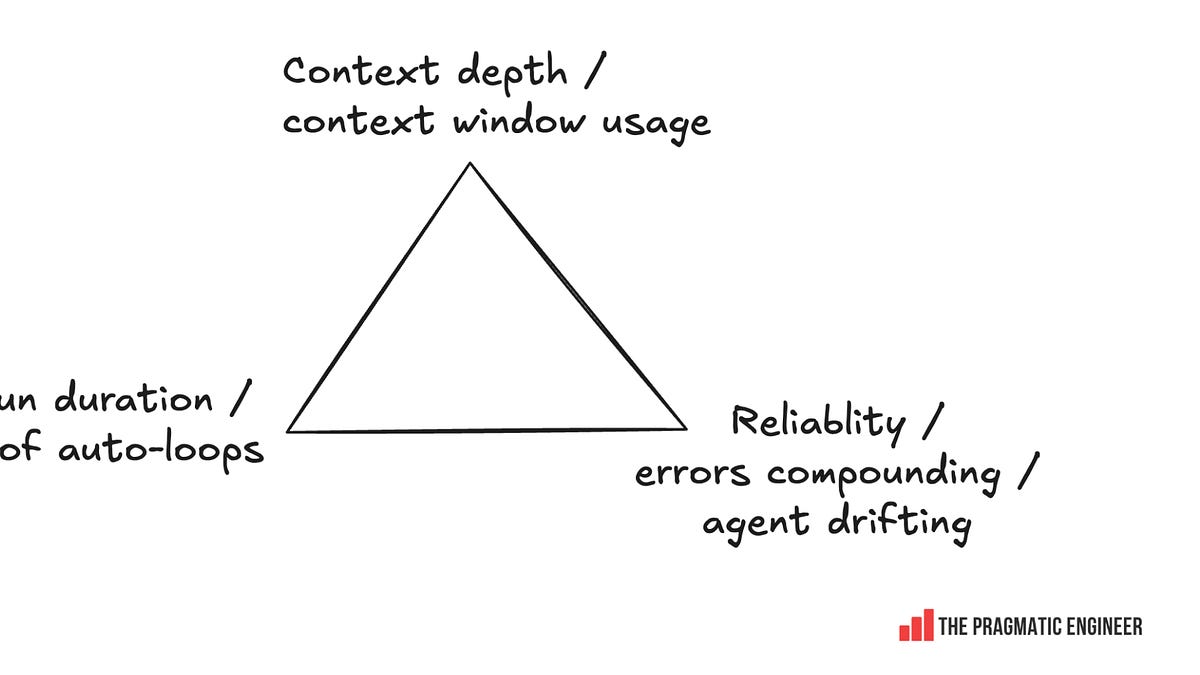
- Pragmatic Engineer examines “loop engineering” — designing self-running loops that prompt the agent instead of writing prompts yourself — tracing it to Geoffrey Huntley’s “Ralph Wiggum” Bash loop, noting the
/goalcommand now ships in major harnesses, and reporting that many devs find it drifts, gets expensive, and may have been a stopgap. https://newsletter.pragmaticengineer.com/p/what-is-loop-engineering
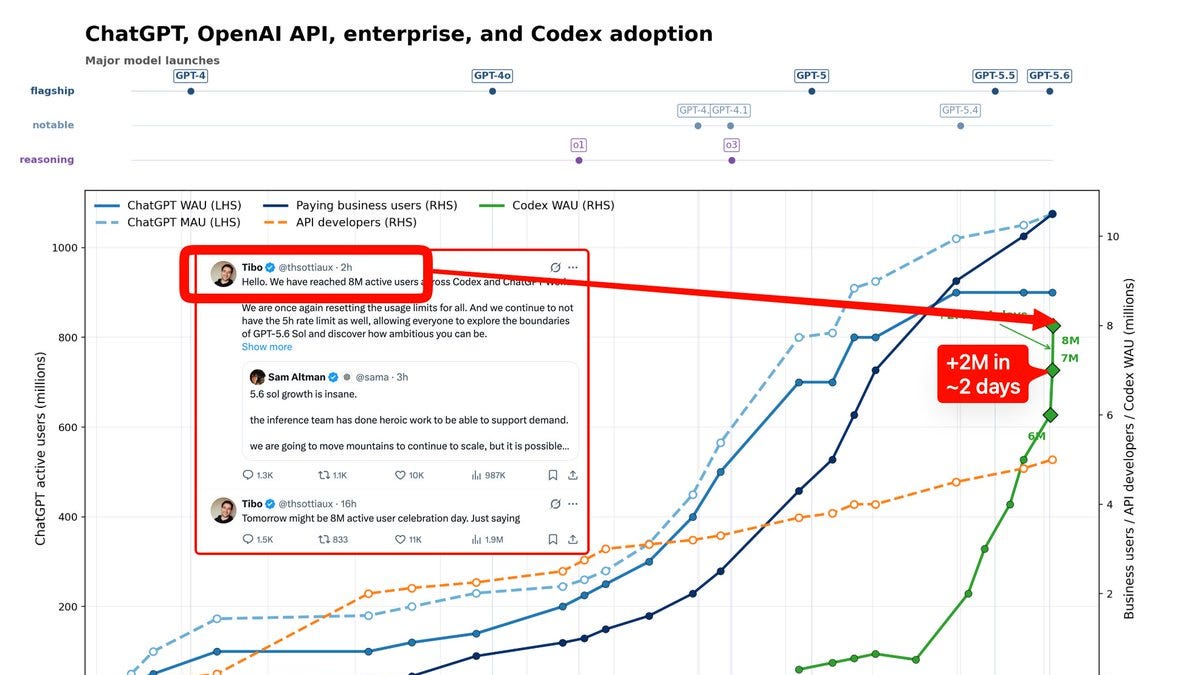
- Latent Space’s daily AINews roundup (“not much happened today”) covers Codex/ChatGPT Work usage growth, harness quality and observability becoming a differentiator, aggressive open-model quantization (Bonsai 27B, Hunyuan Hy3), and realtime multimodal systems like MOSS-VL-Realtime. https://www.latent.space/p/ainews-not-much-happened-today-c72
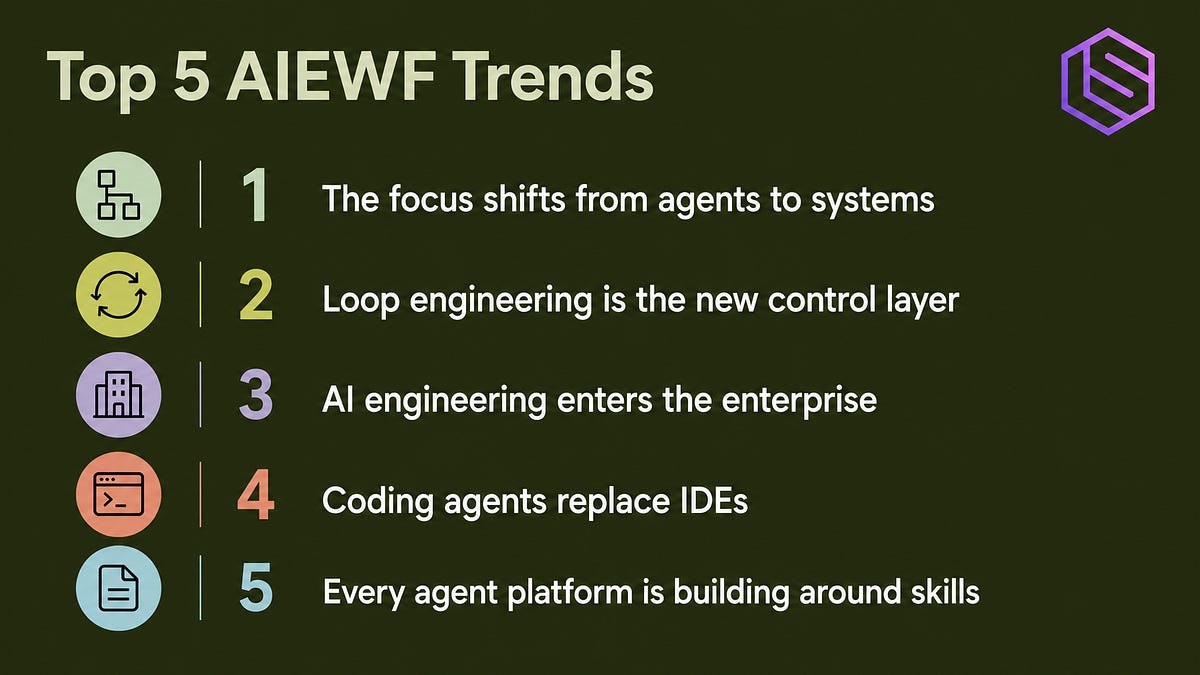
- Latent Space’s “5 Trends That Defined AI Engineering at World’s Fair 2026” argues the field has shifted from prompting models to “harness engineering” — building reliable systems around models — with agents now framed as augmenting rather than replacing engineers. https://www.latent.space/p/aiewf26trends
- Chase AI walks through his exact Claude-based personal-assistant setup, automating three buckets of grunt work — productivity/sales, research, and content — into Claude Code skills to save 5–10 hours a week. https://www.youtube.com/watch?v=gUv7VqcRzok
- Claude for Teachers demo: elementary teacher Karina uses voice to have Claude pull a TeachFX lesson recording, produce a coaching summary and a standards-aligned next-day lesson plan with California ELD supports, then schedule it to run automatically each weekday at 4 p.m. https://www.youtube.com/watch?v=V-OOEC5RNaQ
- Claude for Teachers demo: high-school teacher Zac hands Claude a folder of rosters, diagnostics, and attendance; Claude produces a performance report, groups students into reteach/on-level/extension, and generates differentiated, standards-grounded lesson plans and worksheets. https://www.youtube.com/watch?v=sMh99UfkvL4
Structured Summaries
New models / research
The AI News roundup catalogs a wave of open-model compression: PrismML’s Bonsai 27B (based on Qwen 3.6 27B) ships in a ternary variant at 5.9GB / 1.71 effective bits and a 1-bit variant at 3.9GB / 1.125 effective bits, both Apache 2.0, reportedly preserving multimodal, tool-using, long-context agentic workflows locally (demoed on an RTX 5090 and even phones). Tencent Hunyuan released 1-bit and 4-bit Hy3, a 295B flagship-scale model servable on a single GPU via llama.cpp with MTP. NVFP4 dynamic quants landed across the Gemma-4 family plus Qwen3.5-122B-A10B and GLM-4.7-Flash, and practitioners sketched multi-node local deployments (1M-context DeepSeek v4 Flash, MiMo-V2.5, GLM 5.2) on DGX Sparks. On the multimodal front, OpenMOSS released MOSS-VL-Realtime, an 11B Apache-2.0 vision-language family with 256K context designed for continuous video streams that can keep watching while generating. The takeaway across posts is that low-bit local inference is becoming viable for serious agentic use, not just a toy path. Sources: https://www.latent.space/p/ainews-not-much-happened-today-c72
Product launches
Anthropic’s Claude for Teachers — free for every verified U.S. K-12 teacher — is showcased in two demos. In one, an elementary ELA teacher uses voice to have Claude pull a TeachFX lesson recording, return both a coaching summary (praising her talk-time ratio, flagging insufficient wait time) and a next-day lesson plan grounded in state standards and California ELD supports via a Learning Commons knowledge graph, then schedules it to recur automatically each weekday. In the other, a high-school math teacher hands Claude a whole folder of class data; Claude reads everything, reports that proficiency more than doubled since fall, correlates chronic absences with flat scores, and produces differentiated reteach/on-level/extension groups with standards-grounded worksheets — while keeping the teacher in control of what reaches students. Separately, Simon Willison released Datasette 1.0a37, a minor release improving permissions-system performance and docs and reverting a cosmetic API change that had broken plugin test suites. Sources: https://www.youtube.com/watch?v=V-OOEC5RNaQ https://www.youtube.com/watch?v=sMh99UfkvL4 https://simonwillison.net/2026/Jul/14/datasette/#atom-everything
Research insights
Two essays frame where AI engineering stands in 2026. Latent Space’s AIEWF recap contrasts Lilian Weng’s 2023 “LLM Powered Autonomous Agents” with her 2026 “Harness Engineering for Self-Improvement,” arguing focus has shifted from the agent itself to the surrounding harness — workflows, context, permissions, evaluation, persistent state, and continuous improvement. AutoGPT went unmentioned this year; the conversation now centers on Claude Code, Codex, Gemini CLI, Cursor and Warp, with agents positioned to augment rather than replace engineers (Romain Huet: “AI engineers are eating the world”), and Anthropic’s Thariq Shihipar describing Claude Fable as “grown, not designed” with spiky capability overhead. Complementing this, Armin Ronacher observes that a project’s true shared language is the collective understanding of its concepts and invariants — and that the slow pre-agent friction of reading code and asking questions, though partly waste, was also how understanding synchronized between people, something agents risk eroding. Sources: https://www.latent.space/p/aiewf26trends https://simonwillison.net/2026/Jul/14/armin-ronacher/#atom-everything
Tooling
Pragmatic Engineer unpacks “loop engineering,” the idea of replacing yourself as the prompter by designing a system that prompts the agent for you — championed by Anthropic’s Boris Cherny (“my job is to write loops”) and OpenAI/OpenClaw figures. It traces the pattern to Geoffrey Huntley’s year-old “Ralph Wiggum” Bash loop (while :; do cat PROMPT.md | claude-code; done), notes the /goal command now ships in major harnesses, and reports mixed reception: most real-world loops are just triggers and cron jobs, agents drift, token costs balloon at API prices, and some engineers view looping as a temporary hack until harnesses matured — with context engineering arguably mattering more. Chase AI’s video demonstrates a concrete personal-assistant build on Claude Code, offloading productivity/sales, research, and content drudgery into skills and automations to reclaim 5–10 hours weekly. On the ops side, Simon Willison highlights Lobsters’ completed MariaDB-to-SQLite migration (lower CPU/memory, ~half the VPS cost, ~3.8GB content DB on a single server) as a case study in how much a single server plus SQLite can do in 2026, GitHub’s new default three-day Dependabot cooldown before opening version-update PRs, and his own pedalican project showing GPT-5.6 Sol and gpt-image-2 generating game-ready animated sprites from chroma-key reference images.
Sources: https://newsletter.pragmaticengineer.com/p/what-is-loop-engineering https://www.youtube.com/watch?v=gUv7VqcRzok https://simonwillison.net/2026/Jul/14/lobsters-sqlite/#atom-everything https://simonwillison.net/2026/Jul/14/github-changeling/#atom-everything https://simonwillison.net/2026/Jul/14/pedalican/#atom-everything
🔗 View this digest on the web: https://ainews.rusig.com/digests/2026-07-14-evening/